
Operator calls for tougher rules amid increase in cab companies
Advertisement
Read this article for free:
or
Already have an account? Log in here »
We need your support!
Local journalism needs your support!
As we navigate through unprecedented times, our journalists are working harder than ever to bring you the latest local updates to keep you safe and informed.
Now, more than ever, we need your support.
Starting at $15.99 plus taxes every four weeks you can access your Brandon Sun online and full access to all content as it appears on our website.
Subscribe Nowor call circulation directly at (204) 727-0527.
Your pledge helps to ensure we provide the news that matters most to your community!
To continue reading, please subscribe:
Add Brandon Sun access to your Free Press subscription for only an additional
$1 for the first 4 weeks*
- Enjoy unlimited reading on brandonsun.com
- Read the Brandon Sun E-Edition, our digital replica newspaper
*Your next Free Press subscription payment will increase by $1.00 and you will be charged $20.95 plus GST for four weeks. After four weeks, your payment will increase to $24.95 plus GST every four weeks.
Read unlimited articles for free today:
or
Already have an account? Log in here »
The president of ABC Taxi has called on the City of Brandon to introduce stricter regulations for new taxi companies.
The current licensing system allows too many operators into the market and threatens the long-term sustainability of the local industry, co-owner Abraham Takie told the Sun.
“We need competition,” Takie said. “But there should be a limit and proper regulations for new companies to ensure they can provide reliable service and maintain industry standards. Right now, almost anyone can open a taxi company with just a few vehicles.”
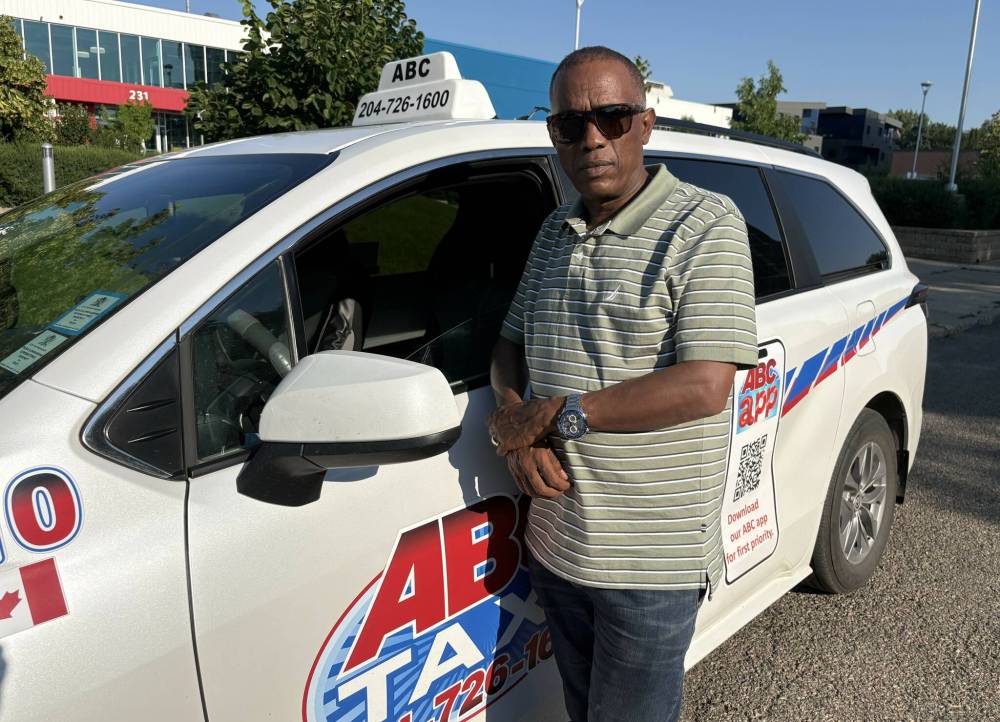
ABC Taxi president Abraham Takie stands in front of one of his cabs on Eighth Street in downtown Brandon on Friday. (Abiola Odutola/The Brandon Sun)
His concerns are based on the recent emergence of several new cab companies in Brandon and the implications for established operators.
Taxi operators in Brandon are not protected, unlike Winnipeg, where taxi licences have historically been more limited, Takie said.
“Here … to become an owner, you need $500, four cars and four drivers. But in Winnipeg … you need to have half a million to own one car … because it is protected,” he said.
“If the (City of Brandon) required 10 or 15 vehicles instead of four, it would help ensure companies are serious and able to provide dependable service.”
Takie, whose company has been operating in Brandon for more than 40 years, said ABC Taxi has remained competitive through investments in technology, newer vehicles and experienced drivers.
The company uses the iCabbi dispatch system, which Takie said offers real-time GPS tracking, automated dispatching and safety features similar to ride-hailing platforms. ABC was the first taxi company in Manitoba to adopt the system and is one of only three companies in Canada currently using it, he said.
“It’s reliable and safe,” he said in an interview on Friday. “Customers can track vehicles, and we can dispatch the nearest available driver, reducing wait times.”
ABC currently operates more than 50 vehicles, including 17 SUVs, with plans to increase that number to 20. Takie said many of the company’s vehicles are 2025 and 2026 models, allowing it to better accommodate larger groups and improve winter driving conditions.
Takie said some smaller companies are offering flat-rate fares below metered prices, making it difficult for larger operators to compete while complying with municipal regulations.
“Some operators offer rides for $5 or $10 instead of charging by the meter. That creates problems for established businesses,” he said.
While ABC has been able to withstand the increased competition because of its reputation and customer base, he said, the overall industry is becoming fragmented.
“We are strong because we have enough customers, good drivers and good service. But other companies are struggling.”
Stronger regulation would benefit workers by creating more stable employment, he said.
“When businesses aren’t sustainable, drivers leave because they can’t earn enough. That doesn’t help the community.”
Not everyone in the industry shares the view that additional regulation is needed.
Nebiat Anmut, owner of Call A Cab, which launched in February, said competition ultimately benefits customers and that the market should determine which companies succeed.
“It’s up to the customers,” Anmut told the Sun. “If somebody gives better service and treats customers properly, they will stay in business.”
Anmut previously drove for other operators for about 11 years before starting his own company.
He said demand for taxi services has changed over the past few years, and that while there are more drivers in the industry than before, customer service remains the deciding factor.
Call A Cab currently operates with four owner-operators, but Anmut has ambitious expansion plans.
“I hope to grow the company to between 30 and 40 drivers within the next one to two years,” he said.
Like most businesses, Call A Cab faces challenges, including occasional customers who fail to pay their fares. However, Anmut described those issues as part of doing business and said he has not encountered significant barriers since launching the company.
Despite his concerns, Takie said he is confident in ABC Taxi’s future.
“Our customers know us for discipline, respect and reliable service,” he said. “We have survived for over 40 years because we focus on serving the community.”
City spokesperson Merrilea Metcalf could not provide details on the number of operators and regulations for the Sun on Friday and asked for more time.
» aodutola@brandonsun.com
» X: @AbiolaOdutola