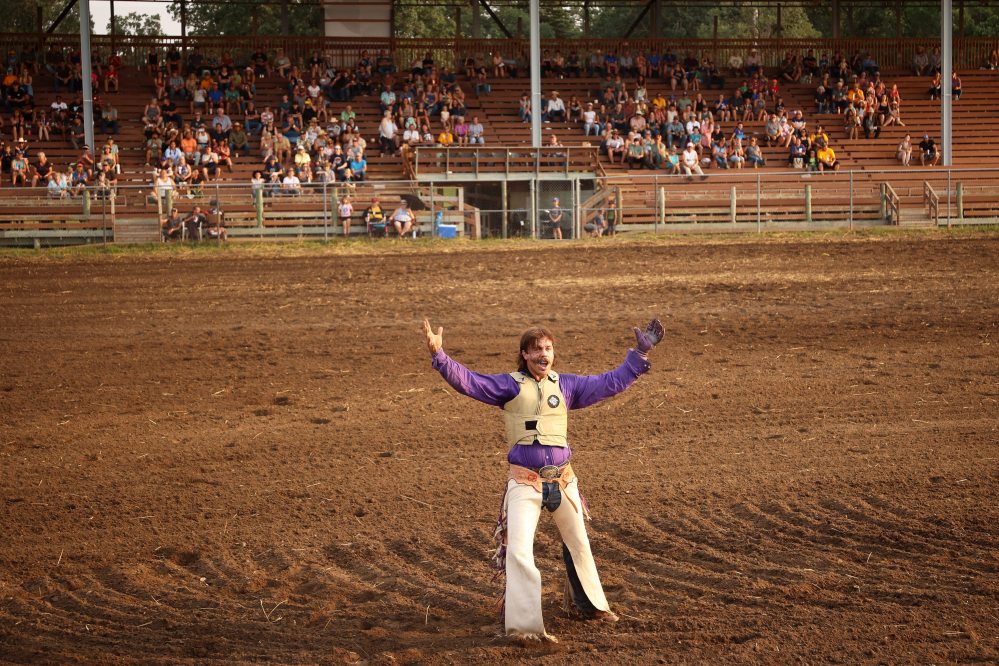
Cowboys embrace the thrill of the ride
Advertisement
Read this article for free:
or
Already have an account? Log in here »
We need your support!
Local journalism needs your support!
As we navigate through unprecedented times, our journalists are working harder than ever to bring you the latest local updates to keep you safe and informed.
Now, more than ever, we need your support.
Starting at $15.99 plus taxes every four weeks you can access your Brandon Sun online and full access to all content as it appears on our website.
Subscribe Nowor call circulation directly at (204) 727-0527.
Your pledge helps to ensure we provide the news that matters most to your community!
To continue reading, please subscribe:
Add Brandon Sun access to your Free Press subscription for only an additional
$1 for the first 4 weeks*
- Enjoy unlimited reading on brandonsun.com
- Read the Brandon Sun E-Edition, our digital replica newspaper
*Your next Free Press subscription payment will increase by $1.00 and you will be charged $20.95 plus GST for four weeks. After four weeks, your payment will increase to $24.95 plus GST every four weeks.
Read unlimited articles for free today:
or
Already have an account? Log in here »
AUSTIN — For some cowboys it’s like drugs, for others it’s all in a day’s ride.
It’s early in the evening at the agricultural arena in Austin on the first night of the Manitoba Threshermen’s Reunion & Stampede. The sun is orange and low in the sky. Four paramedics walk through a group of cowboys and turn up a staircase, where they stand by. An enclosure of white metal corrals surrounds the group of cowboys.
One cowboy wraps his arm in sports tape, reserved and silent, his head down. The young man, Corbin Boczkowski, has not said a word to anybody, though he has been here for the better part of an hour. He remains to himself, putting on an elbow brace to prevent his bicep from tearing.
Two horses are herded into a maze of metal fences nearby. The animals are unruly, going too fast, or turning abruptly and bumping into fences. As they go deeper through the maze, the room they had to circle around and trot shrinks. They stop and attempt to turn around when facing a narrow corridor, but a rodeo hand pushes the gate behind them, and the rear horse has no time to come backwards before the gate is closed.
When the horses are separated into chutes, the first, a biege, tall, healthy-looking beast stands calmly, and receives its saddle gracefully from the rodeo hands. In front of it, the brown, smaller horse is not calm. Each time it is touched, the horse explodes its hind leg into a thin metal wall to its rear. The sound of the hind kick goes off like a gunshot. Bang. Bang. The wall behind the horse is dented, discoloured, muddy. It receives a dozen more blows as the horse is strapped up. It will be ridden without a saddle.
Boczkowski looks down at the horse from beside the chute. He is wearing leather chaps over jeans, boots with laces that wrap several times above his ankle, a cushion on the back of his neck, an elbow brace around his bicep and forearm, sports tape over the elbow brace, and a cowboy hat.
“Are we ready yet? Can I start the rodeo?” the emcee of the event calls down.
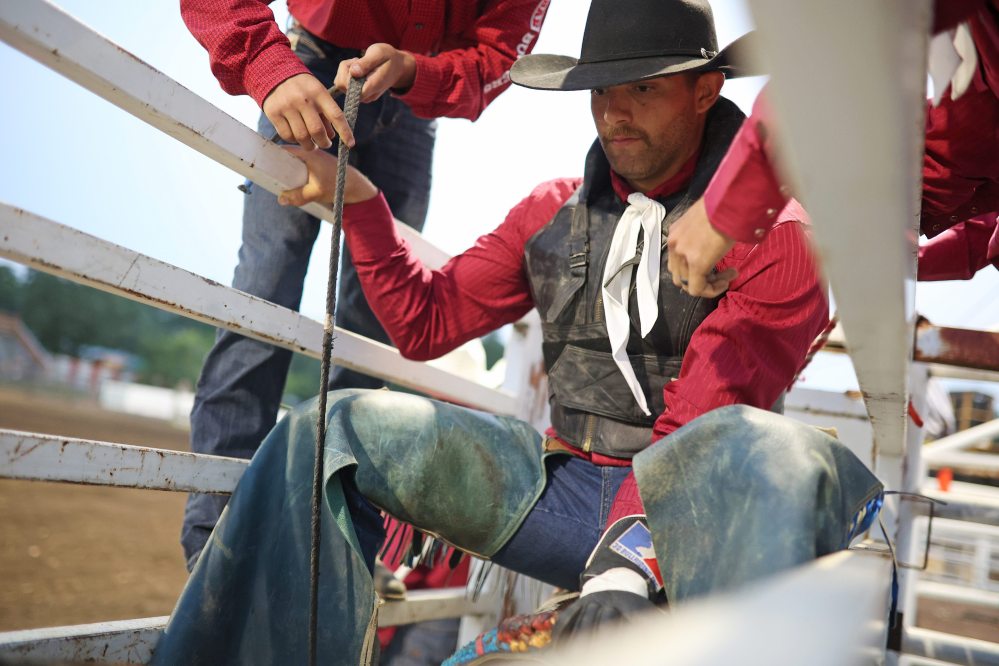
Boczkowski of Lethbridge, Alta., will be the first to go out. He mounts the brown horse. He leans over to tighten straps around its chest. Bang. Bang. With the help of four or five cowboys, Boczkowski leans back onto the horse until the nape of his neck is almost touching the hair of the horse’s rear. The horse twists and complains, nearly bucking already, and Boczkowski’s skull comes within a half foot of the metal chute before the event has begun.
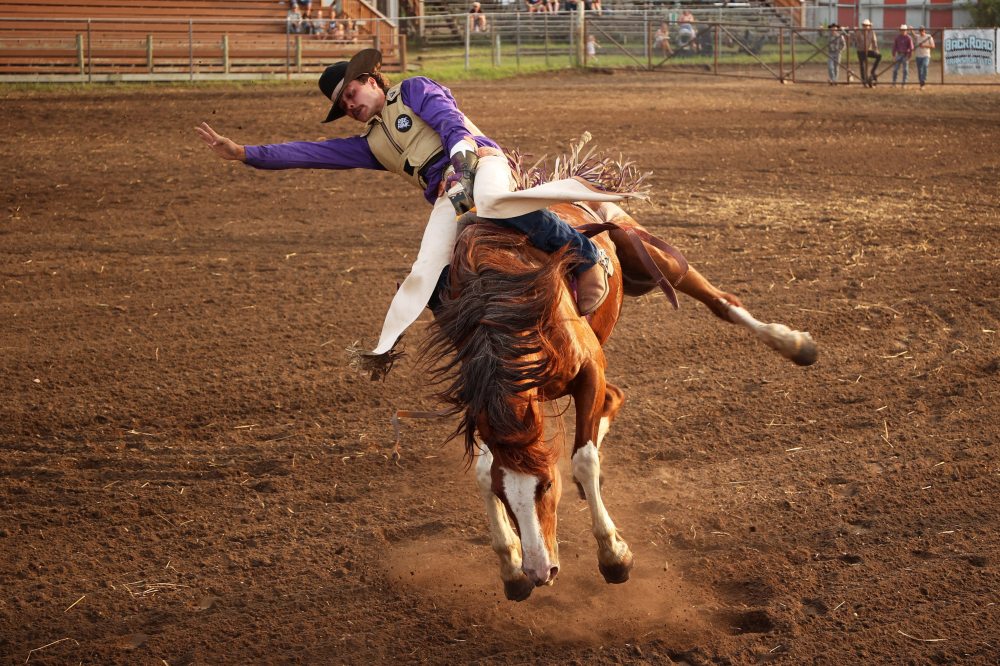
The gate opens, and atop twisting, bucking, kicking and thrashing, Boczkowski clears the chute clean, avoiding contact with the metal bars. The horse bucks into the arena, and Boczkowski stays with his chin tucked. “Once it gets to your chin then it can get your whole body out of whack,” he later says. Eventually the horse bucks him off, he lands in the dirt, escapes and the judges give him a 61.
Coming back into the cowboy’s den, Boczkowski shoots glances in all directions, looking every willing person in the eyes for the first time of the night. His hazel eyes are wide, thrilled, present. “Did I score? Oh, wow!” he says. He stands in the middle of the den. It’s the first time Boczkowski has spoken aloud, or interacted with any of the cowboys since strapping up nearly an hour before.
He then hops up on the shelf and speaks words of encouragement to a young man saddling up on a horse in a chute. “Stay with her now. Stay with her!” he says. He hops off the shelf, and while removing layers of protective gear, he describes what he’s feeling.
“It’s similar to doing drugs, because you get such an adrenaline rush from it you just keep wanting to do it,” he says, his voice clear and bright, his gaze steady. He gestures, he splashes his face with water, he changes his boots, he takes off his shirt, he moves around the den backwards and sideways without looking where he’s going.
“Can you hold this?” He takes a knife to the tape around his arm and slices it off.
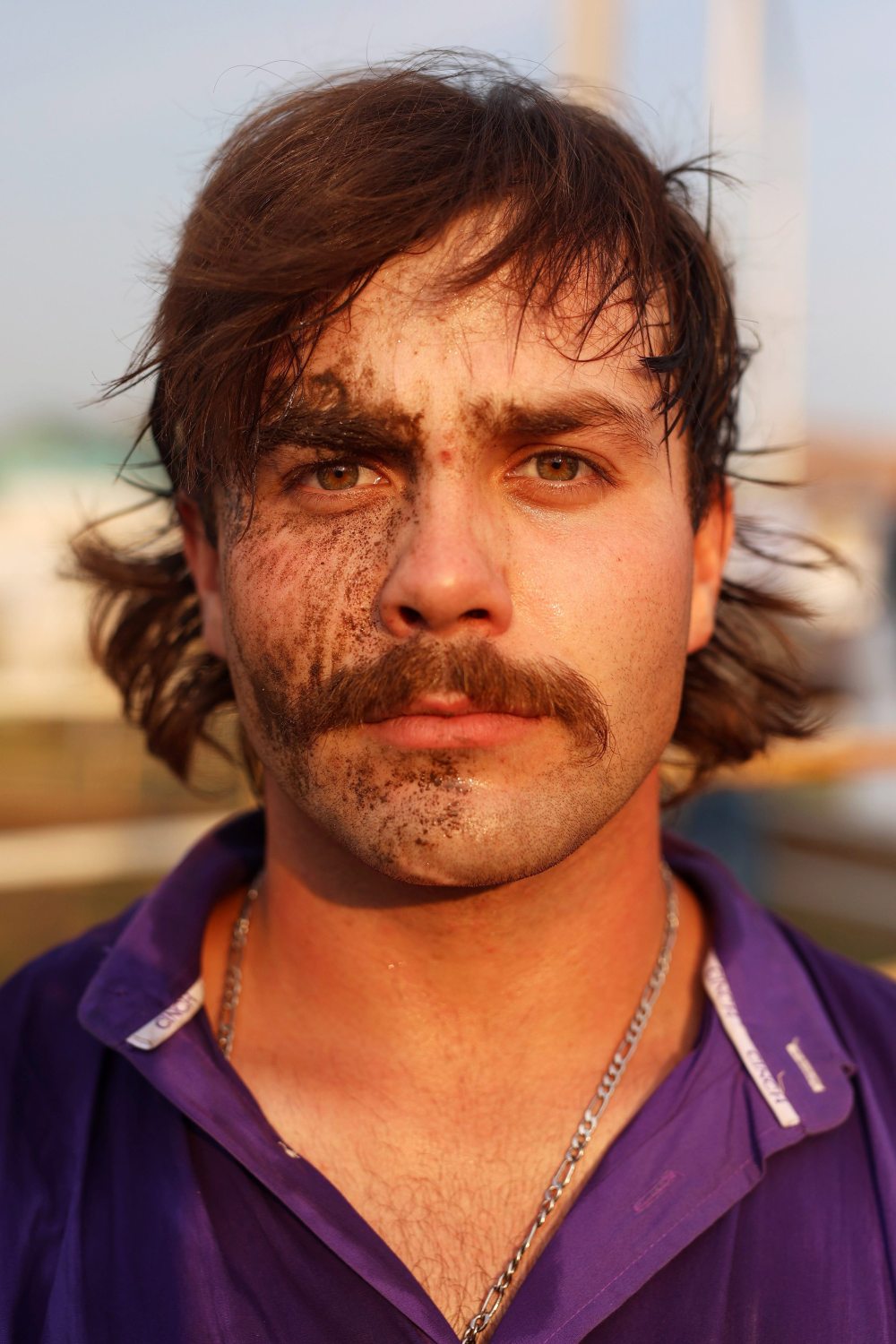
It’s been 10 weeks since the cowboy has ridden — a torn ligament in his knee from a horse kick forced 10 weeks of break. He’s not wasting time — Boczkowski said he would leave off that night to go to Brandon to ride again today. He has been riding for four years. He doesn’t wear helmets because it would affect his vision, he said.
The rodeo progressed to 14-year-old Gunner Armstrong of Shellbrook, Sask., the second-place finisher for junior steer riding at the Calgary Stampede this year, and the winner of the same competition at the Ponoka Stampede. A silent youth, Armstrong has been riding for seven years. He spent the time before his ride throwing high knees, and moved in and out of conversation with his father and friends. When it came time to go, he put on a helmet.
Coming back into the den, having scored a 71.5 in the junior steer riding competition, Armstrong was unremarkable. His voice remained quiet. His sentences were short. He had nothing to talk about, nothing to rave about. The ride “went well,” he said, and he was able to “flash her up a bit,” potentially raising his score by embellishing the thrashing like it was worse than it was. He said he no longer gets nerves — and it was believable.
“Even though he’s only 14 years old, he’s been on thousands of rides,” his father, Brandon, said. “He has rode in Vegas. He has rode in Calgary. He has rode everywhere that a kid his age could.”
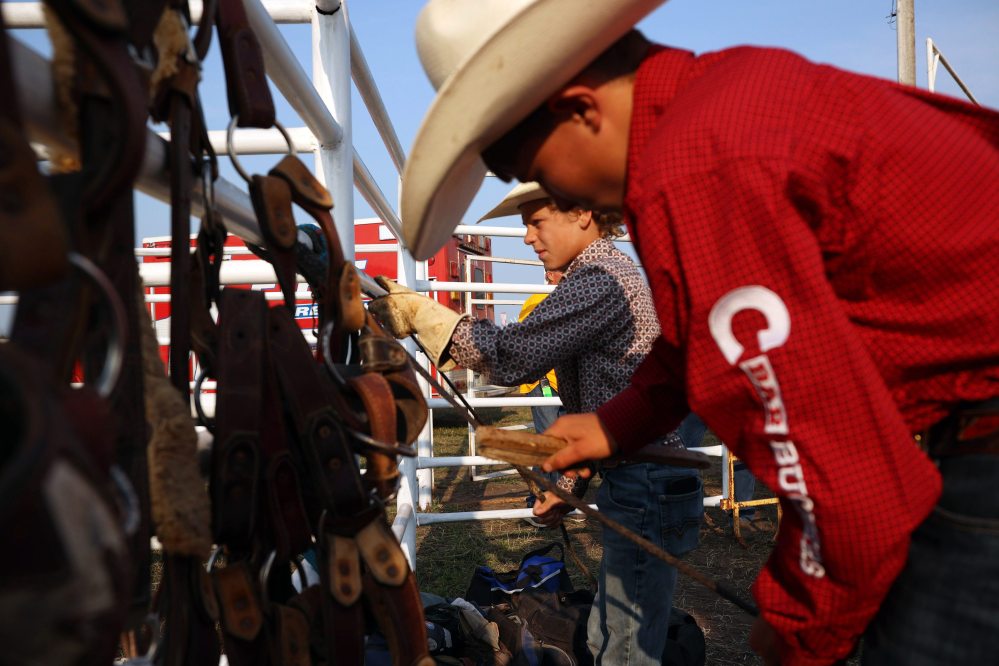
Armstrong uses a practice setup at the family’s home to prepare for rodeos. The young man does agility and strength training twice a week. He prepares as much as possible, because that is the best way to stay safe in a dangerous sport, his father said — “you gotta make sure you’re full cocked” coming into the rough side of the arena.
“We put a lot of time and effort into it,” his father says.
Austin fell dark as the end of the rodeo arrived. Arena lights glowed white light down on the dirt. Awaiting his turn in the final competition, Josia Ritter, 23, visiting from Germany, shifted his weight from foot to foot, back and forth, back and forth. It would be his first time ever riding a cow.
Ahead of him, riders were bucked off their animals, one after the other, their falls forming a countdown to his own. Ritter climbed over the gate and sat on his cow, a black animal with a set of horns, one curling forward and another curling downward. Ritter stood up, dodging the cow’s twists and shifts in the chute, and sat back down. It turned its head toward him, slipping a horn under the corral bar and nearly caught him.
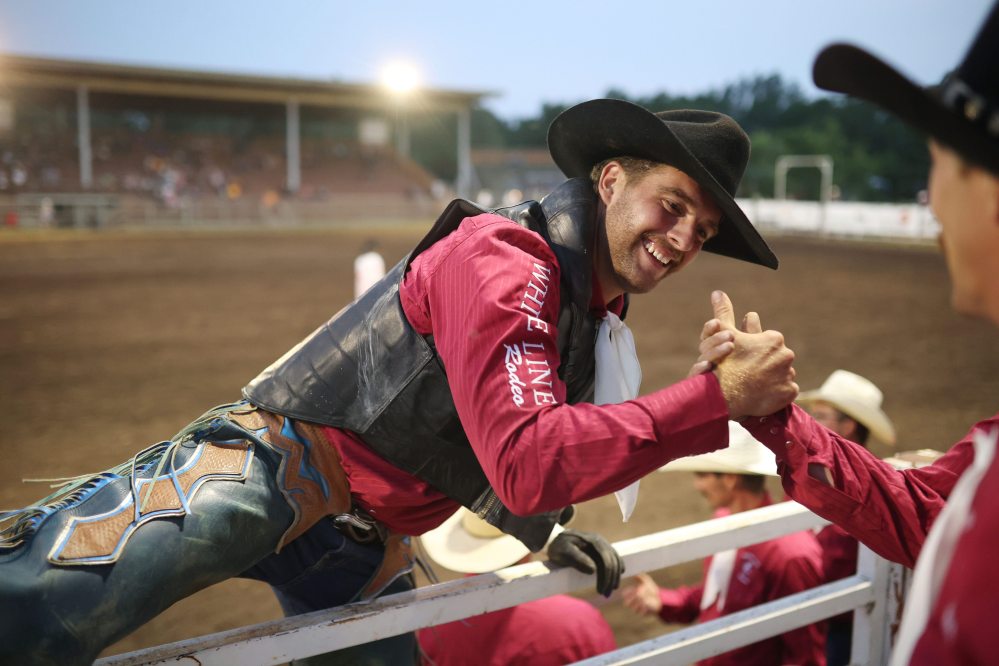
When the group of cowboys helping him mount the cow got him settled, Ritter’s gate opened, and his cow flew out into the arena in a straight line, racing away from the chute, bucking as it went. Seconds passed, and with a burst he was thrown off, landing in the dirt. Ritter go to his feet, the bullfighters stepped in and distracted the animal, and he paced like a conquerer towards the cowboy den with a wide smile, took his cowboy hat in a hand and thew it toward the other competitors. A number of friends, cowboys and cowgirls surrounded him with handshakes and congratulations when he returned. He did not score — and he did not care.
“It’s my first cow, I’m happy.”
» cmcdowell@brandonsun.com