
Manitoba Hydro’s energy plan set to be scrutinized
Advertisement
Read this article for free:
or
Already have an account? Log in here »
We need your support!
Local journalism needs your support!
As we navigate through unprecedented times, our journalists are working harder than ever to bring you the latest local updates to keep you safe and informed.
Now, more than ever, we need your support.
Starting at $15.99 plus taxes every four weeks you can access your Brandon Sun online and full access to all content as it appears on our website.
Subscribe Nowor call circulation directly at (204) 727-0527.
Your pledge helps to ensure we provide the news that matters most to your community!
To continue reading, please subscribe:
Add Brandon Sun access to your Free Press subscription for only an additional
$1 for the first 4 weeks*
- Enjoy unlimited reading on brandonsun.com
- Read the Brandon Sun E-Edition, our digital replica newspaper
*Your next Free Press subscription payment will increase by $1.00 and you will be charged $20.95 plus GST for four weeks. After four weeks, your payment will increase to $24.95 plus GST every four weeks.
Read unlimited articles for free today:
or
Already have an account? Log in here »
WINNIPEG — Manitoba Hydro is set to face questions and concerns over its plan for the province’s future energy needs, which includes proposed natural gas-powered turbines in Brandon and Indigenous-owned wind farms.
The Public Utilities Board, an arm’s-length regulator, will begin six weeks of hearings today into the 10-year blueprint and potential ways to satisfy electricity demand, while Hydro grapples with a projected energy shortfall, debt of $25 billion and aging infrastructure.
“The development plan reflects the best available information and analysis of how Manitoba Hydro can meet growing energy demand, while balancing factors we know are important to our customers, including cost, reliability and the environment,” Peter Chura, a spokesman for the Crown corporation, told the Winnipeg Free Press.
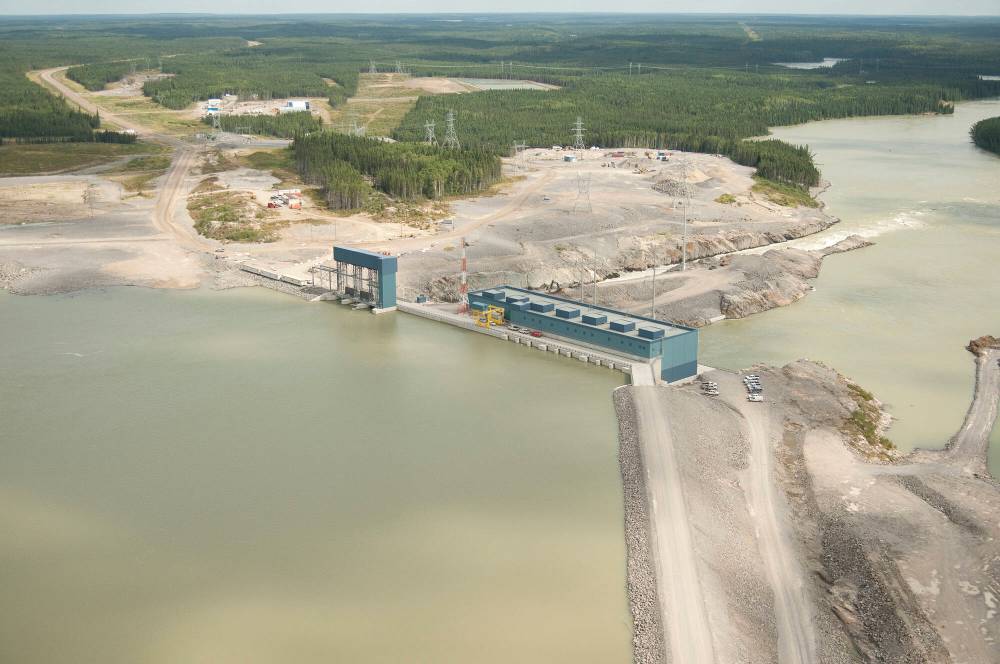
The Wuskwatim Generating Station is located on the Burntwood River, about 45 kilometres southwest of Thompson. (Manitoba Hydro)
“We are confident in our analysis and that we’ve appropriately balanced reliability, affordability, safety and risk.”
The PUB will later provide recommendations to the government on the proposed combustion turbines, which are expected to cost $3 billion, and an overarching 10-year integrated resource plan.
Seven parties were granted intervener status. Some, including the Consumers Coalition, will challenge Hydro’s analysis and justification for the turbines.
“Independent expert evidence suggests Manitoba Hydro’s plan falls short of best practice IRP (integrated resource plan) and may lead to building too much too soon,” Katrine Dilay, an attorney with the Public Interest Law Centre, which represents the Consumers Coalition, said in a statement, citing some of the findings of consultants retained by the coalition and the PUB.
“This means Manitoba Hydro’s proposed play may not be the most appropriate and least-cost option to meet Manitoba’s future energy needs.”
The coalition acts to protect the interests of residential customers.
Hydro has projected a shortfall in firm electricity capacity, potentially reaching 600 megawatts, by the end of 2030. The long-term plan aims to add about 1,760 megawatts with the goal of a net-zero grid by 2035.
The corporation wants to build three turbines at a plant in Brandon to produce 750 megawatts of power by 2030, alongside plans for Indigenous-led wind farms that will generate 600 megawatts by 2035.
“Manitoba needs new sources of electricity by 2030 to meet peak winter demand, and combustion turbines are the most reliable and cost-effective way to ensure we meet that demand,” Chura said.
“This backup capability is also essential for supporting Indigenous majority‑owned wind projects and navigating drought years.”
Hydro’s plan said the combustion turbines will run on low-carbon fuels when they become readily available, with remaining emissions offset by carbon credits.
The plan includes utility scale battery storage for up to five megawatts by 2034, and enhanced hydro generation to a minimum of 25 megawatts of capacity by 2029.
Energy-saving measures aim to reduce Manitobans’ usage by 860 megawatts by 2035.
Non-profit, volunteer-led Sustainable Brandon, another intervener, plans to propose “practical” renewable energy alternatives.
“As Brandonites, we will be the most affected by any emissions and related health risks from a new gas plant in Brandon,” the organization wrote to the PUB. “And, as customers and taxpayers, we will be required to join other Manitobans in paying for this new infrastructure … that, according to Manitoba Hydro, will sit idle most of the time.”
The plan calls for the turbines to be used up to five per cent per year. Chura said it is possible the turbines will operate more than that, depending on events such as drought.
Wa Ni Ska Tan, an alliance of Indigenous communities that has been granted intervener status, said in its application to the PUB it will explain how Indigenous rights holders will face added risks from “oversights” in Hydro’s public engagement process.
The Climate Action Team, which is not an intervener, supports wind power and battery storage proposals, but disagrees with Hydro’s analysis and justification for the turbines, said policy manager James Wilt.
The turbines would bring high greenhouse gas emissions and be a “massively expensive asset” that sits idle for most of the year, he added.
“The biggest question mark for us is if the PUB does issue strong recommendations for Hydro to redo this process or much of the process, whether the government will agree to those recommendations or not,” Wilt said.
The turbine proposal is based on the outcomes of more than two years of detailed work and comprehensive analysis, Chura said.
“In addition to Manitoba Hydro experts that understand our system, recognized third-party experts also reviewed and tested the analysis, and concluded it was consistent with industry best practice,” he said.
Chura said public engagement was “comprehensive.”
Finance Minister Adrien Sala, the minister responsible for Hydro, thinks the Crown corporation presented a strong plan.
“But of course (the) public review is about testing that plan, looking at the assumptions, examining alternatives and ensuring the plan will create reliable, affordable energy for Manitobans for years to come,” he said.
The proposed turbines were announced in November’s throne speech.
“We know we need reliable backstop energy during periods of peak demand. Those cycle turbines will ensure we do have access to that energy when we need it, and it will help to ensure that that energy is affordable as well,” Sala said.
Lauren Stone, the Tory party critic for Hydro, said the integrated resource plan should be guided by engineering, economics and reliability, not political direction or interference.
“The question is whether Manitoba Hydro is investing in the right projects and the most cost-effective way possible,” she said.
“Given Hydro’s financial position — $25 to $26 billion in debt — and placing the further financial burden of 12 per cent of rate increases on Manitobans, every dollar matters. We’ll be looking very closely at whether the corporation has thoroughly evaluated all available options, including opportunities to partner with the private sector where it makes financial and operational sense.”
» Winnipeg Free Press