
Munn backs call for policy change in wake of animal rescuer’s death
Advertisement
Read this article for free:
or
Already have an account? Log in here »
We need your support!
Local journalism needs your support!
As we navigate through unprecedented times, our journalists are working harder than ever to bring you the latest local updates to keep you safe and informed.
Now, more than ever, we need your support.
Starting at $15.99 plus taxes every four weeks you can access your Brandon Sun online and full access to all content as it appears on our website.
Subscribe Nowor call circulation directly at (204) 727-0527.
Your pledge helps to ensure we provide the news that matters most to your community!
To continue reading, please subscribe:
Add Brandon Sun access to your Free Press subscription for only an additional
$1 for the first 4 weeks*
- Enjoy unlimited reading on brandonsun.com
- Read the Brandon Sun E-Edition, our digital replica newspaper
*Your next Free Press subscription payment will increase by $1.00 and you will be charged $20.95 plus GST for four weeks. After four weeks, your payment will increase to $24.95 plus GST every four weeks.
Read unlimited articles for free today:
or
Already have an account? Log in here »
The director of the Brandon Humane Society is adding her voice to calls for stricter regulation of pets following the death of Amanda Nobiss on Sandy Bay Ojibway First Nation.
Lack of governance surrounding animal breeding and veterinary care has been ongoing for years, and the death this month stems from the problem that needs to be addressed, director Tracy Munn said in a phone interview on Thursday.
“I have been doing this 29 years in Canada, and it’s not getting better. It’s crazy. Actually, it’s getting worse,” she said. “There has to be policy change. We talk about this all the time.”
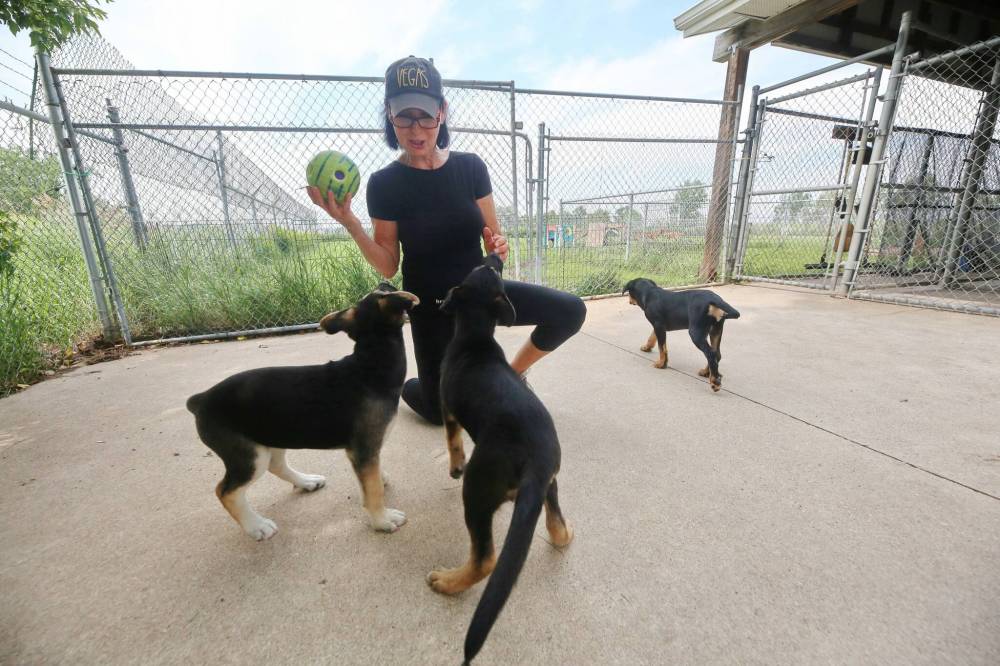
Brandon Humane Society director Tracy Munn plays with puppies Khaleesi, Sansa and Aria on a warm summer Thursday afternoon at the society’s outdoor enclosure for a bit of exercise. (Photos by Matt Goerzen/The Brandon Sun)
She said she agrees with the Winnipeg Humane Society’s call for more funding to be dedicated by the government toward rescue organizations to control overpopulation.
“The answer is spaying and neutering, and having bylaws,” she said. “And if you want to breed, OK, you can breed, but it’s $2,000 for a licence.
“Until they start doing that, there won’t be change.”
Munn said “backyard” breeders commonly ask to drop off animals at the shelter when unable to place their entire litter. Overpopulation gives way to other issues, she said.
The BHS works with a number of First Nation communities to help deal with overpopulated animals — up to 90 per cent of dogs received by the shelter originate from First Nations, she said.
However, similar issues are seen in Brandon, she added.
Nobiss, an animal rescuer, was found dead on July 17 at Sandy Bay, where she was visiting on behalf of K9 Advocacy Manitoba to pick up puppies from a resident. She appears to have been killed by dogs, the Manitoba First Nations Police Service said. Two male dogs were put down following the incident.
In February, a 56-year-old man died two days after he was attacked by five dogs on Keeseekoowenin Ojibway First Nation, south of Riding Mountain National Park. Also in February, a 22-year-old woman was significantly injured when four dogs attacked her on Ebb and Flow First Nation as she walked along a highway.
In 2024, a nine-year-old girl was attacked by 10 dogs in Norway House Cree Nation as she was out for a walk with her dog.
The Winnipeg Human Society on Tuesday put out a call to all three levels of governments to take “immediate action” and provide funding to address what it called a “public-health crisis” of animal overpopulation and lack of accessible veterinary care. More than 20 Manitoba animal rescue organizations signed onto the call.
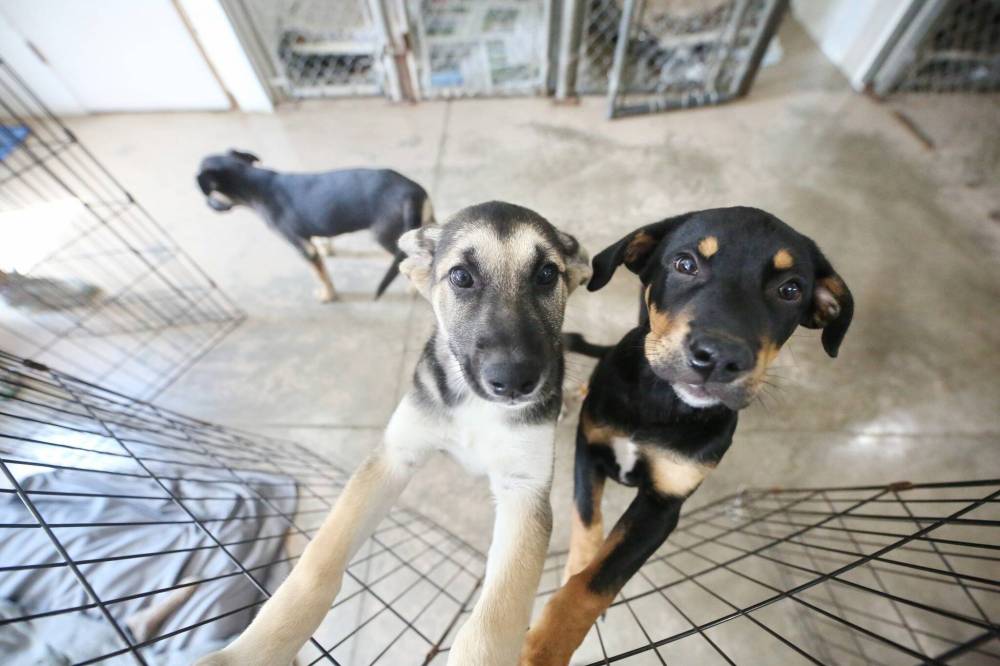
Puppies Sansa (centre) and Khaleesi (right) reach for some attention while their canine friend Aria (left) waits to go outside at the Brandon Humane Society on Thursday afternoon.
“No volunteer should ever have to risk their life filling a gap left by unresponsive public policy. The time to act is now,” the organizations wrote. “Every level of government needs to step up, work together, and fund real solutions.”
The organizations called for a roundtable discussion, as well as the creation of an advisory committee, more government funding and a focus on community-led solutions to address overpopulation and veterinary care gaps.
Caedmon Malowany, press spokesman for Agriculture Minister Ron Kostyshyn, said the Manitoba government is looking forward to sitting down for a roundtable meeting regarding animal overpopulation and veterinary care. The idea was brought forward by the Winnipeg Humane Society in its letter following Nobiss’s death.
“The minister’s office met with the Winnipeg Humane Society on Monday and had a productive conversation,” Malowany said. “The minister is committed to further meetings, conversations and engagement in partnership.
“Regarding their request for (the roundtable), I can say that the Province of Manitoba is in.”
He noted that Manitoba Agriculture has previously invested in a $1-million partnership to support mobile spay and neuter services, and supported a vaccination program that connected with 33 communities.
» cmcdowell@brandonsun.com, with files from Morgan Modjeski