
Wait times surge for MRI scans in Prairie Mountain
Advertisement
Read this article for free:
or
Already have an account? Log in here »
We need your support!
Local journalism needs your support!
As we navigate through unprecedented times, our journalists are working harder than ever to bring you the latest local updates to keep you safe and informed.
Now, more than ever, we need your support.
Starting at $15.99 plus taxes every four weeks you can access your Brandon Sun online and full access to all content as it appears on our website.
Subscribe Nowor call circulation directly at (204) 727-0527.
Your pledge helps to ensure we provide the news that matters most to your community!
To continue reading, please subscribe:
Add Brandon Sun access to your Free Press subscription for only an additional
$1 for the first 4 weeks*
- Enjoy unlimited reading on brandonsun.com
- Read the Brandon Sun E-Edition, our digital replica newspaper
*Your next Free Press subscription payment will increase by $1.00 and you will be charged $20.95 plus GST for four weeks. After four weeks, your payment will increase to $24.95 plus GST every four weeks.
Read unlimited articles for free today:
or
Already have an account? Log in here »
Wait times for MRI scans have surged in the Prairie Mountain Health region during the last two years.
Despite a campaign promise by the NDP in September 2023 to increase allied health professionals capable of administering diagnostic imaging in northern and rural areas, wait times for MRI scans have increased dramatically in Brandon and Dauphin.
Median imaging wait times tripled at Dauphin Regional Health Centre between 2024 and 2026, increasing from eight to 24 weeks, according to the province’s wait time dashboard.
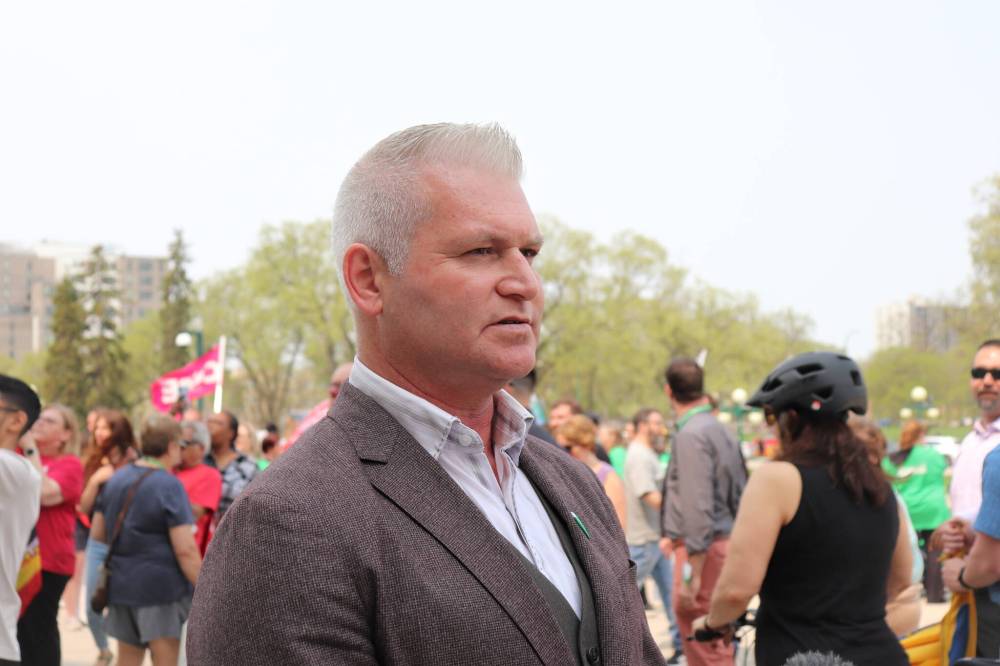
Jason Linklater, president of the Manitoba Association of Healthcare Professionals, says there are only 100 MRI technologists in the province, which he cites as a prominent reason for the high wait times. (Tyler Searle/Winnipeg Free Press files)
The Brandon Regional Health Centre median wait times for MRI scans more than doubled during the same period, from nine to 23 weeks, or just over five months.
The most recent provincial data show more than 19,000 people are waiting for a diagnostic imaging MRI across Manitoba, with more than 3,700 people waiting in the Prairie Mountain Health region.
Jason Linklater, president of the Manitoba Association of Healthcare Professionals, says these delays in diagnostic imaging could impact the whole health-care system.
“There’s a high percentage of decisions that physicians make that are based on diagnostic testing,” Linklater said in an interview Friday.
“It really is imperative that patients and Manitobans have access to the necessary tests to get treatment in a timely way,” he said.
An MRI — short for magnetic resonance imaging — is used to take pictures of soft tissues and organs inside the body by using a large magnet and radio waves, administered by a technologist.
According to Linklater, there are only 100 MRI technologists in the province, which he cites as a prominent reason for the high wait times.
“The constraint we’re describing is really a training and retention problem. If Manitoba does not train more (technologists) than the ones it has, we’re simply bidding against all of the other provinces for a shrinking pool of technologists,” he said.
Earlier this week, the province announced an additional 4,725 net new health-care providers since 2023, including 607 allied health professionals.
However, the term “allied health professional” includes 50 different job positions, ranging from lab and diagnostic technicians to physiotherapists and audiologists, according to Linklater.
A government spokesperson said in a written statement that 700 of the net new health-care staff were added to the PMH region but did not specify what kind of health-care providers were included in that figure.
In June, Doctors Manitoba issued a release identifying that the country’s longest MRI wait times are in Manitoba.
“Physicians are concerned about long wait times in Manitoba for diagnostic imaging, including MRI and CT, which have been among the longest in Canada for several years,” Doctors Manitoba said in a statement.
They also noted that the wait times might not be entirely accurate and could be longer than reported.
“Wait times reported by Manitoba Health do not include the period between when your physician first requests the test by fax and when the faxed request is entered into the Diagnostic Imaging computer system,” the statement said, citing a “major backlog” with diagnostic imaging central intake, which could add weeks or months to wait times.
Diagnostic imaging central intake is the singular point of entry for diagnostic imaging in the province, meaning it’s the first step for many patients starting the process to get an MRI, CT or ultrasound.
Shared Health has oversight of the program, and says they’re addressing the wait times through technological upgrades.
“Shared Health Diagnostic Services continues to actively expand access and improve diagnostic care delivery across regional networks,” a Shared Health spokesperson said in an email statement.
“A key driver of this effort is ongoing investment in innovative technology,” the statement said, referencing the Deep Resolve scanning device, which uses “AI-powered MRI software.”
“This advanced technology significantly enhances image resolution while drastically reducing scan times significantly,” the statement said.
The Deep Resolve technology was added to the Brandon hospital in January 2026, but Linklater says the issue remains in human resources.
“There certainly can be investment into an MRI machine, but there has to be someone to run that machine,” he said.
“The fix is not another announcement by government,” Linklater said. “It is a workforce plan in writing, and that includes having all of the different diagnostic professions at the table.”
The province in a statement said it is still managing a backlog from the former Progressive Conservative government.
“MRI volumes increased by roughly 18 per cent between 2019 to 2025, but the former government did not make the investments needed … to keep up with that growth,” the statement said.
“Since taking office in October 2023, we’ve been working to bring that backlog down by rebuilding the capacity that was lost.”
In 2022, Brandon hospital had the shortest MRI wait time since 2019 at six weeks.
» rgerrard@brandonsun.com