
Honey producers feel U.S. tariff sting
Advertisement
Read this article for free:
or
Already have an account? Log in here »
We need your support!
Local journalism needs your support!
As we navigate through unprecedented times, our journalists are working harder than ever to bring you the latest local updates to keep you safe and informed.
Now, more than ever, we need your support.
Starting at $15.99 plus taxes every four weeks you can access your Brandon Sun online and full access to all content as it appears on our website.
Subscribe Nowor call circulation directly at (204) 727-0527.
Your pledge helps to ensure we provide the news that matters most to your community!
To continue reading, please subscribe:
Add Brandon Sun access to your Free Press subscription for only an additional
$1 for the first 4 weeks*
- Enjoy unlimited reading on brandonsun.com
- Read the Brandon Sun E-Edition, our digital replica newspaper
*Your next Free Press subscription payment will increase by $1.00 and you will be charged $20.95 plus GST for four weeks. After four weeks, your payment will increase to $24.95 plus GST every four weeks.
Read unlimited articles for free today:
or
Already have an account? Log in here »
Manitoba honey producers are warning that 50 per cent U.S. tariff could leave millions of dollars of product looking for a new home.
The trade measure, which took effect Saturday following the breakdown of Canada-U.S. negotiations, is threatening to shut Canadian producers out of one of their largest export markets.
Producer Osee Podolsky said the impact could be significant as the tariff effectively makes selling into the U.S. market unprofitable for his operation.
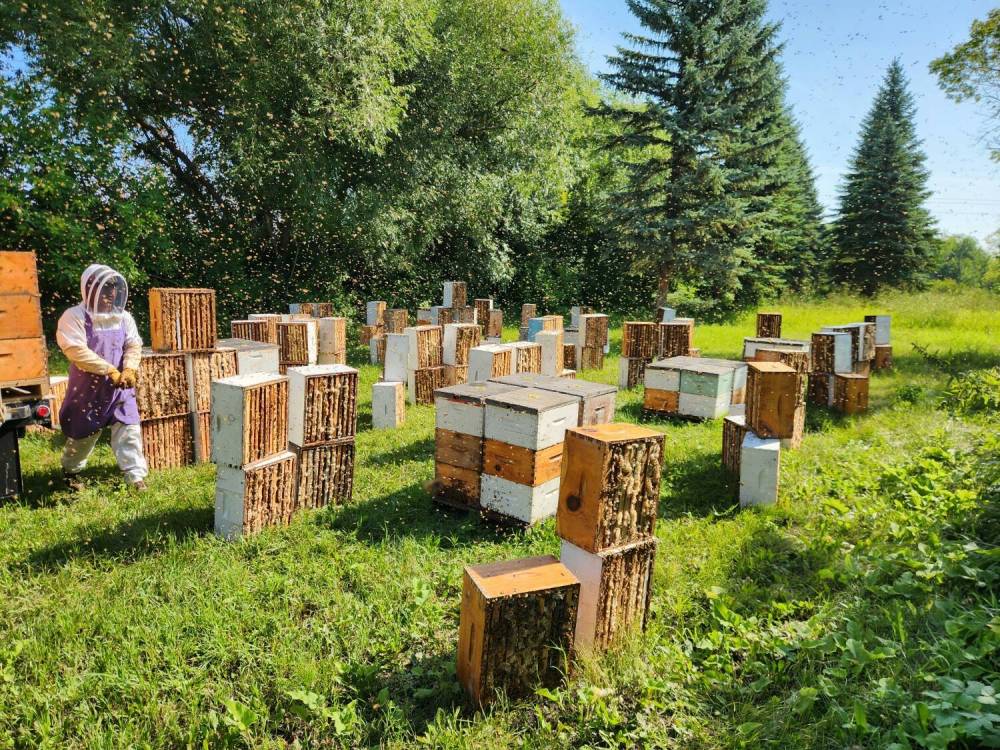
Podolsky Honey Farms employees check hives on the farm in Ethelbert. The company ships most of its product to the U.S. (Supplied)
“The potential financial impact could reach more than $1 million in lost sales, and we ship 90 per cent of our sales to the U.S.,” Podolsky, general manager of Ethelbert-based Podolsky Honey Farms, told the Sun.
“A tariff of 50 per cent, or any tariff for that matter, really leaves us no profitability in trying to sell honey because profit margins have been extremely thin in recent years.”
Natural honey is among a range of Canadian products now facing an additional 50 per cent U.S. duty.
Federal government trade data show Manitoba accounted for more than half of Canada’s honey exports last year, with about $28.7 million worth of honey shipped from the province. The U.S. was the largest destination for Canadian honey in 2025, taking 52.9 per cent of the country’s honey exports, valued at approximately $28.4 million.
The development has left producers weighing whether to stop shipping to the U.S., seek alternative international markets or encourage Canadians to consume more domestically produced honey, Podolsky said.
The company is now looking at how to redirect honey that would ordinarily have gone south of the border.
“Canada produces more honey than it consumes, making exports an important part of the industry,” he said. “About 30 per cent of Canadian honey production is typically exported because domestic consumption is not sufficient to absorb the country’s production.”
The United States, he said, has historically been the largest buyer, while Japan has also been a customer, although on a smaller scale.
Podolsky said one potential solution is to increase Canadian consumption and find more domestic buyers for Canadian-produced honey.
“If this honey is not able to be exported to the U.S., and we don’t see an increase in consumption, there will be a surplus of honey sitting in producers’ warehouses,” he said.
That surplus, he said, could eventually push prices lower as supply exceeds demand.
“There will be an oversupply versus demand for honey in Canada,” Podolsky said.
That concern comes at a particularly important time for producers, as the tariff has been imposed while honey crops are being harvested across the country.
Tim Wendell, co-owner of Wendell Estate Honey near Roblin, said his business would also be affected by the tariff.
“We will not be selling into the U.S. until the tariffs are removed as the cost of the tariffs is too great,” Wendell told the Sun.
The business operates through two companies — Wendell Honey, a farm that produces honey and sells bulk honey to packers, and Wendell Estate, a packaging company that puts a portion of its production into consumer-sized containers.
Together, the companies have sold between 10 and 12 per cent of their production to the U.S. in recent years.
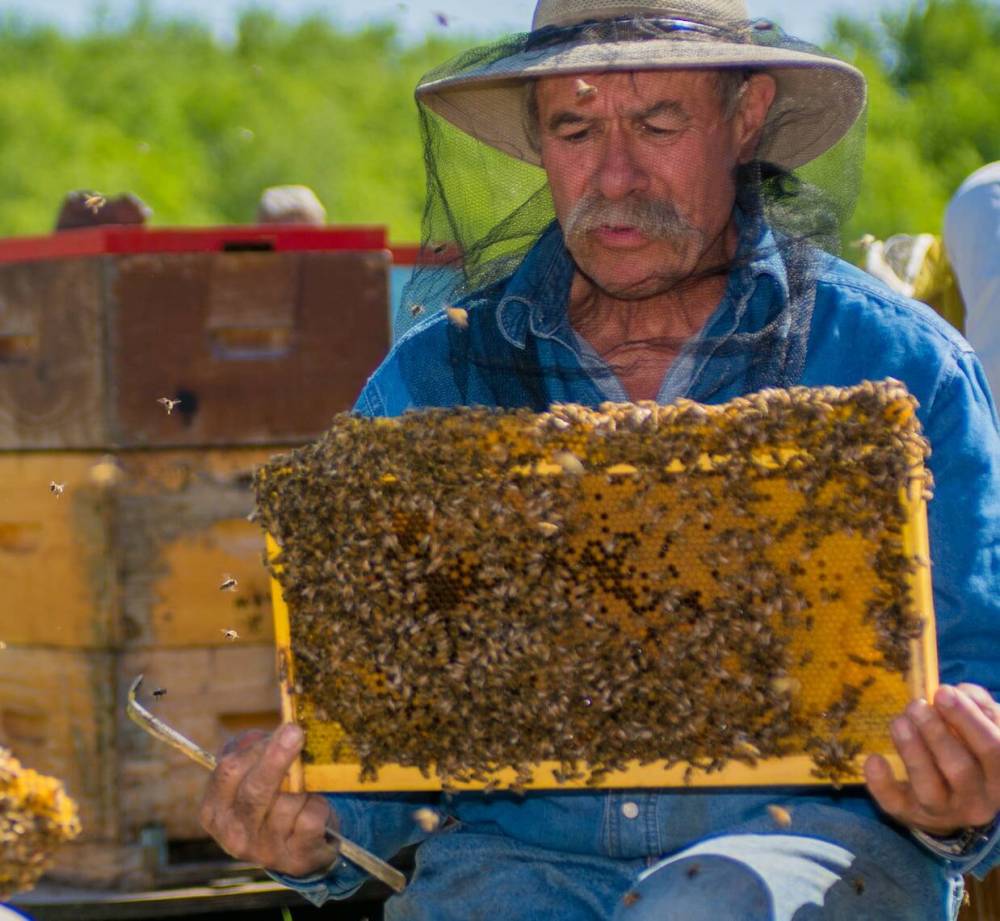
Tim Wendell, co-owner of Wendell Estate Honey, said it is too early to know exactly how the tariff will affect Canadian honey prices. (Supplied)
Until the tariff is removed, Wendell said the operation will actively seek other markets.
“The U.S. will import from countries other than Canada, which will leave a void somewhere else to be filled,” he said.
Unlike Podolsky Honey Farms, Wendell said the U.S. market represents a much smaller share of his operation’s production and he does not currently expect the tariff to threaten the farm’s ability to maintain its colonies, employ workers or invest in equipment over the next couple of years.
He said it is too early to know exactly how the tariff will affect Canadian honey prices.
“It is unfortunate that this tariff was put in place just as honey crops are being harvested across Canada as this will seriously affect some producers’ cash flow over the coming months,” he said.
Wendell also noted that western Canadian honey producers are facing lower-than-average production this season, making the tariff an additional source of uncertainty.
Podolsky said the Canadian government needs to continue pursuing a trade agreement with the U.S. but should also consider ways to strengthen the domestic market.
“Hopefully, a trade agreement can be agreed upon between both countries,” he said.
If that does not happen, he said the government should consider incentives and promotional efforts to encourage Canadians to purchase more Canadian honey.
“If we’re consuming honey that’s imported from offshore, it’s not helping the Canadian beekeeper,” Podolsky said.
The federal government has said it is responding to the broader U.S. tariffs with measures to support affected Canadian businesses and workers, while Canada has pledged a dollar-for-dollar response to the American tariffs.
» aodutola@brandonsun.com
» X: @AbiolaOdutola