
Better back to school breakfasts
Advertisement
Read this article for free:
or
Already have an account? Log in here »
We need your support!
Local journalism needs your support!
As we navigate through unprecedented times, our journalists are working harder than ever to bring you the latest local updates to keep you safe and informed.
Now, more than ever, we need your support.
Starting at $15.99 plus taxes every four weeks you can access your Brandon Sun online and full access to all content as it appears on our website.
Subscribe Nowor call circulation directly at (204) 727-0527.
Your pledge helps to ensure we provide the news that matters most to your community!
To continue reading, please subscribe:
Add Brandon Sun access to your Free Press subscription for only an additional
$1 for the first 4 weeks*
- Enjoy unlimited reading on brandonsun.com
- Read the Brandon Sun E-Edition, our digital replica newspaper
*Your next Free Press subscription payment will increase by $1.00 and you will be charged $20.95 plus GST for four weeks. After four weeks, your payment will increase to $24.95 plus GST every four weeks.
Read unlimited articles for free today:
or
Already have an account? Log in here »
September is “Better Breakfast Month,” a reminder that a good school day starts with a good breakfast. Vanessa Hamilton, a registered dietitian and a healthy living facilitator with Prairie Mountain Health, shares some expertise on getting the good stuff on the breakfast table.
Hamilton says after a night of fasting, a good breakfast is fuelling the tank at the start of the day.
“Nourishing our body helps protect against infections and chronic diseases such as diabetes. A nourished mind supports our mood, attention, and memory. We tend to get tired and irritable when our fuel is low and breakfast gives our brain the boost it needs after sleeping,” she says.
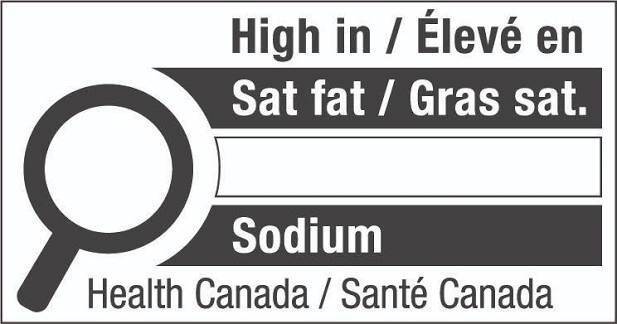
Health Canada has implemented a new front of package nutrition symbol making it easier for consumers to quickly identify if a product is high in sugar, sodium, and/or saturated fat, your guide to better nutrition. (Canada Health graphic)
A balanced breakfast is marked by variety with a whole grain, a protein, and a vegetable or fruit. She especially encourages including a vegetable or fruit. According to the Canada Food Guide, juice is not considered a fruit or vegetable serving due to the high sugar content and lack of nutrients such as fibre.
Each component provides support for a different need including energy, growth, repair, and immunity.
“Dietary fats help to absorb nutrients such as the fat-soluble vitamins A, D, E, and K. Fat is necessary for brain development in toddlers and it’s needed to help children grow and develop,” she says.
“Unless it’s specified by a healthcare provider like a doctor, it’s generally not recommended to have a low-fat diet for children.”
Breakfast can boost dietary fibre, a nutrient most Canadians are short on. Product labelling will guide you. Ingredients are listed from most to least by weight.
“Fibre is needed for overall health to protect against diseases and keep us healthy. When choosing a cereal or bread, look for the word ‘whole,’ such as ‘whole grain wheat flour’ as the first ingredient. It’s going to have more fibre than a product that just has wheat flour in it,” she says.
If sugar is listed first, the product will be high in sugar.
She says a balanced meal could include cottage cheese, a homemade carrot muffin, and a sliced orange or whole grain French toast with strawberries and a hard boiled egg.
All nutritious foods can be part of a balanced breakfast, not just traditional breakfast items. She suggests fruit or vegetables with leftovers such as pizza or a breakfast bowl with brown rice or quinoa, tofu, and vegetables.
Meal times should be adapted for ages and stages. Parental patience is the key with toddlers learning how to eat and grow in independence.
“It’s really normal for toddlers’ eating to be quirky, erratic, picky and messy … but this stage shall pass,” she says.
Children aged one to five are at higher risk of choking on certain foods, so avoid whole and pieces of nuts and seeds and sticky foods like fruit leather. Foods can be modified for safety. For example, remove pits from peaches and cut them in thin slices. Tortillas and naan bread should be cut or torn into small pieces and soft bread should be toasted and cut into strips.
Hamilton says that elementary aged kids are better able to sit at the table and can clearly say “yes, please” or “no, thank you” to what’s being offered.
“It’s the parents’ and caregivers’ role to continue providing structure. Not letting your child graze on foods and drinks except water in between meals and snacks will help them have an appetite for the next meal,” she says.

Vanessa Hamilton, a healthy living facilitator with Prairie Mountain Health, shares top tips for a good breakfast. (Prairie Mountain Health)
That can start in the evening before bedtime with consistent meal and snack times.
“Children thrive with structure, so have supper at a consistent time, say 5 or 6 o’clock. Maybe the child needs a light snack around 8 p.m., but then just let it stop there. A light snack like berries and yogurt is fine in the evening, but eating too much could disrupt sleep, leaving them without a good appetite in the morning,” she says.
One mealtime approach Hamilton suggests is the “Division of Responsibility,” coined by registered dietitian and family therapist Ellyn Satter, which states that it’s the parent’s or caregiver’s role to decide what, when and where to feed children, and it’s the child’s role to decide how much and whether to eat the foods offered. This adaptable idea helps parents relax into the knowledge that appetites change from day to day and encourages children to pay attention to their own hunger and satiety signals.
“It creates a pleasant eating environment with no pressure to eat, such as making children take an extra bite or finish everything on their plate because when eating is forced, that’s when nutrition does suffer,” she says.
Middle- and high-schoolers are flying through big developmental changes including changes to sleep patterns, becoming night owls, wanting to sleep later in the morning instead of getting up early for breakfast. A nutritious “grab and go” like single-serve yogurt, cheese strings and fresh fruit, or even a peanut butter and banana sandwich will fuel their day.
Hamilton says planning ahead takes the guesswork out of breakfast, helps to reduce food waste and saves money. Strategies look like boiling a few days’ worth of eggs, prepping overnight oats, or batch-cooking pancakes, muffins, breakfast burritos or granola bars for the freezer.
“Also, I think it’s important to involve children in the planning and preparation and cooking of family meals, giving them food skills later in life,” she says.
And finally, a good breakfast deserves attention at the table.
“Put away toys and turn off screens because if kids are distracted at meal times, they’re not wanting to eat and not paying attention to their appetite and fullness cues,” says Hamilton. “It’s really important to limit distractions at meal times.”
» wendyjbking@gmail.com