
Alternative schooling enrolment shoots up
Advertisement
Read this article for free:
or
Already have an account? Log in here »
We need your support!
Local journalism needs your support!
As we navigate through unprecedented times, our journalists are working harder than ever to bring you the latest local updates to keep you safe and informed.
Now, more than ever, we need your support.
Starting at $15.99 plus taxes every four weeks you can access your Brandon Sun online and full access to all content as it appears on our website.
Subscribe Nowor call circulation directly at (204) 727-0527.
Your pledge helps to ensure we provide the news that matters most to your community!
To continue reading, please subscribe:
Add Brandon Sun access to your Free Press subscription for only an additional
$1 for the first 4 weeks*
- Enjoy unlimited reading on brandonsun.com
- Read the Brandon Sun E-Edition, our digital replica newspaper
*Your next Free Press subscription payment will increase by $1.00 and you will be charged $20.95 plus GST for four weeks. After four weeks, your payment will increase to $24.95 plus GST every four weeks.
Read unlimited articles for free today:
or
Already have an account? Log in here »
WINNIPEG — Independent schools are preparing to welcome a record number of students as more families pay for faith-based instruction and secular alternatives.
The overwhelming majority of Manitoba children — 200,000 — are starting in the public school system this fall. Since 2000, the percentage of students enrolled elsewhere — in homeschools, funded and non-funded independent schools — has nearly doubled, to 12 per cent from seven per cent.
“If money was no object, we could fill dozens and dozens more classrooms with the demand for independent education,” said Andrew Micklefield, executive director of the Manitoba Federation of Independent Schools, who is a former Tory government house leader.
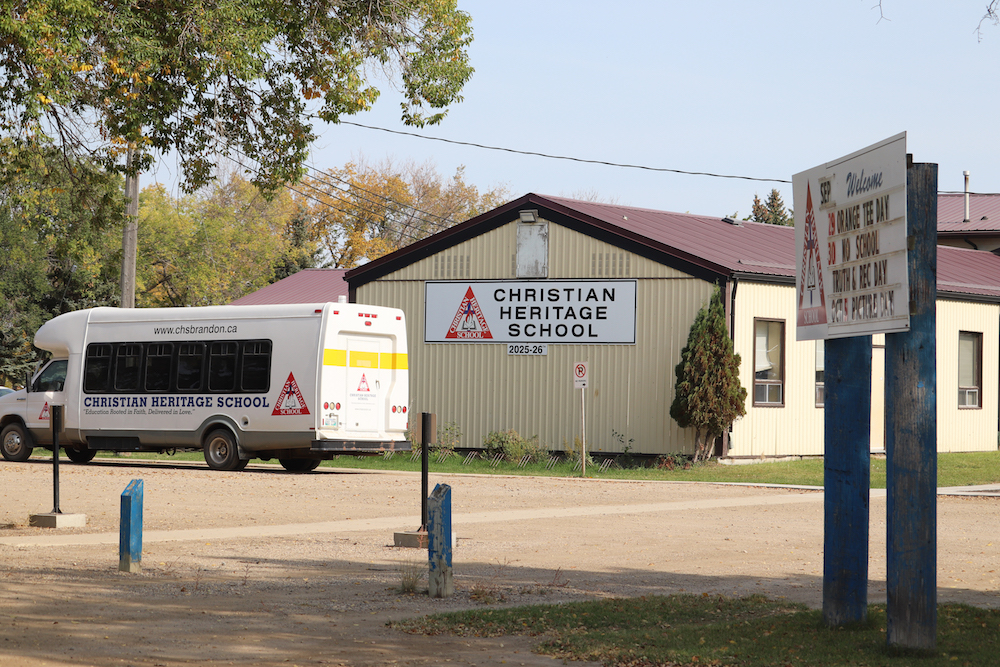
Micklefield said many of his colleagues have waitlists with hundreds of names because they don’t have enough space or staff to meet the interest.
The executive director called last year’s enrolment statistics “staggering.”
Funded independent schools, which are typically non-profit entities that employ certified teachers to deliver provincial curriculum and receive some public funding to complement tuition and fundraising revenue, added 658 students.
At the same time, 564 fewer kids registered in the public system that is more than nine times its size, with nearly 700 schools located in Manitoba.
“We’re not a protest against public education,” Micklefield said, adding that he’s a firm believer in giving parents options.
He noted that independent schools have been a part of Manitoba’s education landscape for more than 200 years and the reasons parents register their children in them are as varied as the schools themselves.
The federation has members that share campuses with places of worship, a university and a farm, among other unique models.
Funded independent schools registered about 18,000 students, about a tenth of the public school population.
Homeschools taught about 5,500 kids while non-funded independent schools registered approximately half that number.
For Paris Semansky of People for Education, Manitoba’s enrolment trends are worthy of further investigation.
“It behooves us to not look away when we get useful information like this,” said the co-leader of the charity dedicated to improving Canadian public schools through research, policy analysis and community engagement.
“What is it telling us about what’s working and what’s not working about the promise of public education?”
People for Education defines that promise as a commitment to ensuring every child, regardless of income, birthplace, race, ethnicity, religion or learning needs, obtains a high-quality education that prepares them for adulthood.
Semansky said it’s worthwhile to consider what kinds of schools are growing, if Manitoba’s reliance on local property taxes to fund education is a contributing factor and individual rationale for leaving the public system.
One former public school parent said she got fed up with the discontinuation of high-stakes exams and feeling like her division had misplaced priorities.
“It honestly broke my heart,” said the mother, who agreed to an interview on the condition of anonymity to protect her two children.
“I just didn’t feel that (public school) was adequately preparing my children for any future that they might want.”
Small frustrations about the widespread need for after-hours tutoring in her social circle and administrators barring homemade baked goods — at one point she was told to only send pre-packaged items with nut-free logos in student lunches — piled up over time, she said.
Education Minister Tracy Schmidt was unavailable for an interview Friday, but her office issued a statement that indicated ensuring all students “have access to the best possible education” is her top priority.
It touted the fact the NDP government has overseen every division receiving a funding increase since the last election, in addition to topping up dollars for the independent school system.
Public schools are receiving $51 million in new operating money this school year.
Nearly $17 million was earmarked for independent schools as part of a longtime funding agreement.
The group receives 50 per cent of public school net operating expenditures from two years previous to the current funding year. These schools also receive curriculum support, but they do not get any funding for capital expenses.
Lillian Klausen, president of the Manitoba Teachers’ Society, said the sizable top-up for independent schools this year was disappointing because public schools, which cannot raise money via tuition, are cash-strapped.
Klausen said the union representing roughly 17,000 public school teachers is in favour of a review of “disproportionate” funding of independent schools.
As far as the leader of the Manitoba Federation of Independent Schools is concerned, his members are “the best deal going in education for the government.”
“We are saving them huge money and that’s rarely recognized,” said Micklefield, a former independent school principal and father of children who graduated from the alternative system.
The education department’s latest finance report shows an average of $16,493 was budgeted per public school student last year.
» Winnipeg Free Press