
Plan for weather disruptions, expert tells chamber
Advertisement
Read this article for free:
or
Already have an account? Log in here »
We need your support!
Local journalism needs your support!
As we navigate through unprecedented times, our journalists are working harder than ever to bring you the latest local updates to keep you safe and informed.
Now, more than ever, we need your support.
Starting at $15.99 plus taxes every four weeks you can access your Brandon Sun online and full access to all content as it appears on our website.
Subscribe Nowor call circulation directly at (204) 727-0527.
Your pledge helps to ensure we provide the news that matters most to your community!
To continue reading, please subscribe:
Add Brandon Sun access to your Free Press subscription for only an additional
$1 for the first 4 weeks*
- Enjoy unlimited reading on brandonsun.com
- Read the Brandon Sun E-Edition, our digital replica newspaper
*Your next Free Press subscription payment will increase by $1.00 and you will be charged $20.95 plus GST for four weeks. After four weeks, your payment will increase to $24.95 plus GST every four weeks.
Read unlimited articles for free today:
or
Already have an account? Log in here »
Business owners should prepare for the possibility that severe weather could disrupt their operations even when their own buildings escape major damage, a climate resilience expert told the Brandon Chamber of Commerce on Thursday.
Emilia Cameron of the Institute for Catastrophic Loss Reduction told attendees at the chamber’s September luncheon that the recent flooding and heavy rainfall across Manitoba affected several businesses either directly or indirectly.
“Businesses need to prepare not just for direct damages to buildings, but for wide disruptions that can prevent them from operating,” Cameron said at the Victoria Inn.
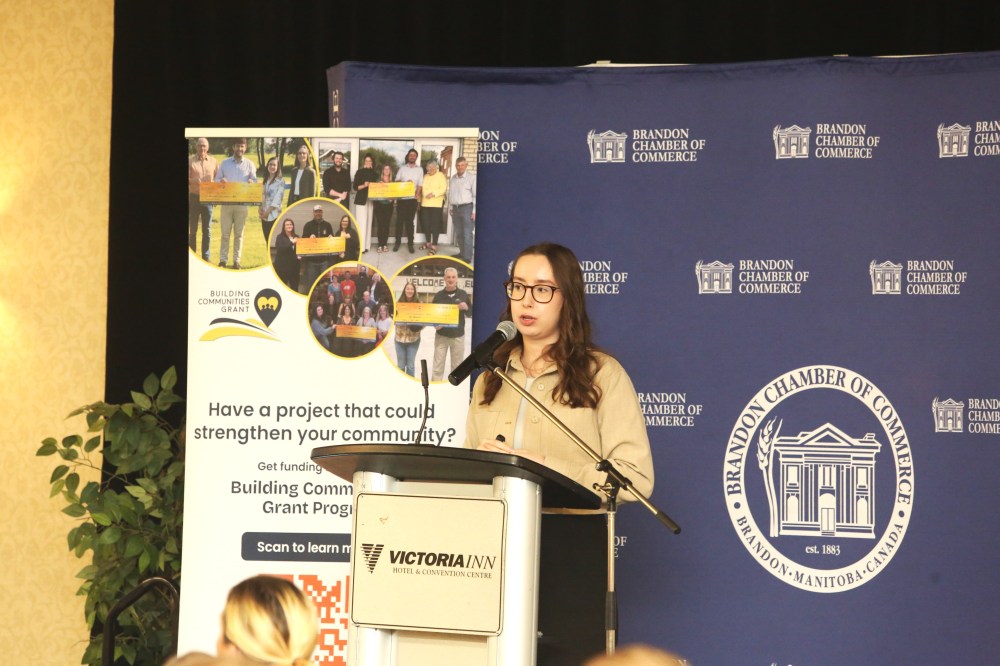
“Road closures, power outages, damaged infrastructure, internet failures and employees being unable to reach work can all bring operations to a standstill.”
Supply chains can also be affected when suppliers cannot reach their customers, she said.
The message comes after flooding affected several Manitoba communities this year, with states of emergency declared in several areas across the Westman region.
Cameron said business owners should begin by assessing the hazards they face and discussing their coverage and vulnerabilities with insurance providers and local governments.
The institute’s free Open for Business disaster planning toolkit is designed to help small and mid-sized companies prepare for emergencies and other interruptions, she said.
The resource includes a 10-question self-assessment, a business continuity plan and a property protection plan.
Business owners and managers should identify the functions their companies cannot operate without and determine how long they could survive if those functions were interrupted.
“A business should also identify key employees, suppliers, vendors, equipment and services, while keeping contact information accessible if normal computer systems or buildings become unavailable,” she said.
“It’s important to choose a team or a person to help lead out this plan.”
Businesses should consider alternatives before they are needed, including temporary locations, working from home, backup communications and alternate suppliers, she said.
Physical protection does not always require major spending, Cameron said. For businesses concerned about heavy rain, she recommended checking gutters and roof drainage systems, cleaning them regularly and trimming nearby trees to prevent blockages.
The larger concern, she said, is understanding the chain of dependencies that keeps a business operating.
Cameron said preparedness should not be treated as a one-time exercise. Businesses should review their plans after an emergency, identify what worked and make changes as circumstances evolve.
“Don’t wait for the next disaster to start planning,” Cameron said. “Take that assessment, find out where your gaps are, pick one or two, and start there and improve them.”
The goal, she said, is not to predict exactly when or where the next severe weather event will occur, but to ensure businesses understand what they depend on and what they will do if those resources become unavailable.
“You may not be able to prevent that next natural disaster from occurring,” Cameron said. “But you can take action to reduce the damages, limit the disruption and give your business a better chance of staying open.”
The topic was particularly relevant following the recent flooding in Brandon, Chamber president Emilio Brown said after the event.
“We had a flooding that actually happened recently in our city,” Brown told the Sun. “This is to raise awareness for that, for folks to be ready and be proactive.”
While flood protection measures helped reduce the impact in Brandon, Brown said some businesses were still affected by seepage.
The chamber does not yet have an estimate of the economic losses suffered by businesses during the recent flooding, Brown said, as insurance claims are still being processed, and data is being collected.
» aodutola@brandonsun.com
» X: @AbiolaOdutola