
Trump defends Iran war in address to UN General Assembly
Advertisement
Read this article for free:
or
Already have an account? Log in here »
We need your support!
Local journalism needs your support!
As we navigate through unprecedented times, our journalists are working harder than ever to bring you the latest local updates to keep you safe and informed.
Now, more than ever, we need your support.
Starting at $15.99 plus taxes every four weeks you can access your Brandon Sun online and full access to all content as it appears on our website.
Subscribe Nowor call circulation directly at (204) 727-0527.
Your pledge helps to ensure we provide the news that matters most to your community!
To continue reading, please subscribe:
Add Brandon Sun access to your Free Press subscription for only an additional
$1 for the first 4 weeks*
- Enjoy unlimited reading on brandonsun.com
- Read the Brandon Sun E-Edition, our digital replica newspaper
*Your next Free Press subscription payment will increase by $1.00 and you will be charged $20.95 plus GST for four weeks. After four weeks, your payment will increase to $24.95 plus GST every four weeks.
Read unlimited articles for free today:
or
Already have an account? Log in here »
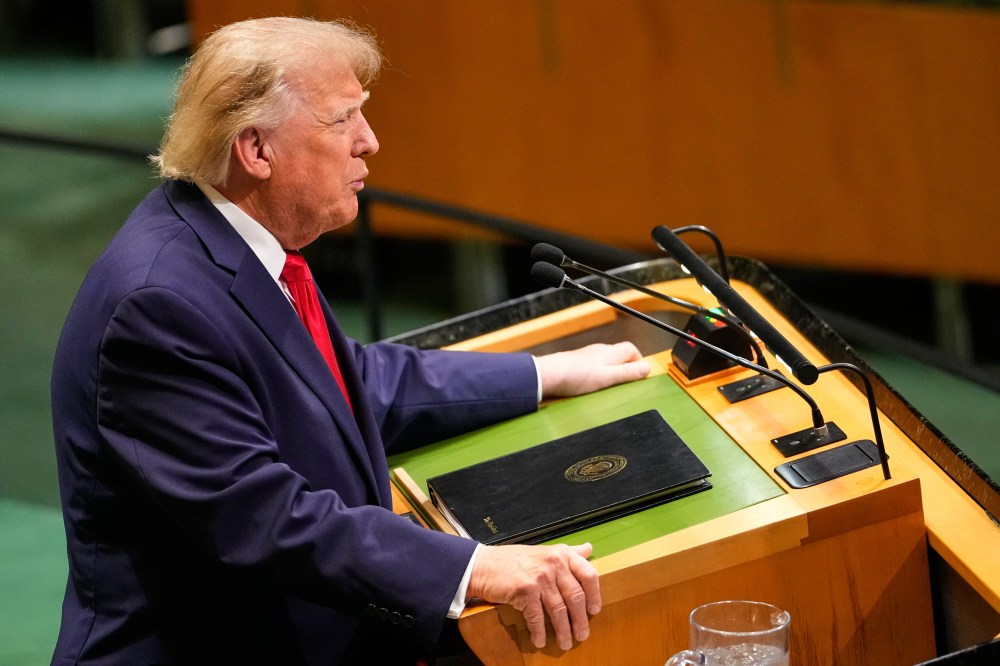
UNITED NATIONS – U.S. President Donald Trump told the United Nations General Assembly on Tuesday he has a choice to make on Iran: negotiate a deal or “annihilate the Islamic Republic.”
In a wide-ranging speech, Trump defended his war on Iran and boasted of American strength, claiming that “while others have talked, I have acted.”
He celebrated the U.S. military operation to oust Venezuelan President Nicolás Maduro earlier this year and a new agreement to expand the American military presence in Greenland, which came after his threats of annexation.
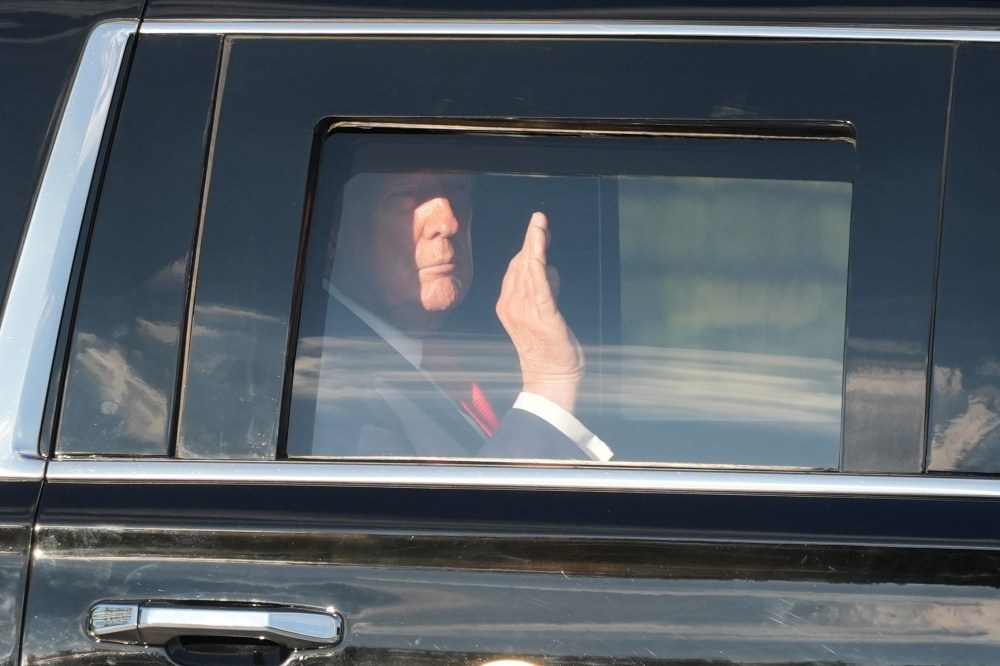
But those actions have upended U.S. relationships with other nations, including traditional allies. Many of those allies have used the United Nations forum to call for a return to international law.
This 81st Session of the United Nations General Assembly is taking place as the world grapples with oil supply shocks and rising prices driven by the closure of the Strait of Hormuz, and under the shadow of Trump’s constant attacks on multilateralism.
Canada, like most countries, has not been able to escape the geopolitical effects of Trump’s erratic deployment of military force and tariffs.
Prime Minister Mark Carney said one of the shared challenges of the moment is a multilateral system that doesn’t reflect the times and cannot respond to them.
“But at the same time, the need for multilateral co-operation is very much alive,” Carney told reporters on Tuesday.
Carney — who has emerged in recent weeks as a key global champion of multilateralism and alliances in the face of Trump’s repeated attacks — said no one country, no matter how powerful, can manage the world’s challenges alone.
“Co-operation, therefore, is not an act of idealism. It is a practical necessity,” he said. “And the question is not whether multilateralism can survive but how it must evolve to meet the challenges of the moment.”
Trump has demanded massive reforms at the UN and has held back funding for the institution, putting it in turmoil. The Trump administration has withdrawn from multiple UN organizations, including the World Health Organization.
Carney, meanwhile, has been making the case for continued global collaboration to address crises like climate change, financial instability and war.
For nearly a year now, Carney has been travelling the globe calling on middle powers to band together in defence of what he has called “shared interests, and occasionally shared values, rather than shared institutions.”
Carney has sought to build a bridge between the European Union and a Pacific Rim trading bloc called CPTPP so middle powers can better resist economic coercion by the United States and China.
The prime minister’s efforts have caught the attention of the Trump administration, especially since trade negotiations between Canada and the United States ended acrimoniously last month.
After European Commission President Ursula von der Leyen last week opened the door to Canada becoming what she called the first “associate member” of the European Union, Trump said it could be a “hostile act.”
Carney did not hold any official meetings with Trump or members of the U.S. administration while in New York this week — his first return to the United States since trade negotiations fell apart last month.
The prime minister said during a gathering of global leaders “it’s most valuable to meet those who you don’t normally see.”
Carney held bilateral meetings with Chilean President Jose Antonio Kast and Angola President Joao Lourenco on the sidelines of the assembly. He also met with King of Jordan Abdullah II and a delegation from the United Arab Emirates.
Earlier Tuesday, Carney was quickly greeted by Australian Prime Minister Anthony Albanese when he arrived for the opening of the General Assembly. He also walked across the floor to speak with Crown Prince of the State of Kuwait Sabah Al-Khalid Al-Sabah before formal speeches began.
Carney co-hosted with France and the United Kingdom an event on the two-state solution — one year after the three countries recognized an independent Palestinian state at the General Assembly. More than 150 countries followed the move to recognize Palestinian statehood.
At the General Assembly last year, Trump said recognizing a Palestinian state would amount to rewarding Hamas for the “horrible atrocities” of the Oct. 7, 2023, attack on Israel. Trump also claimed the move could hinder Canada’s ability to make a trade deal with the United States.
Canada and the United States now seem further than ever from reaching that deal. Bilateral relations have continued to deteriorate as the trade war has escalated.
Trump, meanwhile, partially walked back remarks he’d made on social media about getting potash from Belarus instead of Canada. During a bilateral meeting on Tuesday with Ukrainian President Volodymyr Zelenskyy, Trump said “we’ll continue to go with Canada (for potash), but Belarus would like to sell it for a much lower price.”
Asked about Trump’s change of tone, Carney said “the Canadian potash industry is one of admiration.”
“I think that there is a real opportunity, if we so choose, and it’s one of many, many opportunities that Canada and the United States have to co-operate and to become fertilizer-independent,” Carney said.
“Not just potash, but across all ammonia and other fertilizers. That would be good for Canadian farmers, it would be great for American farmers.”
This report by The Canadian Press was first published Sept. 22, 2026.
— With files from The Associated Press