
Website offers hope for suicide prevention
Advertisement
Read this article for free:
or
Already have an account? Log in here »
We need your support!
Local journalism needs your support!
As we navigate through unprecedented times, our journalists are working harder than ever to bring you the latest local updates to keep you safe and informed.
Now, more than ever, we need your support.
Starting at $15.99 plus taxes every four weeks you can access your Brandon Sun online and full access to all content as it appears on our website.
Subscribe Nowor call circulation directly at (204) 727-0527.
Your pledge helps to ensure we provide the news that matters most to your community!
To continue reading, please subscribe:
Add Brandon Sun access to your Free Press subscription for only an additional
$1 for the first 4 weeks*
- Enjoy unlimited reading on brandonsun.com
- Read the Brandon Sun E-Edition, our digital replica newspaper
*Your next Free Press subscription payment will increase by $1.00 and you will be charged $20.95 plus GST for four weeks. After four weeks, your payment will increase to $24.95 plus GST every four weeks.
Read unlimited articles for free today:
or
Already have an account? Log in here »
A new website that launched this month is designed to connect resources and support systems from across Westman to the people most at risk of being impacted by suicide.
The Hope in Prairie Mountain website is a hub of content relating to suicide intervention, prevention and life promotion.
September is Suicide Prevention Month, and the website went online prior to Suicide Prevention Day on Sept. 10, said Kelly Lewis, HOPE community co-ordinator with Prairie Mountain Health.
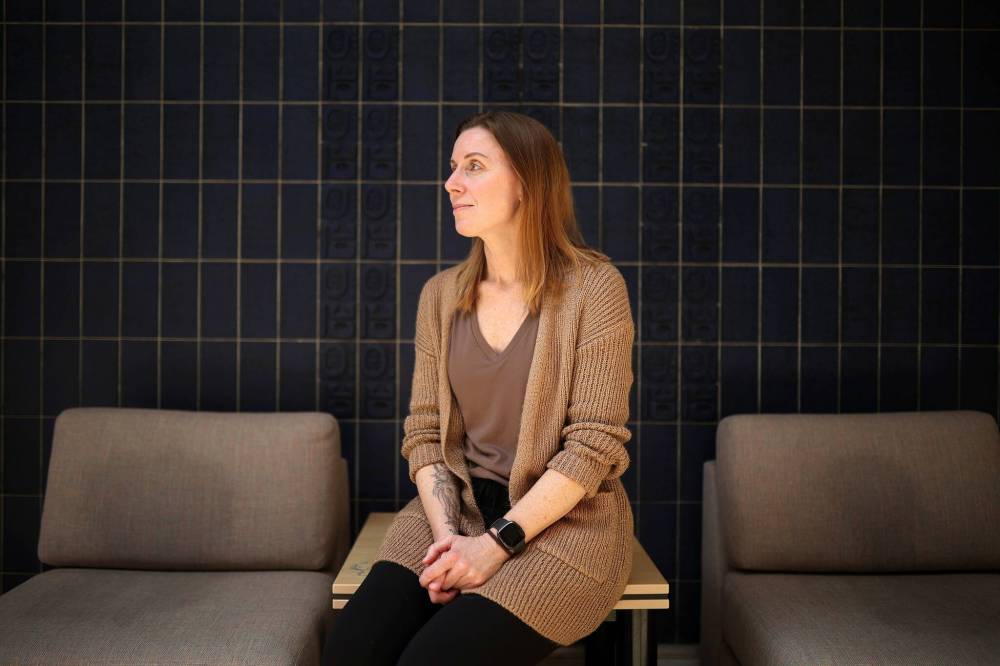
Tracy Young, a research facilitator for Brandon University's Centre for Critical Studies of Rural Mental Health, said it's important to extend resources to rural areas because people living in those communities have an increased risk of suicide compared to people in urban centres. (Tim Smith/The Brandon Sun files)
“HOPE is an acronym that stands for healing, outreach, promotion and education. So, we’ve kind of built the website around that,” Lewis said in an interview on Tuesday.
The website brings together information on mental health organizations that work in the PMH region, such as the Suicide Prevention Implementation Network (SPIN) and Suicide Prevention, Awareness, Resilience, Knowledge (SPARK).
“I really hope that (people) will see there are initiatives happening within their communities and outside some of the bigger centres, because I think sometimes it can feel like maybe lots of things are happening just in Brandon or Dauphin,” Lewis said.
It’s important to extend resources to rural areas because people living in those communities have an increased risk of dying by suicide compared to people in urban centres, said Tracy Young, research facilitator for the Centre for Critical Studies of Rural Mental Health at Brandon University.
“We know that there’s increased risk factors because of isolation, or proximity to the resources or to the help that might be out there,” Young said.
In a report published by the centre in 2023, other identified risk factors include easier access to means, like firearms, or — more often seen in men — stoical traits that may prevent someone from seeking out help.
“Even when rural communities have access to mental health services, there are unique barriers that impact service use,” the report said.
Services used in urban areas that are then transplanted to a rural community won’t necessarily work the same way because they don’t meet the culture and values of rural residents, the report pointed out.
Men are three times more likely to die by suicide than women, according to Statistics Canada. In 2024, suicide deaths were highest among men aged 45 to 64.
Young said it’s valuable to recognize September as Suicide Prevention Month, but it shouldn’t take away from the conversation around mental health and suicide throughout the year.
“We want to make sure that we are noticing those rural populations, those rural places, and getting to the bottom of why these risk factors, that are glaringly known to us, are allowed to be left to stand that way,” Young said.
“If the data is showing us that this is where the risk is, why keep everything to ourselves in our urban spots?” she said.
The goal of the website is to connect all part of the Prairie Mountain region with suicide support resources, Lewis says.
“Part of my role is really trying to get all of us working together, so that everyone can see (that there are) walks and things happening in lots of different communities,” Lewis said. “It’s just bringing it all together into one spot where we can really see the whole picture.”
There are several resources in Brandon for people experiencing thoughts of suicide during a mental health crisis, such as the Crisis Stabilization Unit and Mobile Crisis Unit, but supports aren’t as readily available in smaller communities.
The Applied Suicide Intervention Skills Training (ASIST) course aims to make communities more suicide safe by providing training to anyone who wants it.
The two-day course gives people intervention skills and aims to help people understand how someone ends up in a situation where they’re contemplating suicide, said Amanda Conway, one of the course instructors in Brandon.
“There’s always a need for a community to be educated in these topics and around suicide and discussions around suicide,” Conway said.
“One of the biggest messages that we give to people through the training is that being upfront about suicide or thoughts of suicide does not cause anyone to become suicidal.”
She said the course also addresses biases and judgments toward suicide.
“There’s always been, or historically, there’s been thoughts around suicide that almost criminalizes it — that people shouldn’t have thoughts of suicide,” Conway said.
“But through educating people, and through providing programs like ASIST, people can better understand suicide and better understand how we address suicide when we are dealing with people in crisis.”
The best way to make communities more suicide safe is by training intervention skills and making more people aware and open to the conversation, Conway said.
The most important thing when assisting someone during a mental health crisis is keeping the person safe, she added.
Several telephone lines are available to help in immediate crisis, such as 9-8-8 — Canada’s suicide crisis helpline — or more tailored resources are available like the Kids Help Phone or the Manitoba Farm, Rural and Northern Stress line.
» rgerrard@brandonsun.com