
Ukrainian survivors describe Russian captivity, praise Canada’s efforts
Advertisement
Read this article for free:
or
Already have an account? Log in here »
We need your support!
Local journalism needs your support!
As we navigate through unprecedented times, our journalists are working harder than ever to bring you the latest local updates to keep you safe and informed.
Now, more than ever, we need your support.
Starting at $15.99 plus taxes every four weeks you can access your Brandon Sun online and full access to all content as it appears on our website.
Subscribe Nowor call circulation directly at (204) 727-0527.
Your pledge helps to ensure we provide the news that matters most to your community!
To continue reading, please subscribe:
Add Brandon Sun access to your Free Press subscription for only an additional
$1 for the first 4 weeks*
- Enjoy unlimited reading on brandonsun.com
- Read the Brandon Sun E-Edition, our digital replica newspaper
*Your next Free Press subscription payment will increase by $1.00 and you will be charged $20.95 plus GST for four weeks. After four weeks, your payment will increase to $24.95 plus GST every four weeks.
Read unlimited articles for free today:
or
Already have an account? Log in here »
TORONTO – Ukrainians who survived Russian captivity are thanking Canada for its advocacy and for funding programs to help children heal from trauma.
Dariia Tomashova, 18, told a Toronto conference Monday that she escaped Crimea four months ago, after a year of trying to flee the Ukrainian region Russian seized in 2014.
“Children were turned into Russians, into zombies,” she said through an interpreter.
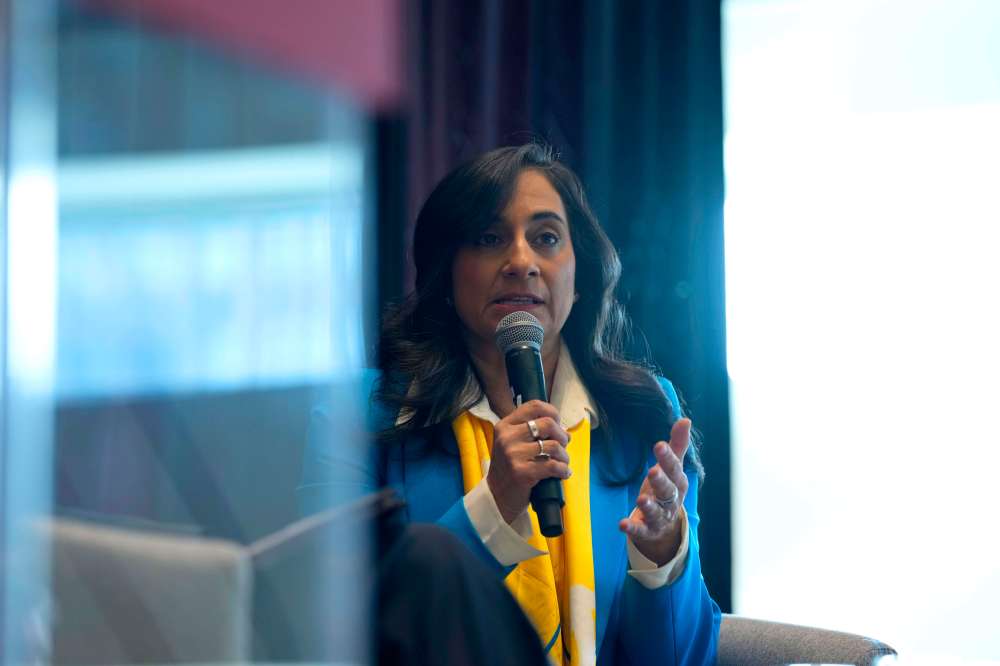
Any mentions of Crimea being part of Ukraine were stripped from classroom instruction, as was any mention of the Soviet repression of the island’s Indigenous Peoples, Tomashova said. Children were made to write letters of support to Russian troops.
“We didn’t understand at that time that we were being prepared for a real war, that all of these events — when girls from being 10 years old, learning tactical medical support, boys being taught how to handle weapons — we were being trained to be Russian soldiers,” she said, pausing to hold back tears.
Tomashova was addressing a two-day conference aimed at advancing work to return Ukrainian children from captivity in Russia and the Ukrainian territories it occupies.
In 2024, the Trudeau government co-launched with Ukraine an international coalition of nations committed to finding and returning Ukrainian children abducted by Russia after Moscow invaded Ukraine in 2014 and launched a full-scale invasion in 2022.
Ukrainian authorities cite what they say are more than 20,651 records of possible unlawful deportations or forcible transfers of Ukrainian children to Russia or Russian-occupied territories of eastern Ukraine.
Officials in Ukraine say 2,573 of those children have been returned.
Bring Kids Back, a coalition launched by Ukrainian President Volodymyr Zelenskyy, has reported that abducted children returned to Ukraine have reported being subjected to physical and sexual violence.
One of the coalition members, Save Ukraine, has used Canadian funds to support Ukrainians who have been sexually abused while held by the Russian state or in foster homes.
“Their rescue only begins when they’re coming back from (the) Russian trap, because with that trauma they have, we have to provide constant 24-7 support for months, sometimes for years,” Save Ukraine co-founder Mykola Kuleba said in an interview.
“We are so grateful for Canada leading and supporting our rescue missions,” he said.
Kuleba called for more pressure and sanctions on Russia, saying this would lead to more children being returned home.
On Monday, Foreign Affairs Minister Anita Anand announced $863,000 in new funding for civil society groups in Ukraine that help returned children and families. That sum brings Canada’s total funding for those efforts to $7 million.
Anand said Canada has used artificial intelligence technology to trace the whereabouts of Ukrainian children and prisoners of war. She noted that Russian officials have changed children’s names, making it harder to verify who is in an “indoctrination camp.”
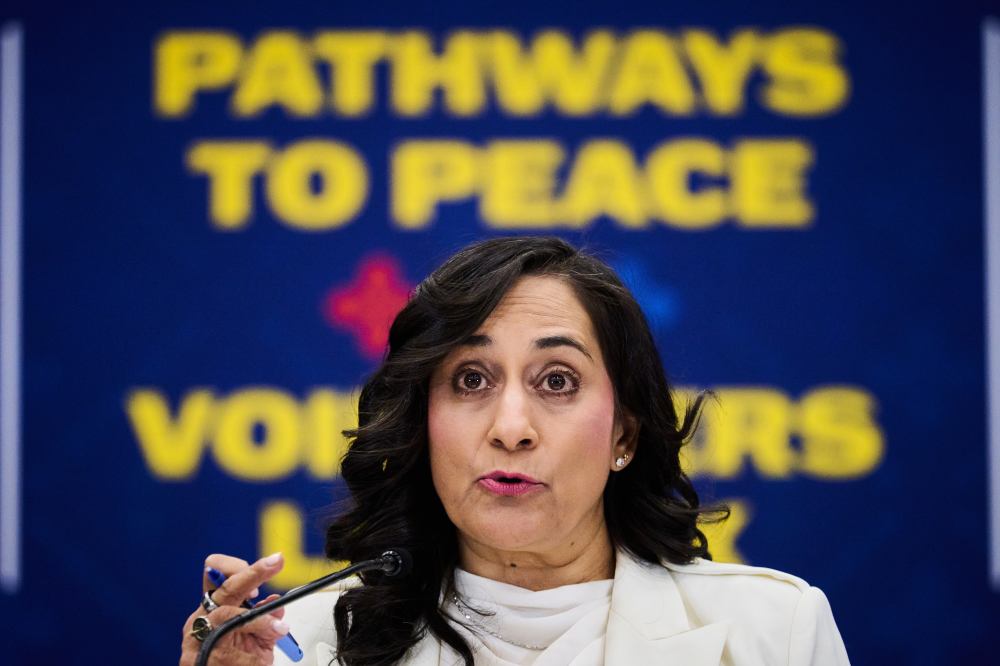
“This is not an accident, this is not a side-effect of war. This is a systematic effort to separate Ukrainian children from Ukraine,” she said at a news conference.
“They must stop obstructing their return, provide information about where these children are (and) stop altering their identities.”
Ukraine’s allies have expanded their reunification efforts to include adult civilians and prisoners of war taken from parts of Ukraine occupied by Russia.
Margaryta Shabanova described her husband being taken by Russian officials in 2022 during his work with an independent monitoring mission in the occupied region of Luhansk.
She said she only learned he was alive when video surfaced of her emaciated husband facing espionage charges for his work with the Organization for Security and Co-operation in Europe, a group of which both Canada and Russia are members.
“Thinking too much about this — where he is, and what he may be enduring there — is something you learn to manage. Not because the fear goes away, but because you cannot function, if you let it consume (you) entirely,” Shabanova said.
Tomashova and Shabanova were among four Ukrainians describing their experiences at this week’s conference. Dozens of countries sent representatives to the conference, including all G7 countries, most European states and other nations such as Qatar and Honduras.
But the flags of several major G20 countries were absent, including those of Brazil, China, India, Indonesia and Saudi Arabia. Global Affairs Canada did not immediately respond when asked for a list of conference attendees.
Anand said complex diplomacy has been required to get children out of Russia and the occupied Ukrainian territories. She said India’s direct talks with Russia have helped inform Canada’s work on understanding various Russian actions in the war.
“I have had numerous discussions with foreign ministers around the world about what more we can do to engage indirectly, and in some cases directly, with Russia,” she said.
“We’re very much relying on a full set of countries to assist with this process.”
This week’s talks are taking place in Toronto, where the CN Tower was set to project the blue and yellow colours of the Ukrainian flag Monday evening.
Since March 2023, Russian President Vladimir Putin and a senior Russian official have been subject to International Criminal Court arrest warrants on charges of unlawful deportation and transfer of children.
This report by The Canadian Press was first published Sept. 28, 2026.