
Chief’s pledge offers us all a way forward
Advertisement
Read this article for free:
or
Already have an account? Log in here »
We need your support!
Local journalism needs your support!
As we navigate through unprecedented times, our journalists are working harder than ever to bring you the latest local updates to keep you safe and informed.
Now, more than ever, we need your support.
Starting at $15.99 plus taxes every four weeks you can access your Brandon Sun online and full access to all content as it appears on our website.
Subscribe Nowor call circulation directly at (204) 727-0527.
Your pledge helps to ensure we provide the news that matters most to your community!
To continue reading, please subscribe:
Add Brandon Sun access to your Free Press subscription for only an additional
$1 for the first 4 weeks*
- Enjoy unlimited reading on brandonsun.com
- Read the Brandon Sun E-Edition, our digital replica newspaper
*Your next Free Press subscription payment will increase by $1.00 and you will be charged $20.95 plus GST for four weeks. After four weeks, your payment will increase to $24.95 plus GST every four weeks.
Read unlimited articles for free today:
or
Already have an account? Log in here »
As Canada continues to navigate the long and sometimes tortuous road that is truth and reconciliation, a profound shift is beginning among those who lead the way.
Earlier this month it was announced that Chief Trechelle Bunn of the Birdtail Sioux Dakota Nation has been named a 2026 recipient of the Royal Society of Canada’s Justice Rosalie Silberman Abella Prize.
That achievement is more than just a well-deserved personal accolade for a smart young legal mind. It serves as a kind of signpost for the evolution of social justice that is taking place in this province.
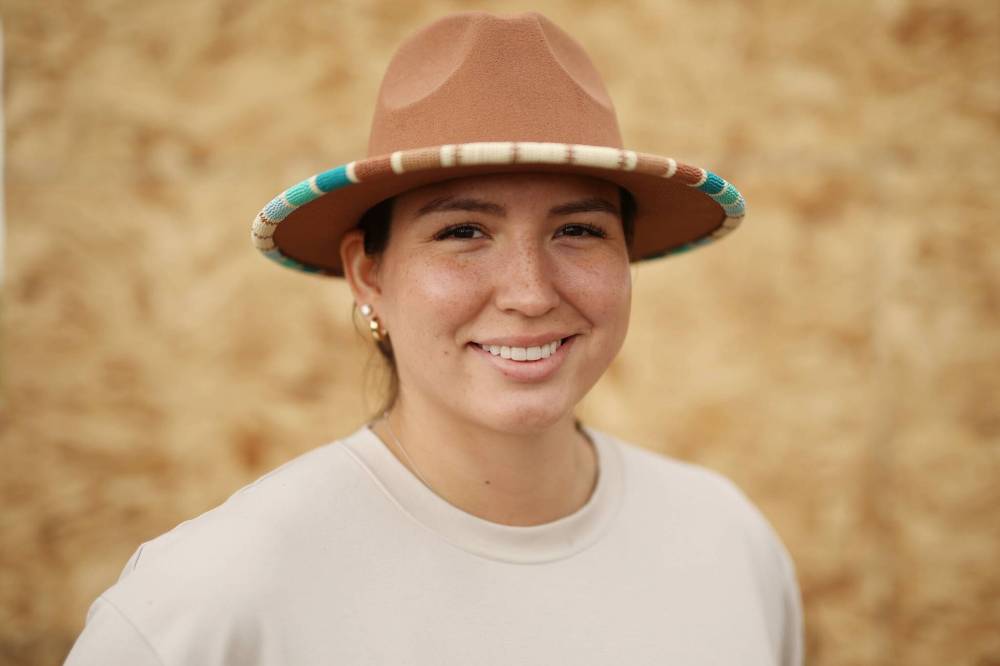
Established in 2021, the Abella Prize recognizes law graduates with the unique potential to reshape equity on a national scale.
Previous recipients are young community leaders from across the country who are working to empower marginalized families, advocate for international human rights and support marginalized youth.
By selecting Chief Bunn, the Robson Hall Faculty of Law and the Royal Society of Canada have recognized the growing potential of Indigenous leadership — one that increasingly fuses grassroots community advocacy with institutional legal expertise.
For generations, the legal system in Manitoba has functioned as a primary mechanism of colonial imposition. Indigenous people have been historically excluded from the halls of judicial power while remaining drastically overrepresented within the correctional and child welfare systems.
But change is moving from the outside in.
Inspired in part by her father’s legacy as an Indigenous RCMP officer who worked to reform institutions from within, Chief Bunn embodies a generation that refuses to accept the colonial architecture of Canadian law as immutable.
What could make this a crucial turning point for Manitoba’s future is the philosophy Chief Bunn brings to her dual identity as both a lawyer and a political leader.
Elected as Birdtail’s first female — and youngest ever — chief at just 25, she says she has tried to build her mandate on a foundation of structural healing and love.
Last weekend’s annual Reconciliation Run — a half-marathon that begins at the site of the former Birtle Residential School and culminates in Birdtail Sioux — literally maps the transition from trauma to community reclamation.
The Reconciliation Run, which Bunn essentially created, carries a painful family connection: her great grandmother and great grandfather both attended Birtle Indian Residential School, which operated from 1931 to 1972.
“I know for me, obviously it was impactful because I think of my family and my community,” Bunn told the Winnipeg Free Press in 2023. “But I think it even impacted a wide range of the participants and volunteers from all different backgrounds. For me, it was just important to say this started in honour of my (great) grandparents, and now it’s growing and impacting people in their own way.”
And the impact of that work continues. People from across the province have increasingly joined the run — Indigenous and non-Indigenous alike. While the run may be symbolic, it has mirrored both her and her family’s hopes that the next generations can look forward to a brighter future in a country that has fully achieved true reconciliation.
In her remarks to the Sun on the weekend, Chief Bunn pointed directly to a person whom she called one of her “biggest inspirations,” invoking the late Justice Murray Sinclair.
Sinclair taught that true leadership requires learning to love your people, even when that love is a heavy and difficult burden. In a landscape often dominated by gridlocked political theatre and jurisdictional disputes, Chief Bunn’s pledge to “show up with love” offers Canadians a way forward for future relations between peoples, and between nations.
Reconciliation cannot simply be a matter of government apologies, symbolic orange shirts or stagnant legal agreements — or even an extra day off in September.
It requires those who hold the constitutional and hereditary responsibility of leadership to also possess the legal tools required to address and dismantle ongoing societal inequities within the system.
As Chief Bunn steps forward with the backing of one of Canada’s most prestigious academic societies, she carries the hopes of young girls and future leaders across Manitoba’s First Nations. That should be a hopeful sign for all of us.
Her newfound momentum suggests that the next chapter of truth and reconciliation will not be written by passive observers waiting for institutional benevolence.
It will be written by young and exceptionally educated Indigenous leaders who are busy revising the laws, while healing their communities, and leading with love from the front lines.