
ALC patients taking up more hospital beds
Advertisement
Read this article for free:
or
Already have an account? Log in here »
We need your support!
Local journalism needs your support!
As we navigate through unprecedented times, our journalists are working harder than ever to bring you the latest local updates to keep you safe and informed.
Now, more than ever, we need your support.
Starting at $15.99 plus taxes every four weeks you can access your Brandon Sun online and full access to all content as it appears on our website.
Subscribe Nowor call circulation directly at (204) 727-0527.
Your pledge helps to ensure we provide the news that matters most to your community!
To continue reading, please subscribe:
Add Brandon Sun access to your Free Press subscription for only an additional
$1 for the first 4 weeks*
- Enjoy unlimited reading on brandonsun.com
- Read the Brandon Sun E-Edition, our digital replica newspaper
*Your next Free Press subscription payment will increase by $1.00 and you will be charged $20.95 plus GST for four weeks. After four weeks, your payment will increase to $24.95 plus GST every four weeks.
Read unlimited articles for free today:
or
Already have an account? Log in here »
More patients are receiving medical attention they don’t need in hospitals across the province, a new report shows.
In a data table published by the Canadian Institute of Health Information, the percentage of patient days spent in alternate level of care has increased in every provincial health authority, except Prairie Mountain Health.
Alternate level of care, or ALC, is a designation a patient receives from clinical staff when they’re medically stable and don’t need acute-level treatment but are unable to leave the hospital because they’re waiting for another form of care.
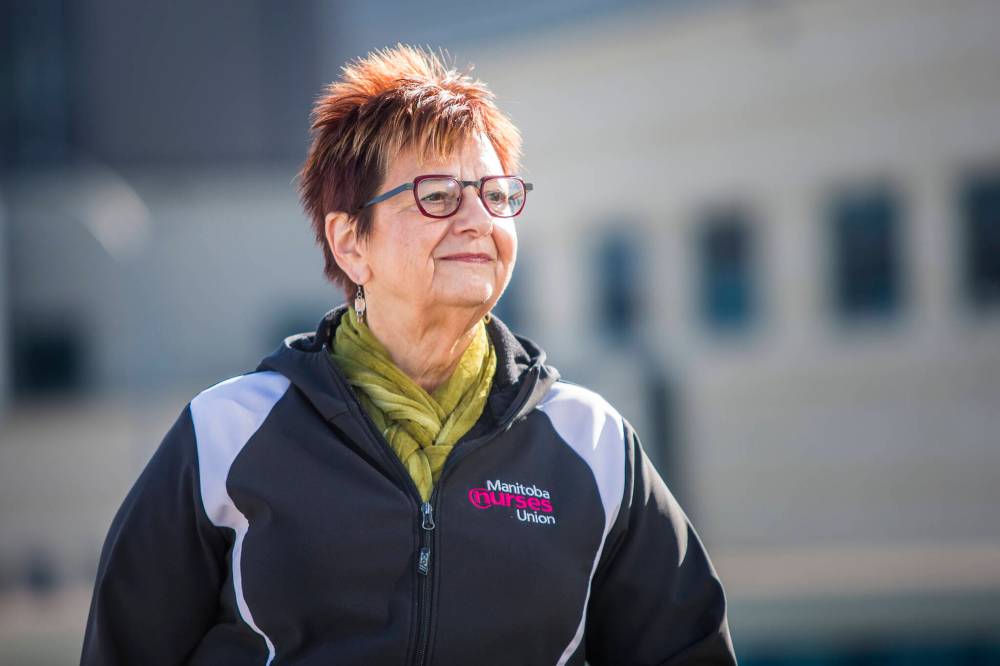
Darlene Jackson, president of the Manitoba Nurses Union, said more patients in alternate level of care directly impact hospital and emergency room wait times. (Mikaela MacKenzie/Winnipeg Free Press files)
ALC patients could be waiting to leave the hospital for a variety of reasons, such as admission into a personal care home or a long-term care facility.
A patient may also be waiting for housing if the person doesn’t have a place to be discharged to.
Darlene Jackson, president of the Manitoba Nurses Union, said more patients in alternate level of care directly impact hospital and emergency room wait times.
“It’s a shame to see that it’s increasing because what happens is those individuals remain on an acute care unit and basically utilize an acute care bed while not needing acute care services,” Jackson said in a phone interview on Monday.
Often when patients are admitted to the hospital through the emergency department, they’re sent into acute care beds — the same ones occupied by ALC patients.
“With more ALC patients, wait times (are) growing and there’s less and less acute care beds, and it’s just an endless circle,” Jackson said.
When an ALC patient occupies an acute care bed, new people seeking medical attention are forced to wait for that bed to become available.
“So as a result of this, what we see are extended wait times in our ER departments,” she said.
Emergency department wait times in rural health regions have increased by 17 per cent over the past two years, according to a Freedom of Information request filed by the MNU.
The Southern Health authority had the highest percentage of ALC patient days at 40 per cent.
While Prairie Mountain Health had the third highest percentage among the provinces’ six health authorities, it was the only region that saw a decrease this fiscal year — from 32.3 per cent to 26.9 per cent.
Jackson said it’s not only frustrating for patients waiting in the emergency room, but it can be harmful to ALC patients.
“You’re basically in a hospital bed. You don’t have the stimulation. You don’t have the activities that they would have in a long-term care facility,” such as opportunities to socialize or be physically active, Jackson said.
“When you are in an acute care facility, you’re not getting any of that,” she said.
“Those patients basically are just sitting and waiting to go to long-term care … It’s very sad for them, they’re very lonely.”
ALC patients waiting to leave the hospital are also required to pay a daily fee, once they’ve been put on a waiting list to get into a different care facility.
The PMH website says that “applicants admitted to hospital begin paying the residential charge once their application has been approved to the wait list” for a long-term care facility.
In the 2023-24 fiscal year, it was reported that PMH charged almost $3 million to people staying in the hospital.
According to an email from a PMH spokesperson, “in general, patients whose care levels change to ALC do not pay fees.”
“Patients do not pay a fee just because they are ‘designated’ ALC,” said Treena Slate, chief executive officer of PMH, in a written statement.
Jackson said addressing high ALC numbers should be one of the “highest priorities” for the provincial government.
In an email statement to the Sun, Health Minister Uzoma Asagwara said they’re aware of the concerns and working to reopen and build more personal care home beds to add alternative level of care capacity.
“We inherited a system where beds and capacity had been cut, including more than 200 personal care home beds,” Asagwara said in the statement.
“We have added more than 400 beds, including 96 transitional care beds, and we are reopening personal care home beds across our province,” the minister said.
Slate said PMH has also added more beds and hired more staff, which contributed to the reduction of ALC days.
“PMH has worked to improve patient flow between acute and long-term care, access to primary care, and community supports, allowing for earlier discharge,” she said in the statement.
» rgerrard@brandonsun.com