
SCO crisis response team back in action
Advertisement
Read this article for free:
or
Already have an account? Log in here »
We need your support!
Local journalism needs your support!
As we navigate through unprecedented times, our journalists are working harder than ever to bring you the latest local updates to keep you safe and informed.
Now, more than ever, we need your support.
Starting at $15.99 plus taxes every four weeks you can access your Brandon Sun online and full access to all content as it appears on our website.
Subscribe Nowor call circulation directly at (204) 727-0527.
Your pledge helps to ensure we provide the news that matters most to your community!
To continue reading, please subscribe:
Add Brandon Sun access to your Free Press subscription for only an additional
$1 for the first 4 weeks*
- Enjoy unlimited reading on brandonsun.com
- Read the Brandon Sun E-Edition, our digital replica newspaper
*Your next Free Press subscription payment will increase by $1.00 and you will be charged $20.95 plus GST for four weeks. After four weeks, your payment will increase to $24.95 plus GST every four weeks.
Read unlimited articles for free today:
or
Already have an account? Log in here »
The Southern Chiefs’ Organization reinstituted its mobile crisis response team this week, after the federal funding for the program was paused seven months ago.
The team — comprised of six people, divided into three groups of two — covers all 33 First Nation communities in southern Manitoba represented by SCO and responds to a wide variety of calls, said Isabel Daniels, case navigator for the response team.
“Whether that would be a natural disaster, floods, fire. It could be due to homicides, overdoses, bullying, anything that the communities, in the 33 communities under Southern Chiefs, deem a crisis for their communities,” Daniels said on Tuesday.
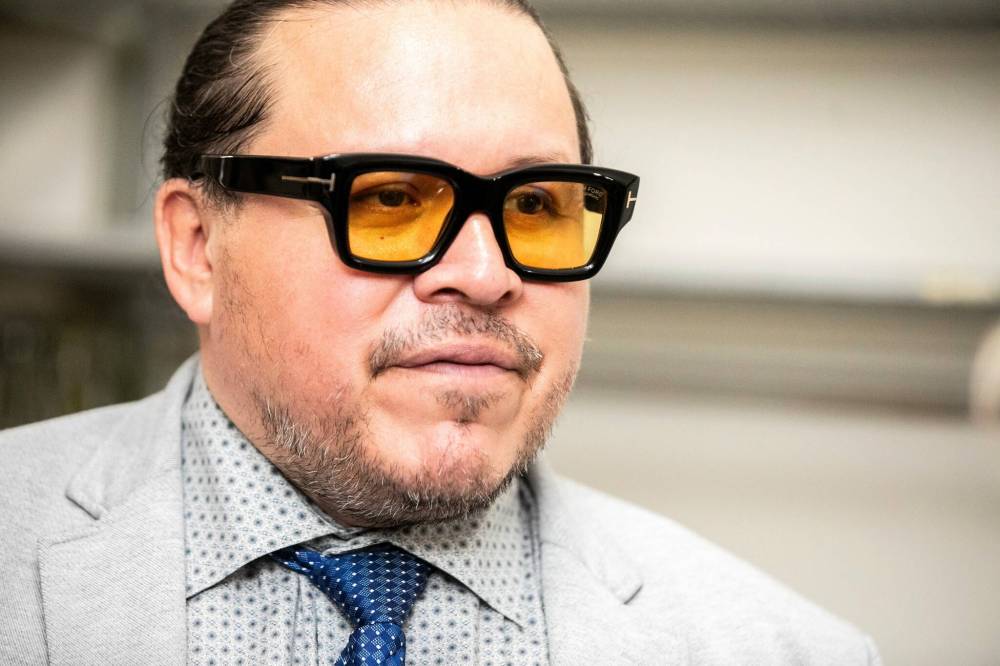
SCO Grand Chief Jerry Daniels is credited with advocating to get federal funding restored for the service. (Mikaela MacKenzie/Winnipeg Free Press files)
She said the response team members use their personal vehicles to travel to a First Nation after receiving a call for service. Once there, they will pick up trash, bring clothing, listen to community needs and “make sure that we’re bridging the gaps in these isolated communities.”
The area covered by the team encompasses all of Westman as far north as Pine Creek First Nation and the eastern part of the province as far north as Poplar River.
In March, SCO was forced to pause the mobile team when federal funding for the project stopped.
“There was a loss of funding when we had a new government take over federally. There’s a lot of services that were cut to front-line and Indigenous front-line services,” Daniels said.
She said the extended pause affected the relationship between the crisis response team and the communities who relied on the support offered through the service.
“We know our First Nation communities are already lacking in supports and services, especially for mobile crisis,” she said. “It was imperative that SCO bring that team back.”
She credited SCO Grand Chief Jerry Daniels for his work.
“Grand Chief Jerry Daniels did a lot of advocacy and a lot of the other team members at SCO advocated for this essential service,” she said.
Neither Indigenous Services Canada nor the SCO disclosed the amount of funding for the program by print deadline Friday.
Before funding was paused, the response team “directly supported” 1,068 people and connected more than 300 people with resources, the grand chief told the Sun on Tuesday.
“Those numbers represent people, families, seeking help through difficult circumstances, traumatic situations,” he said.
“It was a no-brainer for us,” the grand chief added. “We had to make sure that this continued, and so we continued to advocate at all levels to make sure that this was a priority.”
In addition to visiting isolated communities, the response team will also go to court with family members of victims of violent crimes, offer support for drug and alcohol addictions, help create suicide safety plans and more.
The team consists of trauma therapists, mental health specialists, trauma-informed therapists, elders and knowledge keepers.
If there is a resource or form of assistance the response team cannot deliver, Daniels said it’s her job to ensure the individual or community connects with someone who can.
The grand chief said there can be consequences to a community if the crisis response team isn’t there.
“If we weren’t there supporting them, the consequences of that are just, you can only imagine what that translate to in terms of the hopelessness (and the) human experience that comes as a result of these kinds of experiences,” he said.
“We told the government … that this is a long-term need, that we need stability and predictable funding when it comes to servicing our people experiencing traumatic situations.”
The team is not an emergency service and is available from Monday to Friday, 8:30 a.m. to 4:30 p.m.
» rgerrard@brandonsun.com