
After midterm losses, Trump stares down the specter of Democratic probes and the race to succeed him
Advertisement
Read this article for free:
or
Already have an account? Log in here »
We need your support!
Local journalism needs your support!
As we navigate through unprecedented times, our journalists are working harder than ever to bring you the latest local updates to keep you safe and informed.
Now, more than ever, we need your support.
Starting at $15.99 plus taxes every four weeks you can access your Brandon Sun online and full access to all content as it appears on our website.
Subscribe Nowor call circulation directly at (204) 727-0527.
Your pledge helps to ensure we provide the news that matters most to your community!
To continue reading, please subscribe:
Add Brandon Sun access to your Free Press subscription for only an additional
$1 for the first 4 weeks*
- Enjoy unlimited reading on brandonsun.com
- Read the Brandon Sun E-Edition, our digital replica newspaper
*Your next Free Press subscription payment will increase by $1.00 and you will be charged $20.95 plus GST for four weeks. After four weeks, your payment will increase to $24.95 plus GST every four weeks.
Read unlimited articles for free today:
or
Already have an account? Log in here »
WASHINGTON (AP) — For Donald Trump, his party’s resounding midterm losses pave the way for investigations and potential impeachments that will put the Republican president on the defensive in his final two years in office.
The results shift the center of gravity closer to Capitol Hill, where Democrats will be angling to check Trump’s power after two years of acquiescence from congressional Republicans. It not only resurfaces a dynamic from his first term in office, when House Democrats took power in Trump’s first midterms and ultimately impeached him twice, but with control as well of the Senate, Democrats can now stymie Trump’s nominations to Cabinet posts and lifetime federal judgeships.
Trump had all but guaranteed the results would be seen as a referendum on himself by repeatedly urging voters to “pretend I’m on the ballot” as he went into primarily conservative states to shore up Republican candidates and warned of a Washington where Democrats were in power.
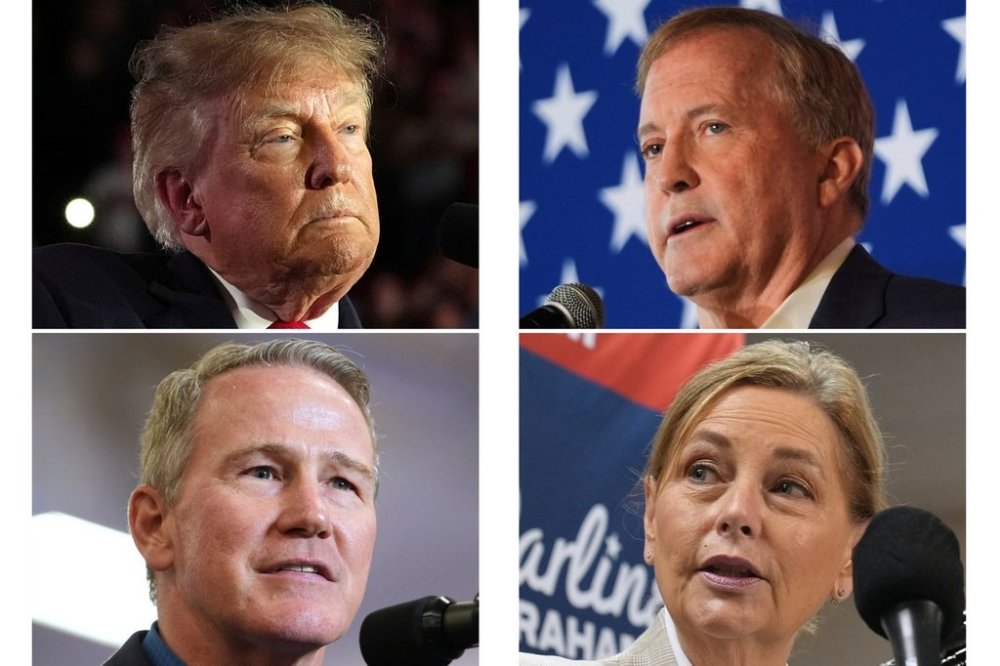
But the results showed how voters rejected Trump’s handpicked candidates while airing widespread concerns about high costs in the wake of his war against Iran and his punishing tariff policy.
Trump tried to shift the blame away from himself during a Fox News interview that aired early Wednesday, saying Democrats “did a good job” in their campaigns and faulting GOP candidates for their losses. “I don’t view it as a hit on me,” he said.
The results leave Trump — who watched returns at the White House with his advisers and members of his Cabinet — with dramatically diminished political capital at home and abroad.
From investigations to impeachment, the stakes for Trump are high
Senior Democrats, as they anticipated a majority in at least one chamber of Congress, have been telegraphing what their top investigative targets would be: the Trump administration’s policies, the conduct of its personnel, and interactions between government officials and private corporations who’ve tried to wield influence with the White House.
Among their priorities are the Trump family’s business dealings, the administration’s handling of the Jeffrey Epstein investigation and broader allegations of corporate corruption.
A Democratic majority will be armed with control of committees, bigger budgets and staff, and subpoena powers that could compel the administration to be responsive to Congress. In response, the White House could reprise its strategy from the first Trump administration, when it slow-walked congressional requests for documents and testimony and asserted executive privilege over certain information.
The president is also bracing for major legislative fights, saying he has a “strong veto.” On Tuesday night, Trump posted a picture of his signature red ball cap with “VETO” stitched on it.
Voters blame Trump’s economic policies
Placing himself front and center on voters’ minds was a major gamble by the president and his political team, who believed it would drive “Make America Great Again” supporters to the polls. Democrats were eager to watch the unpopular president insert himself so fully in the campaign, believing it served as an effective reminder of who should be blamed for the state of the economy.
“Trump’s desire to have everyone think that he’s on the ballot? Like, it’s happening,” said Sen. Andy Kim, D-N.J., who campaigned in key battlegrounds this fall, including Iowa, Georgia and Texas. “Everyone is thinking about him and the harm that he has done to them directly.”
The AP Voter Poll, an expansive survey of the midterm electorate, showed relatively few voters had positive things to say about Trump’s performance on the economy. About two-thirds of voters nationally say Trump’s policies have worsened economic conditions in the U.S., while only about 3 in 10 say they’ve improved economic conditions. Similarly, about two-thirds of voters said Trump’s tariff policies have “hurt” the national economy, or the economy in their local area.
Views of Trump’s priorities more broadly — and his capabilities as a leader — were also mostly negative. More than half of voters say Trump is not a strong leader, does not fight for people like them, does not have the right priorities and does not have the mental capability to serve effectively as president. About 6 in 10 voters say Trump places a higher priority on his own personal interests than he does the country’s interests, while about 4 in 10 said he puts more weight on the country’s interests.
The president — who faced a Democratic-led House for the latter half of his first term — campaigned aggressively in the final weeks to keep the Republican majorities on Capitol Hill because he knows what the consequences would be if Democrats seize power.
But the president at times shrugged off the prospect of a Republican loss of power in Congress. The president is also keenly aware of the political power he draws from having a foil, leveraging opposition to consolidate support in his party and boost fundraising.
Trump’s choices for GOP races had their own baggage
In the House, Democrats flipped districts that voted for Trump by as much as 18 points in 2024. Democrats won at least seven Senate seats in ruby-red states and battlegrounds alike: Kansas, which hasn’t elected a Democratic senator in nearly a century, Iowa, Texas, Ohio, Maine, North Carolina and South Carolina.
Despite urging voters to use their imagination when reading names on the ballot, Trump’s hand-picked Republican candidates in Texas and South Carolina faced deep skepticism.
Republican Darline Graham, the sister of the late Sen. Lindsey Graham, lost to Democrat Annie Andrews in South Carolina after a campaign in which she faced questions about her inexperience.
Republican Ken Paxton, who lost to Democrat James Talarico in Texas, was impeached by his own party over corruption accusations and stained by a very public divorce. But Trump backed him instead of powerful incumbent Sen. John Cornyn, whom he viewed as not sufficiently supportive.
Trump’s loyalty pressures also led incumbent Republican Sen. Thom Tillis in North Carolina to decide to retire after clashing with the president. To try to keep that seat in GOP hands, Trump backed his close ally Michael Whatley, who lost to Democrat Roy Cooper.
Trump was also dealt twin defeats in two Midwestern states that had borne the brunt of high diesel prices and his tariff war. Democrat Adam Hamilton defeated Republican Roger Marshall in Kansas, while Republican Ashley Hinson lost to Democrat Josh Turek.
In another sign of Republican weakness, Democrat Gina Hinojosa defeated incumbent Texas Gov. Greg Abbott, whom Trump had endorsed and repeatedly praised. On Tuesday night, Trump posted on social media that Abbott was to blame for his loss, calling him a “RINO” — a Republican in name only.