
Fire chiefs split over proposal to allow controlled burns of derelict structures
Advertisement
Read this article for free:
or
Already have an account? Log in here »
We need your support!
Local journalism needs your support!
As we navigate through unprecedented times, our journalists are working harder than ever to bring you the latest local updates to keep you safe and informed.
Now, more than ever, we need your support.
Starting at $15.99 plus taxes every four weeks you can access your Brandon Sun online and full access to all content as it appears on our website.
Subscribe Nowor call circulation directly at (204) 727-0527.
Your pledge helps to ensure we provide the news that matters most to your community!
To continue reading, please subscribe:
Add Brandon Sun access to your Free Press subscription for only an additional
$1 for the first 4 weeks*
- Enjoy unlimited reading on brandonsun.com
- Read the Brandon Sun E-Edition, our digital replica newspaper
*Your next Free Press subscription payment will increase by $1.00 and you will be charged $20.95 plus GST for four weeks. After four weeks, your payment will increase to $24.95 plus GST every four weeks.
Read unlimited articles for free today:
or
Already have an account? Log in here »
A pair of Westman fire chiefs are split on whether a proposed pilot project involving setting ablaze derelict buildings should be approved.
Five municipalities in southwestern Manitoba are urging the province to implement the program, which is intended to save municipalities money and provide training opportunities for local firefighters.
Souris-Glenwood Fire Chief Chris Couling said the program would provide a good opportunity for his firefighters to gain experience with structure fires, something they aren’t able to practise often.
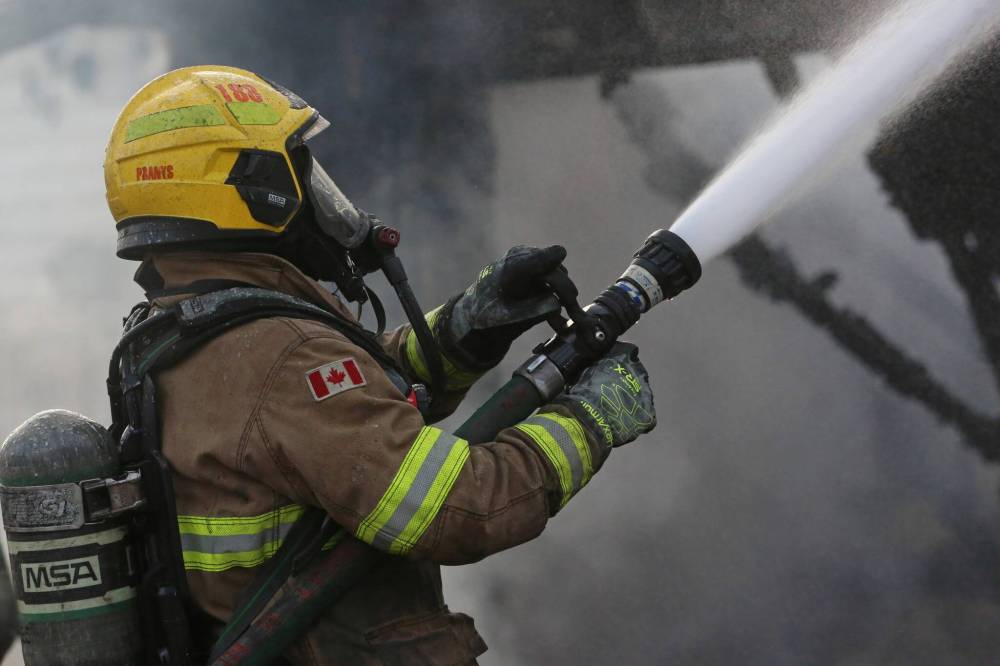
A Brandon firefighter pumps water into the front of a burning house in this file photo. Brandon Fire Chief Terry Parlow spoke against a proposed pilot project that would allow fire departments to practise on derelict buildings, saying the risk of fires getting out of control is too great. (Matt Goerzen/The Brandon Sun files)
“Those opportunities are few and far between to work in a structure fire. But I can see a lot of risk with it. And if the risks outweigh the reward, then absolutely, I would never approve of it,” he said.
While the training is “crucial,” the program would have to be utilized on a case-by-case basis, as the dangers of a fire spreading always take priority, he said.
The pilot project is modelled after a similar one in Saskatchewan.
The resolution was passed at the Association of Manitoba Municipalities’ Western District meeting in June and would need to be approved at the AMM’s fall convention later this month. If it’s passed there, it would be forwarded to the provincial government for review.
Couling said the Sun’s request for an interview was the first time he heard about the proposal, but that while there’s a “pile of risk,” the training opportunities are “valuable.”
He said he would support the project as long as fire chiefs’ input is taken into account.
Souris-Glenwood, along with Virden, Two Borders, Melita and Sifton, were the five municipalities that sponsored the resolution at the district meeting in June.
Brandon Fire Chief Terry Parlow said Wednesday that he opposes the idea, as the risk of fires getting out of control is too great.
“We’ve seen far too many times where we go to start these (controlled fires) and then they get away, and they cause significant damage,” Parlow said.
“Although we try our best to control fires — and obviously you can call it a controlled fire — things can happen. Wind can pick up, things can occur and can cause loss of other property or damage to other property.”
Brandon crews often respond to fires in rural areas, Parlow said, and while the city wouldn’t do controlled burns in a residential area where buildings are close together, he also said it shouldn’t happen in rural places.
In May, dozens of horses were evacuated and a tractor was engulfed by a fire that started as a controlled burn on a private property just south of Brandon.
Parlow said that while he understands it might cost more to deconstruct a building, an out-of-control fire can cost more if things get out of hand, or even just because of health risks from smoke.
The city stopped doing controlled grass burns about 15 to 20 years ago because of concerns over smoke, Parlow said.
“At this time, we are not in favour of this. That’s the best I can put it.”
Souris-Glenwood Mayor Duane Davison on Wednesday said cost is the biggest driver behind the proposed pilot project. Years ago, the municipality was stuck with a building in disrepair, and it cost $400,000 to remove the building. He said for a small community, that’s “pretty significant.”
Davison said while that building wouldn’t have been eligible for a controlled burn due to its location, it shows how significant some of the costs can be.
“And if you can mitigate that cost, at the same time provide some training to the volunteer firefighters, it would be a significant asset for all communities,” he said.
Davison said his municipality hasn’t had to tear down a derelict building in recent years, but it is more common in other parts of Westman and is “a real possibility” for his local government.
Both the cost and the ability to support nearby municipalities are why Souris-Glenwood sponsored the resolution, he said.

Souris-Glenwood Mayor Duane Davison said cost is the biggest driver behind the proposed pilot project. (Connor McDowell/The Brandon Sun)
He said it’s a pressing need in Melita, something other officials also pointed to.
However, a Melita official said their municipality likely wouldn’t benefit from the project.
An official in Two Borders gave a similar response, adding they also sponsored the resolution to support neighbours.
In Virden, chief administrative officer Neil Smith said his council supported the project as their community “has a challenge with the costs and timelines of processes that deal with derelict buildings,” as do other municipalities.
“If a municipality, after the tortuous process of securing the legal rights to demolish or remediate a derelict building (where the owner has not complied with orders, bylaws or other legislation for a number of years), moves to demolish or remediate the property, the costs can be considerable to the tax base without a lot of hope of significant cost recovery,” Smith said in an email.
The hard part, he said, would likely be for a municipality to take control of a property to even utilize the program in the first place.
“But it is an interesting alternative potential approach for executing the demolition process in specific circumstances,” Smith said, adding he’s “quite sure” council would still be supportive of the pilot project.
A spokesperson for the Saskatchewan government’s ministry of environment in an email said their pilot project was started in fall 2025 because of “costs, safety risks and redevelopment challenges associated with derelict buildings.” Opportunities for firefighter training also played a factor.
Questions about how often the program has been used, whether there are concerns around it and how effective it is weren’t answered.
“The Government of Saskatchewan will continue to evaluate the pilot program’s performance to determine its effectiveness and community uptake,” the spokesperson said.
The Saskatchewan Association of Rural Municipalities in an email said it is not aware of any approvals for the project in any RMs.
If the program does go ahead in Manitoba, Couling said along with concerns that fires can get away, he also wants to make sure any hazardous materials are removed first and that there’s proper documentation to support that.
He said there are a few vacant buildings in his community that are of concern, along with some that are still being occupied.
The project would likely be utilized more in rural areas than in the actual community of Souris, he said.
“I can see it happening. I don’t think it would be very frequent, honestly, in this community,” Couling said.
The AMM fall convention is scheduled for Nov. 24-26 at the Keystone Centre in Brandon.
» alambert@brandonsun.com