
Saskatchewan introduces bill targeting use of fake AI content to deceive public
Advertisement
Read this article for free:
or
Already have an account? Log in here »
We need your support!
Local journalism needs your support!
As we navigate through unprecedented times, our journalists are working harder than ever to bring you the latest local updates to keep you safe and informed.
Now, more than ever, we need your support.
Starting at $15.99 plus taxes every four weeks you can access your Brandon Sun online and full access to all content as it appears on our website.
Subscribe Nowor call circulation directly at (204) 727-0527.
Your pledge helps to ensure we provide the news that matters most to your community!
To continue reading, please subscribe:
Add Brandon Sun access to your Free Press subscription for only an additional
$1 for the first 4 weeks*
- Enjoy unlimited reading on brandonsun.com
- Read the Brandon Sun E-Edition, our digital replica newspaper
*Your next Free Press subscription payment will increase by $1.00 and you will be charged $20.95 plus GST for four weeks. After four weeks, your payment will increase to $24.95 plus GST every four weeks.
Read unlimited articles for free today:
or
Already have an account? Log in here »
REGINA – The Saskatchewan government says it’s cracking down on artificial intelligence used to deceive the public.
The province introduced a bill Tuesday that would allow courts to order the removal of manipulative AI content and allow victims to seek compensation.
It said deceptive artificial media, often called deepfakes, exploit the public, undermine trust and create financial hardship.
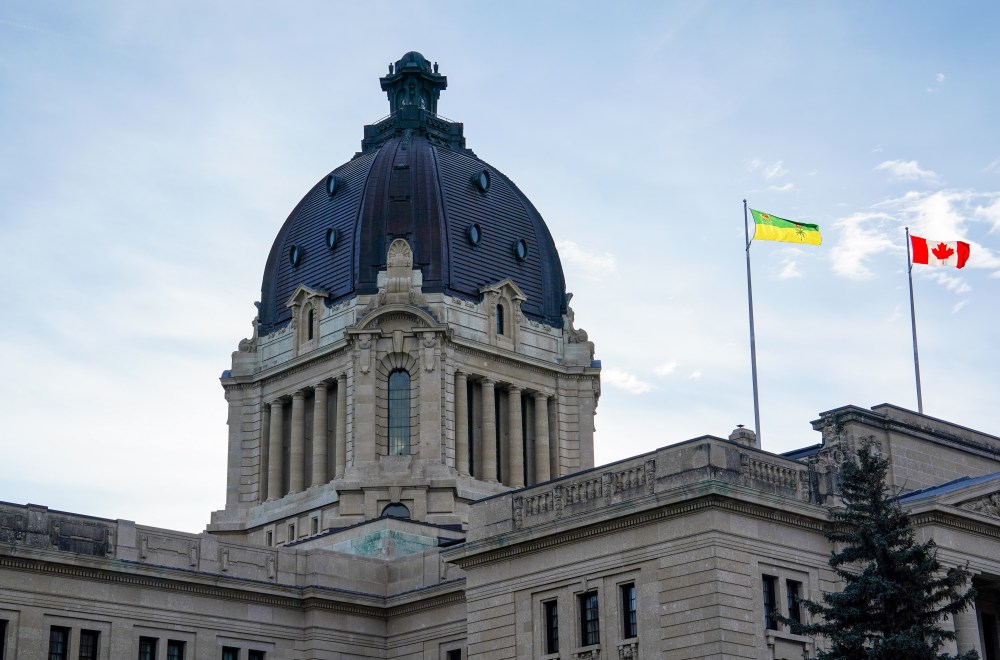
“We do have individuals who will use (AI) inappropriately,” Justice Minister Tim McLeod told reporters after tabling the legislation. “And if they’re attempting to deceive or target vulnerable individuals, we want to make sure that we have a framework that will hold them accountable,”
He said Saskatchewan is the first Canadian jurisdiction to provide a legislative framework on deceptive AI.
Alberta has passed legislation that prohibits the creation of fake AI content of politicians and targets the use of AI for spreading intimate images.
Saskatchewan’s bill said those who have fallen prey to deepfakes could seek legal action against the creators of the deceptive content, whether it’s in audio or visual formats.
If creators are found guilty, they would provide compensation to the victim at a cost determined by the court. The court would also be able to force creators to destroy the content and remove it from platforms.
Speaking with McLeod, Rod McKendrick with the Saskatchewan Seniors Mechanism group told reporters that there have been cases of grandparents receiving calls from scammers pretending to be their grandchildren and asking for money.
“This (bill) is another tool in that person’s tool chest to use when something like that happens to them,” McKendrick said. “This is happening, but there’s nothing that the authorities are able to do, because there is no legislation.”
It would be up to policing agencies to enforce the law, McLeod said, adding the legislation would also apply to AI-generated intimate images.
Saskatchewan Premier Scott Moe previously raised concerns about online deepfakes using his likeness to promote cryptocurrency schemes.
Asked if the province is working to find out who’s responsible for those deepfakes, McLeod said he can’t speak to any details.
The bill would also require disclosures in certain cases.
It said if content could reasonably be believed as authentic, creators would need to put clear markings that it’s AI.
The bill doesn’t limit the use of AI for other content, including parody or satire, as long as it’s not manipulative.
McLeod said if the bill passes, people would still be able to express themselves freely using the technology.
“If it’s all meant in good fun and it’s not rising to the level of defamation or deception, then I think those purposes will continue to be used safely.”
This report by The Canadian Press was first published Nov. 17, 2026.