
Supreme Court sets March date to hear challenge of Saskatchewan’s pronoun law
Advertisement
Read this article for free:
or
Already have an account? Log in here »
We need your support!
Local journalism needs your support!
As we navigate through unprecedented times, our journalists are working harder than ever to bring you the latest local updates to keep you safe and informed.
Now, more than ever, we need your support.
Starting at $15.99 plus taxes every four weeks you can access your Brandon Sun online and full access to all content as it appears on our website.
Subscribe Nowor call circulation directly at (204) 727-0527.
Your pledge helps to ensure we provide the news that matters most to your community!
To continue reading, please subscribe:
Add Brandon Sun access to your Free Press subscription for only an additional
$1 for the first 4 weeks*
- Enjoy unlimited reading on brandonsun.com
- Read the Brandon Sun E-Edition, our digital replica newspaper
*Your next Free Press subscription payment will increase by $1.00 and you will be charged $20.95 plus GST for four weeks. After four weeks, your payment will increase to $24.95 plus GST every four weeks.
Read unlimited articles for free today:
or
Already have an account? Log in here »
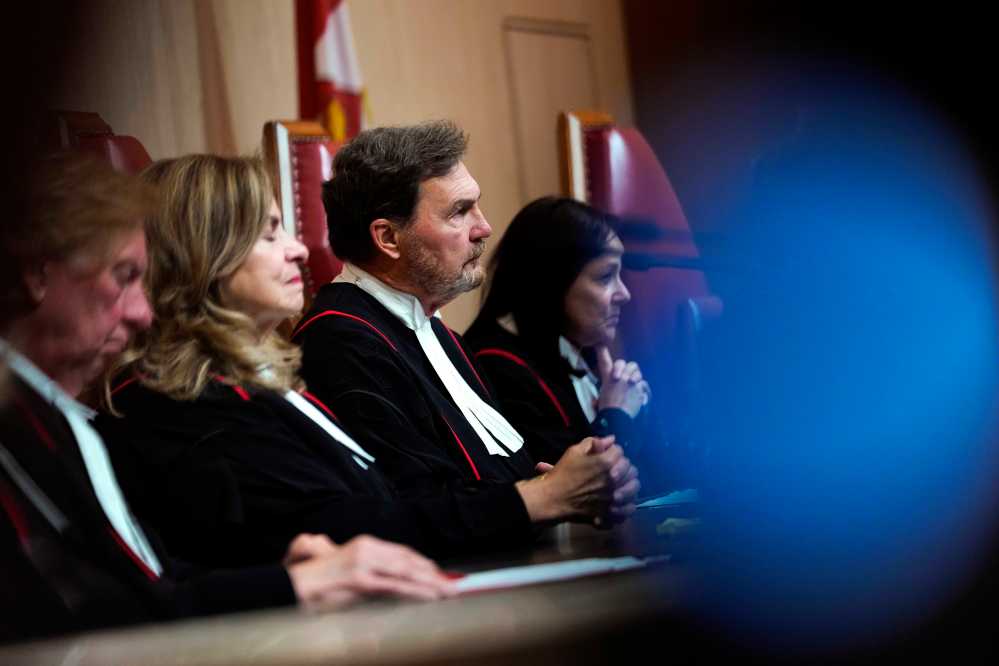
OTTAWA – The Supreme Court of Canada is set to hear appeals next spring in a challenge of Saskatchewan’s school pronoun law and the notwithstanding clause that underpins it.
The court’s website says judges are to hear arguments from the province and UR Pride, a Regina LGBTQ group on March 22 and 23.
The law, passed in 2023, prevents children under 16 from changing their names or pronouns at school without parental consent.
Premier Scott Moe’s government invoked the Charter’s notwithstanding clause to shield the law from legal challenge.
The clause allows governments to override certain Charter rights but such declarations must be renewed every five years.
The judges are to hear arguments over whether courts can provide a declaratory judgment on a law if the notwithstanding clause was used.
This report by The Canadian Press was first published Nov. 19, 2026.