
First Nations youth plan day of action against Ottawa’s major projects legislation
Advertisement
Read this article for free:
or
Already have an account? Log in here »
We need your support!
Local journalism needs your support!
As we navigate through unprecedented times, our journalists are working harder than ever to bring you the latest local updates to keep you safe and informed.
Now, more than ever, we need your support.
Starting at $15.99 plus taxes every four weeks you can access your Brandon Sun online and full access to all content as it appears on our website.
Subscribe Nowor call circulation directly at (204) 727-0527.
Your pledge helps to ensure we provide the news that matters most to your community!
To continue reading, please subscribe:
Add Brandon Sun access to your Free Press subscription for only an additional
$1 for the first 4 weeks*
- Enjoy unlimited reading on brandonsun.com
- Read the Brandon Sun E-Edition, our digital replica newspaper
*Your next Free Press subscription payment will increase by $1.00 and you will be charged $20.95 plus GST for four weeks. After four weeks, your payment will increase to $24.95 plus GST every four weeks.
Read unlimited articles for free today:
or
Already have an account? Log in here »
OTTAWA – First Nations youth are planning a national day of action next month to protest the federal government’s proposed major projects law, which they say would run roughshod over their rights and fail to protect the environment.
Ramon Kataquapit — founder of Okiniwak Youth Movement — and Jeronimo Kataquapit of Here We Stand, both from Attawapiskat First Nation, say the day of action is supported by the Chiefs of Ontario, which represents 133 First Nations in the province.
“We’re more than just a debate. We’re just more than a political issue or red tape. We are people,” Ramon Kataquapit said Friday in the House of Commons foyer.
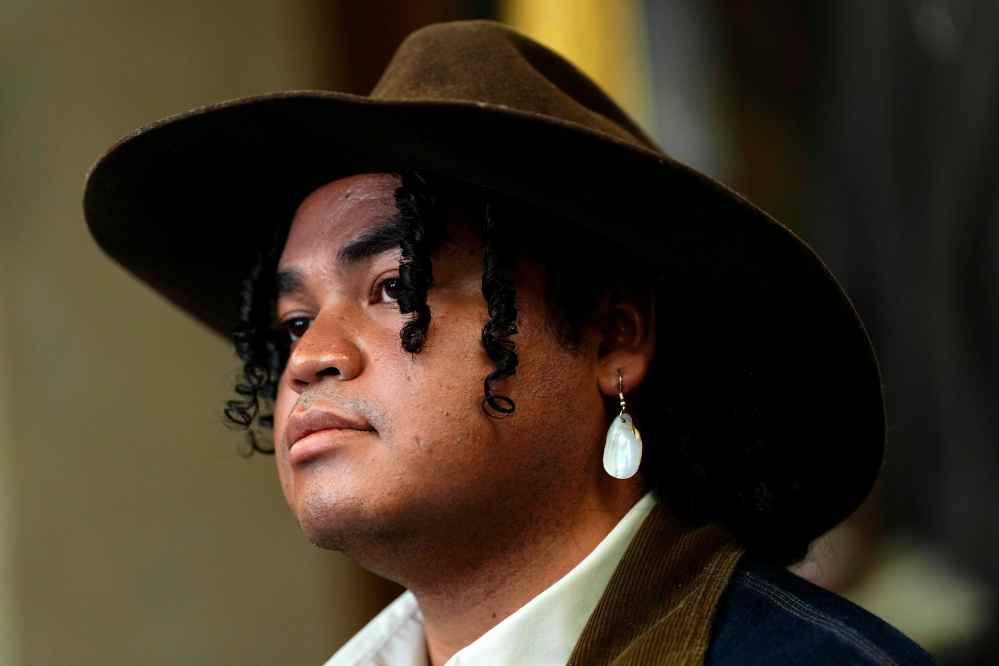
“We are people that are ready to stand at every single front line, whether that’s within the Parliament building, within the Ontario legislature, within the courts or within the land itself.”
The 243-page bill seeks to fast-track approvals for major projects, reduce their review times and create zones of “national interest” to pre-approve certain types of projects.
The bill also proposes changes to Section 107 of the Canada Labour Code to state that a minister can order a business under federal jurisdiction to resume operations, or put parties into binding arbitration.
First Nations, environmental and labour groups have called for amendments to the legislation, or for it to be scrapped altogether.
The Chiefs of Ontario, Assembly of First Nations Quebec-Labrador, Nishnawbe Aski Nation and the British Columbia Assembly of First Nations have said their “free, prior, and informed consent cannot be squeezed into a predetermined federal project timeline.”
The day of action is planned for Dec. 8 — the same day hundreds of chiefs from across the country are expected to gather in Ottawa for an Assembly of First Nations meeting.
Ramon and Jeronimo Kataquapit have attended the committee where MPs are debating amendments to the legislation. They said they aren’t pleased with what they’re hearing.
“We’ve never seen Indigenous people so objectified ever as we have seen in that room,” Jeronimo said.
“It’s disappointing to see that from the federal government that always talks about reconciliation and in this case, economic reconciliation.”
Ramon said that if the bill passes, First Nations leaders and youth will stage protests nationwide to push back against the government’s agenda.
He and Jeronimo have been travelling across the country raising concerns about the legislation.
Prime Minister Mark Carney’s government faced loud opposition from Indigenous leaders last year when it pushed through similar legislation to speed up major projects. First Nations leaders warned Carney’s fast-track approach to development could infringe upon their rights and accused him of sidelining their concerns in favour of investors.
Carney has said Indigenous participation is central to his agenda.
The Kataquapits are vehemently opposed to development of the Ring of Fire, a mineral-rich region in northern Ontario. They have been leaving physical traces of First Nations occupancy on the land and waters in the area, and have vowed industry will be met with resistance on the land.
Both Carney and Ontario Premier Doug Ford point to the region as a tool for strengthening the Canadian economy.
Jeronimo called on youth Friday to show up for the national day of action, saying governments will not slow down their plans.
“We have to draw a line in the sand and say, ‘No more,'” he said.
“We have to stand together and we have to do it now.”
This report by The Canadian Press was first published Nov. 20, 2026.