
Hydro overestimated need for turbines: PUB
Advertisement
Read this article for free:
or
Already have an account? Log in here »
We need your support!
Local journalism needs your support!
As we navigate through unprecedented times, our journalists are working harder than ever to bring you the latest local updates to keep you safe and informed.
Now, more than ever, we need your support.
Starting at $15.99 plus taxes every four weeks you can access your Brandon Sun online and full access to all content as it appears on our website.
Subscribe Nowor call circulation directly at (204) 727-0527.
Your pledge helps to ensure we provide the news that matters most to your community!
To continue reading, please subscribe:
Add Brandon Sun access to your Free Press subscription for only an additional
$1 for the first 4 weeks*
- Enjoy unlimited reading on brandonsun.com
- Read the Brandon Sun E-Edition, our digital replica newspaper
*Your next Free Press subscription payment will increase by $1.00 and you will be charged $20.95 plus GST for four weeks. After four weeks, your payment will increase to $24.95 plus GST every four weeks.
Read unlimited articles for free today:
or
Already have an account? Log in here »
WINNIPEG — The provincial government has released a report by the Public Utilities Board that recommends Manitoba Hydro build one 250-megawatt combustion generator instead of the three turbines proposed by the Crown corporation.
“We shared (the report) publicly today so that you and everyone across Manitoba will have a chance to take a look and start to make up your own mind about which way we should look forward,” Premier Wab Kinew told reporters Wednesday.
The premier had told reporters on Nov. 13 that the report had recommended just one generator be built.
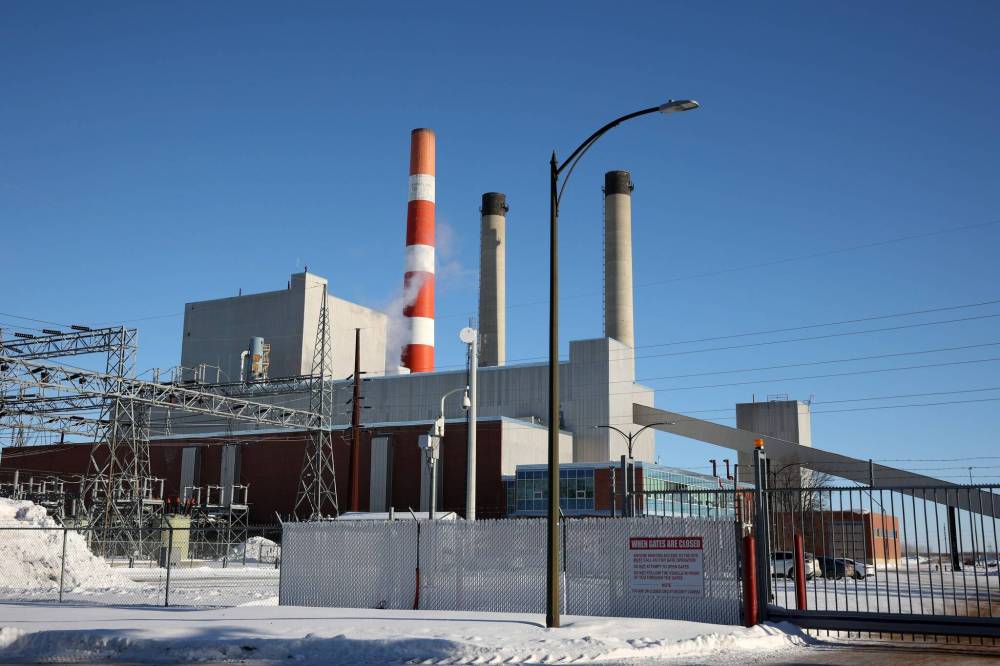
The Manitoba Hydro Brandon Generating Station off Victoria Avenue East. (Tim Smith/The Brandon Sun files)
The 253-page document recommends the government approve the installation of one turbine at the generating station in Brandon.
Hydro’s $3-billion proposal to generate more electricity by installing three natural gas-powered turbines raised concerns from environmental, Indigenous, consumer and civil society groups. The PUB, which is the province’s regulator, was asked to review the proposal.
The board said Manitoba Hydro requires new resources to generate electricity by the winter of 2030-31 to meet forecast winter peak demand. However, adding the proposed 750 MW of combustion turbines is projected to result in more capacity than needed until at least 2045.
“The board finds that 250 MW of new capacity is sufficient when considered with the other alternative resources Manitoba Hydro plans to pursue as a result of its 2025 Integrated Resource Plan,” the report said.
“The availability of alternatives allows Manitoba Hydro to avoid investing too early to meet its future needs, to make future resource decisions as needs arise, and to choose resources that may be more closely aligned with Manitoba’s policy goals.”
Kinew said his government is interested in battery storage and wind power, which are alternatives suggested by the regulator.
“The challenge that we have is we can’t afford for power to be questionable on an early morning in January when you go to turn the thermostat up. We have to make sure that the power works and that our grid works,” the premier said.
“But with the Public Utilities Board telling us that battery power should be maybe a more serious part of our mix of power … I think that’s a big boost for the environment and would probably be more affordable, too.”
Kinew said the government expects a response to the PUB recommendations from Manitoba Hydro by January and will make a decision after receiving it.
A spokesman for Manitoba Hydro said it hadn’t received the PUB report and wouldn’t comment.
The Progressive Conservatives said Wednesday they need time to review the report before commenting.
The PUB analysis comes as Hydro is upgrading or replacing $1.2-billion in aging infrastructure, dealing with a $26.5-billion debt and projecting an electricity shortfall by the end of 2030.
“This is still going to be a megaproject, right? ” Kinew said.
“We’re still talking about a billion dollars’ worth of construction activity. Electricians, people in steel boots and hard hats going to work to build this project. “
» Winnipeg Free Press