
Q&A: Daniels sings the blues
Advertisement
Read this article for free:
or
Already have an account? Log in here »
We need your support!
Local journalism needs your support!
As we navigate through unprecedented times, our journalists are working harder than ever to bring you the latest local updates to keep you safe and informed.
Now, more than ever, we need your support.
Starting at $15.99 plus taxes every four weeks you can access your Brandon Sun online and full access to all content as it appears on our website.
Subscribe Nowor call circulation directly at (204) 727-0527.
Your pledge helps to ensure we provide the news that matters most to your community!
To continue reading, please subscribe:
Add Brandon Sun access to your Free Press subscription for only an additional
$1 for the first 4 weeks*
- Enjoy unlimited reading on brandonsun.com
- Read the Brandon Sun E-Edition, our digital replica newspaper
*Your next Free Press subscription payment will increase by $1.00 and you will be charged $20.95 plus GST for four weeks. After four weeks, your payment will increase to $24.95 plus GST every four weeks.
Read unlimited articles for free today:
or
Already have an account? Log in here »
Hey there, time traveller!
This article was published 06/01/2021 (2082 days ago), so information in it may no longer be current.
Jeff Daniels is kicking off 2021 by organizing 20 virtual concerts across the U.S. and Canada, including a live performance tonight for the Killarney Turtle Mountain Arts Council.
Of course, this kind of setup is nothing new for the veteran actor, who considers his decades-long music career to be just as important as his roles in film (“The Squid and the Whale”), television (“The Newsroom”) and on the stage (“To Kill a Mockingbird”).
In fact, Daniels is so committed to playing his guitar that he put together approximately 60 online concerts last year, when the COVID-19 pandemic made in-person performances impossible.
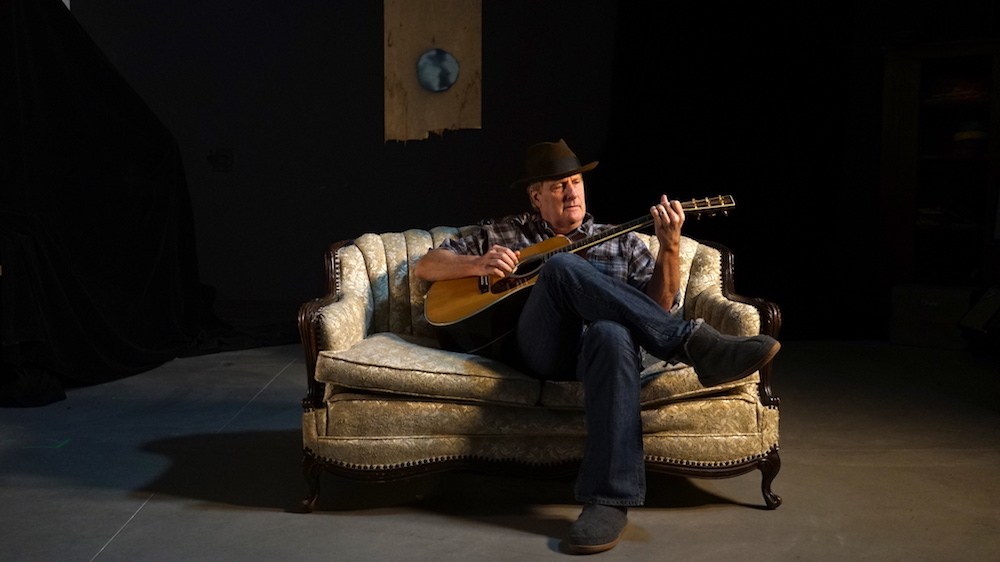
In late 2020, Daniels also released a new album, “Alive and Well Enough,” which includes 11 folk-blues songs that were written before and during lockdown.
In a Tuesday afternoon conversation with the Sun, Daniels talked about his career, tonight’s show in Killarney and what this latest album represents in terms of his evolution as a recording artist.
————–
THE BRANDON SUN: I know it might be a little too early to tell right now, but how has your 2021 been going so far?
JEFF DANIELS: Very similar to how it ended in 2020, given that it was a week ago.
America is like a hamster on a wheel right now, so we’re all kind of waiting to see what happens over the next three weeks.
That’s something I have to get on the other side of and hopefully the vaccine rollout will be improved and the distribution will be improved and we’ll all be feeling a lot better about things come summer and fall.
SUN: From my understanding, you spent a good chunk of 2020 performing at these virtual concerts as opposed to performing in person. Have you gotten used to that format yet?
JD: It’s not that different for me.
It’s like movies and TV. There was a comfort level being in front of the camera that my life as an actor gives me. The difference is you’re looking down the barrel, you’re looking into the lens. But it’s like film acting instead of stage acting.
Even when you’re playing venues, and you’re playing to 200 people or something, you’re reaching out to them. It’s hard to pull them in. And the whole art of film acting is pulling people into you. So for me, it’s a little bit like making a movie.
I really enjoy playing to the one person who is listening. That’s the trick. At the other side of that lens there’s one person who is really listening, so (you) play to that person and then it gets to be a lot of fun.
SUN: So, is the biggest difference between the virtual shows and the in-person shows the audience participation?
JD: I use the audience. I talk to them. I have a conversation with people. It’s an open relationship, so I miss that.
And certainly when you’re timing something that’s funny … just like making a movie or TV (show) or a doing a play you ride the laugh, you set up the laugh. All that stuff.
So you’re working with that audience to make the evening work. You don’t have that (now).
It’s a lot like making “Dumb and Dumber,” to be honest. We had to guess that what we’re doing right now was going to be funny six months from now. And so you’re relying on comic timing and whatever your joke is and … instinctively you need to know whether it was funny or not. You kind of lay it out to the audience through the lens and then keep moving.
You don’t wait for the laughs, necessarily, but you know when you kind of landed something for someone out there and that imaginary audience … the sooner you can make them real, the better.
SUN: I looked at your touring schedule over the next couple of weeks and it involves performances for a lot of small- to medium-sized venues, like the one in Killarney. Is there a reason why you sought out these smaller organizations to kick off 2021?
JD: They’re the ones that I enjoy playing the most.
I haven’t played in Killarney (before), but I remember saying “get me enough gigs to fly to Alaska.”
So I played in Talkeetna, Alaska, at a place called Latitude 62 with 35 people at the top of the earth. I admire those people — they’re making those smaller live venues go. Providing that for people.
And I enjoy playing to 200 people. It’s a lot more fun playing to 200 people than over 1,000. It’s like playing in a living room, which I like.
SUN: For your upcoming show in Killarney, you’re going to be playing a lot of songs from your latest album. For someone who has been playing most of their life, what does “Alive and Well Enough” represent in your career trajectory as a musician?
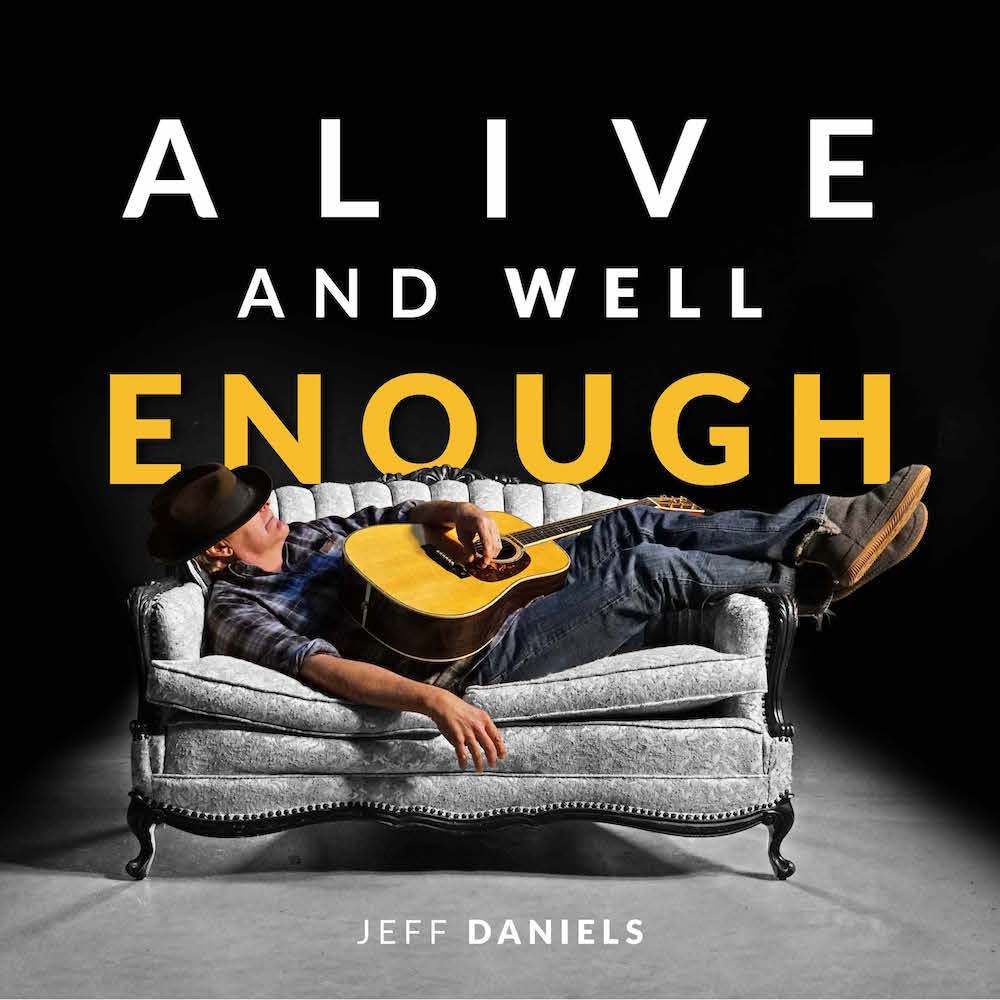
JD: I think the songwriting is there on this one.
This is me at my best, at this point: best songwriting, best finger-picking guitar I can do. I put a lot of the complex stuff for the finger picking on there.
So this is me at my best. Hope you like it. But I’ll probably make more, regardless.
SUN: Your album contains songs that were written before and during the pandemic. So did writing some of these songs under lockdown affect your creative process at all, either in a positive or negative way?
JD: I’ve always admired those song writers, certainly in the States from the ‘60s, the Dylans, the Tom Paxtons, the Dave Van Ronks, Phil Ochs. Later on Crosby, Stills, Nash and Young, they wrote songs like “Ohio.”
These are people who took a look at where they were and wrote about it. I think that’s OK to do. They call them topical songs, but Phil Ochs makes a lot of great arguments for why they are as needed as any other pop song.
Like, “Trumpty Dumpty Blues” is on the album and that marks where we were in April, the month into the pandemic when the president invited us all to attend Easter service with him and I just hit the rough. So I grabbed the guitar and poured (my feelings) into that.
There’s another song on it called “I am America” that I co-wrote with Thornetta Davis, who is a great blues singer out of Detroit. And that just speaks to, you know, after 400 years of slavery, Jim Crow, lynchings, dehumanization, I think that’s enough. Why don’t we all just find a way to work together. We’re all here, we’re all one person.
It became a prayer, a plea for Thornetta, so I loved making that one.
SUN: As you mentioned before, a lot of the tracks on “Alive and Well Enough” centre around U.S. politics. So, I was wondering: does your performance of these songs change post-election? Do they take on a new significance at all for you?
JD: They’re still relevant, unfortunately.
“Come a Little Closer to Me” opens the album, and I wrote that right after Trump was elected.
You could just see it coming, and sure enough, it did, and here we are.
All of these songs I will play a year from now, somehow, somewhere. Some of them I might record or write them and they end up in a notebook somewhere or on a demo. But these (songs) will live on, and I guess that’s what makes this album different.
SUN: On the other side of that, in terms of the songs you wrote this year, you also included songs like “Roadsigns,” which you’ve had with you for several decades.
JD: I’ve been playing that one since Lanford (Wilson) handed me that poem.
The guy ended up winning a Pulitzer Prize for Drama and six years before that he hands me this poem saying “I don’t know if this is a song, but see if you can do something with it.”
And he was my writing mentor. He was my inspiration to become a playwright and a better songwriter, and the imagery that he has in “Roadsigns” … that’s one of those songs that I’ve been playing ever since I sat down and banged the chords out.
SUN: Why did you decide to put it on this album after so many years?
JD: I wanted the songwriting to lead the way on this (album). Songwriting, finger picking and performance.
I wanted the listener to hear those lyrics and to let that little orchestra — the six-string acoustic with low, a middle, and a high — just kind of take you.
SUN: According to your bio, you’ve been playing music for as long as you’ve been acting. Do you feel like writing and performing music complements the work you do on film and television and the stage?
JD: The most common carry-over is the rhythm that a great playwright has or a great speech in a movie.
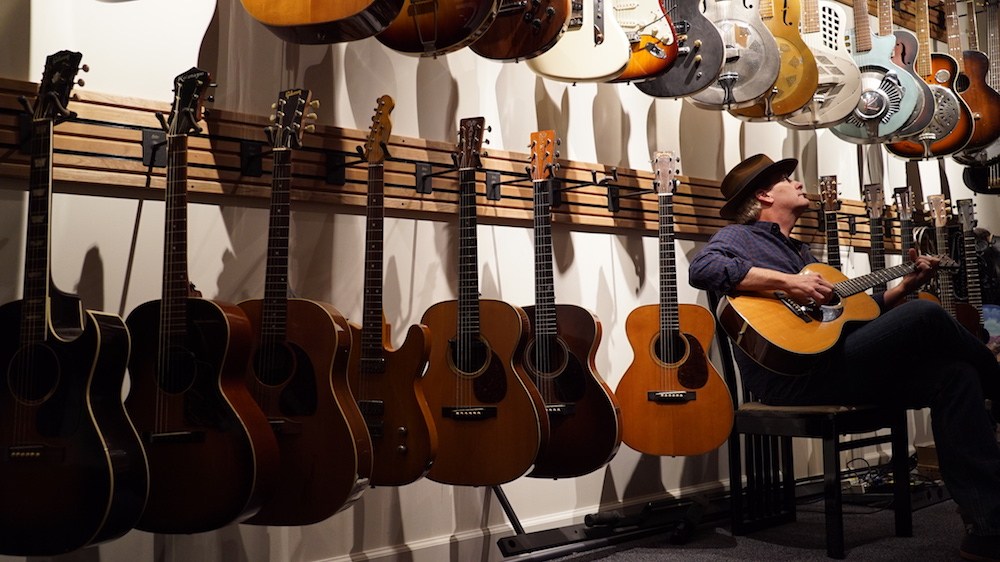
I’ve done a lot with Aaron Sorkin, and Aaron has a rhythm, and you can hear that rhythm in the words he chooses, where the emphasis naturally ends up being. And to have a sense of music, to have a sense of rhythm already in you makes memorizing easier, it makes performing the song easier.
It’s not that you sing the closing argument in “To Kill a Mockingbird” on Broadway, but you can hear the drummer back there with a kick drum very quietly.
SUN: You don’t see them as conflicting disciplines then?
JD: I’m one of these guys who believes it all comes from the same place.
You can speak two or three different languages; playwright, songwriter, guitar player and actor. It’s three different ways to do the same thing, which is to connect to someone who is listening or watching. That’s all that art is trying to do, whether you’re standing in front of a painting in a museum or watching a play or hearing a song.
SUN: Coming back to the upcoming show, for someone who’s never seen any of your virtual concerts, what can folks in Killarney and Westman expect, more or less, from that?
JD: It’s kind of like a mini TV show.
We’ve got three cameras going, we light it like a movie set, I’m not singing into my laptop. I got my two sons working on it. We’re all isolating together here in Michigan.
We have a camera that floats in and out and grabs closeups of the guitar and other things.
And then my other son is in the control room of the recording studio manning the camera switching and the audio.
And then I do a Q and A at the end of it. It’s kind of me playing in your living room if you’ll let me.
SUN: Overall, what’s your state of mind heading into the rest of 2021? Are you optimistic or pessimistic about the state of the world after a very tumultuous 2020?
JD: I think it’s incredibly unpredictable right now. Until Trump is physically out of the White House, I try not to predict much further than that, to be honest.
My hope is that, yes, this will all end and the Republican party can get its act together and the vaccine will be more and more available and we’ve moved on.
That’s what I hope … that we can come out of this better than we were … but we’re not there yet.
—————————
Anyone interested in watching Daniels perform live tonight at 7 p.m. can purchase tickets by visiting crowdcast.io/e/jeffdanieksktmacjan6/register.
This interview has been slightly edited for length and clarity.
» kdarbyson@brandonsun.com
» Twitter: @KyleDarbyson