
Bus companies struggle during pandemic
Advertisement
Read this article for free:
or
Already have an account? Log in here »
We need your support!
Local journalism needs your support!
As we navigate through unprecedented times, our journalists are working harder than ever to bring you the latest local updates to keep you safe and informed.
Now, more than ever, we need your support.
Starting at $15.99 plus taxes every four weeks you can access your Brandon Sun online and full access to all content as it appears on our website.
Subscribe Nowor call circulation directly at (204) 727-0527.
Your pledge helps to ensure we provide the news that matters most to your community!
To continue reading, please subscribe:
Add Brandon Sun access to your Free Press subscription for only an additional
$1 for the first 4 weeks*
- Enjoy unlimited reading on brandonsun.com
- Read the Brandon Sun E-Edition, our digital replica newspaper
*Your next Free Press subscription payment will increase by $1.00 and you will be charged $20.95 plus GST for four weeks. After four weeks, your payment will increase to $24.95 plus GST every four weeks.
Read unlimited articles for free today:
or
Already have an account? Log in here »
Hey there, time traveller!
This article was published 19/12/2020 (2130 days ago), so information in it may no longer be current.
There are a number of supports available for businesses struggling due to COVID-19, but they haven’t been of much help to Brandon’s charter bus companies.
Many of the supports are for businesses that have had to shut down due to COVID-19 restrictions, which Brandon Bus Lines owners Gord and Natalie Hrechka say have left them out of many options
Technically, they’re still able to operate, but their main customers like hockey and other sports teams aren’t, which has cost them bookings alongside those to the United States, whose border has been closed to non-essential travel. Another source of revenue, providing transportation to schools, isn’t happening with field trips on hold due to current restrictions.
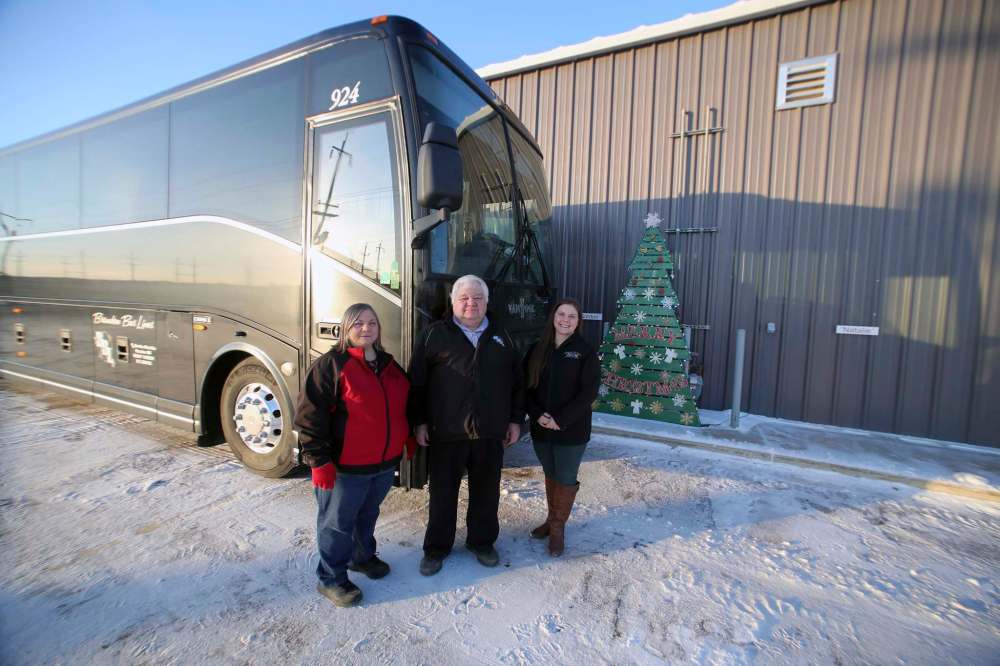
“Since March 13, we haven’t moved any buses,” Gord said.
“There’s an odd trip once in a while, but we’re maybe five per cent working,” Natalie added.
The bulk of help they’ve been able to access has kept their company going, but it’s been in the form of loans they’ll have to pay back later rather than grants.
All of their drivers were laid off in March and their mechanic and office manager are only being called in for sporadic work.
There are still expenses they have to pay, like insurance for their coaches, electricity bills and rent for their building.
To bring in another revenue stream, the company has started performing safety examinations for vehicles weighing a half tonne or more.
It’s been difficult to reach government representatives for assistance, they say, with many just sending them lists of existing supports they can’t access — that is, if they get an answer at all.
Part of the problem is that their industry has been categorized alongside trucking, which is still able to operate and carry goods as an essential service.
Even with the first round of COVID-19 vaccination underway in Manitoba, they don’t foresee most activity restarting until September 2021 at the earliest. With the current code red health restrictions in place until at least January, they have doubts that sports will return soon.
The Assiniboine Community College Cougars and the Portage Terriers buses in their East End garage could remain unused for a while yet.
The Hrechkas believe that charter buses should be lumped in with special events and tourism — two sectors that have faced their share of losses this year due to cancelled events.
“If we were in that category, it would be easier to apply for some assistance,” Natalie said.
Their industry colleague, Niel Henry of Prairie Coach, agrees.
Last year, the Sun reported that Henry wanted to sell his business so he could retire.
He said he was “a millimetre away” from reaching a deal when the pandemic hit.
Since then, he has been unable to sell, and said he has had to face all of his coaches reducing in value because the industry is essentially shut down.
Henry also hasn’t been able to qualify for the federal or provincial wage subsidies because he doesn’t have any employees.
His landlord did apply for and receive five months of the commercial rent subsidy and has qualified for two months of the new version of the subsidy, but has yet to receive any funds from the latter.
“All these programs take forever, and when people want money from you, they want money from you,” he said. “They don’t want to wait on the government for two, three, four months.”
He said he has taken on approximately $180,000 in debt since the pandemic started, and estimates that by the time it’s over he could have as much as $500,000 in debt.
“If things go the way I think they’ll go, I may lose my house and wind up on social assistance after 72 years of work.”
» cslark@brandonsun.com
» Twitter: @ColinSlark