
COVID lessons being applied to monkeypox: Tam
Advertisement
Read this article for free:
or
Already have an account? Log in here »
We need your support!
Local journalism needs your support!
As we navigate through unprecedented times, our journalists are working harder than ever to bring you the latest local updates to keep you safe and informed.
Now, more than ever, we need your support.
Starting at $15.99 plus taxes every four weeks you can access your Brandon Sun online and full access to all content as it appears on our website.
Subscribe Nowor call circulation directly at (204) 727-0527.
Your pledge helps to ensure we provide the news that matters most to your community!
To continue reading, please subscribe:
Add Brandon Sun access to your Free Press subscription for only an additional
$1 for the first 4 weeks*
*Your next subscription payment will increase by $1.00 and you will be charged $20.00 plus GST for four weeks. After four weeks, your payment will increase to $24.00 plus GST every four weeks.
Read unlimited articles for free today:
or
Already have an account? Log in here »
Hey there, time traveller!
This article was published 04/06/2022 (1371 days ago), so information in it may no longer be current.
Canada has learned a few lessons from COVID-19 and they are being applied as cases of monkeypox pop up across the country, according to Canada’s top doctors.
Both diseases were the topic of discussion at a Friday morning conference with chief public health officer Dr. Theresa Tam and her deputy Dr. Howard Njoo.
Tam said COVID activity is decreasing in Canada, based on findings from wastewater samples, confirmed lab tests and case positivity rates taken across the country. Currently, hospitalizations are elevated and variable, but severe illness is declining in most areas.
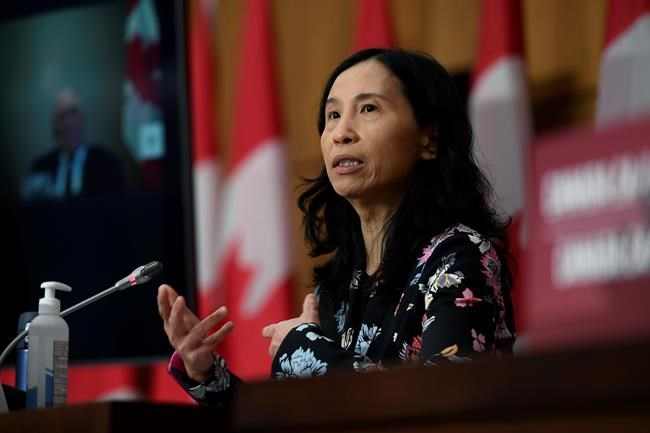
When asked about potential gaps in how that data is being collected in different jurisdictions, Tam said she could not speak specifically to Manitoba or any other jurisdiction. However, the public and health officials must support the public health systems of data acquisition and sharing.
The pandemic is not over, she said, even if some segments of the public may think it is and the health system provides information on the status of cases.
“As we all know, we are doing surveillance to look at trends and making sure we have enough samples for that,” she said. “We are not detecting every case, but we want to get enough information, samples and epidemiological information so that trends can be managed.”
This is one of the reasons health officials increased wastewater surveillance, Tam said. The Public Health Agency of Canada is doing everything it can to support provincial and territorial health system data collection as needed.
That data collection is crucial not just for COVID, but for the emerging monkeypox cases. There are now 77 confirmed cases in Canada, with 71 in Quebec, five in Ontario and one in Alberta.
Globally, there are 550 confirmed cases in 30 non-endemic countries where the virus is not usually found, as of Friday. While monkeypox is not known to be deadly, Tam said health officials are watching this closely because not much is known about how it spreads in non-endemic countries where people are not vaccinated against it.
Monkeypox is caused by a virus and spreads when humans come into direct contact with the virus, often through infectious sores, scabs, bodily fluids or respiratory secretions during prolonged contact. Symptoms include a rash leaving blisters on the face, hands, feet, eyes and mouth, fever, swollen lymph nodes, headaches, muscle aches and a lack of energy.
So far the virus hasn’t spread beyond the communities where the first cases were found, but there is always a risk and the public needs to be aware of it and the potential risks. This also helps officials track it when cases emerge.
Why this virus is spreading at all comes down to many factors, including climate change and viruses mutating, Tam said.
The world must erect better defences against transmissible diseases as these factors raise the risk we will see more emerging infectious diseases in the years to come.
Tam said all groups are potentially susceptible to the virus.
“The risk of exposure is not exclusively related to any group or setting. No matter your gender or sexual orientation, anyone could get infected and spread the virus if they come into close contact — including intimate sexual contact — with an infected person or their contaminated objects.”
This is why it’s important that public health officials learn from past experiences and involve communities right from the start that are most impacted.
She said governments must act fast to cut off the chains of transmission and prevent the virus from spreading further.
The World Health Organization issued public health advice to gay, bisexual and other men who have sex with men last week, urging the community to be on the lookout for symptoms.
Quebec has started vaccinating the close contacts of infected people and Canada has a stockpile of smallpox shots ready to deploy to other parts of the country if they are needed, Tam said.
Smallpox and monkeypox belong to the same family of viruses and the smallpox vaccine has proven effective against monkeypox in the past. But that shot has not been in circulation in Canada for decades because smallpox was eradicated in Canada in the late 1970s, which is why there needs to be a global approach, said Tam. They want to know how this disease has spread so quickly and what factors are behind it.
» kmckinley@brandonsun.com
» Twitter: @karenleighmcki1