
End-of-life rituals transformed by pandemic
Advertisement
Read this article for free:
or
Already have an account? Log in here »
We need your support!
Local journalism needs your support!
As we navigate through unprecedented times, our journalists are working harder than ever to bring you the latest local updates to keep you safe and informed.
Now, more than ever, we need your support.
Starting at $15.99 plus taxes every four weeks you can access your Brandon Sun online and full access to all content as it appears on our website.
Subscribe Nowor call circulation directly at (204) 727-0527.
Your pledge helps to ensure we provide the news that matters most to your community!
To continue reading, please subscribe:
Add Brandon Sun access to your Free Press subscription for only an additional
$1 for the first 4 weeks*
- Enjoy unlimited reading on brandonsun.com
- Read the Brandon Sun E-Edition, our digital replica newspaper
*Your next Free Press subscription payment will increase by $1.00 and you will be charged $20.95 plus GST for four weeks. After four weeks, your payment will increase to $24.95 plus GST every four weeks.
Read unlimited articles for free today:
or
Already have an account? Log in here »
Hey there, time traveller!
This article was published 11/12/2021 (1734 days ago), so information in it may no longer be current.
Some have opted to host small funerals during more restrictive phases of public health measures, others have waited until health measures allowed more friends and family members to gather. And in some cases, no memorial or service has been held.
Funeral practices transformed during pandemic
The COVID-19 pandemic has reshaped the experience of end-of-life rituals and ceremonies, said Kelly and Wade Lumbard, of Brockie Donovan Funeral and Cremation Services.
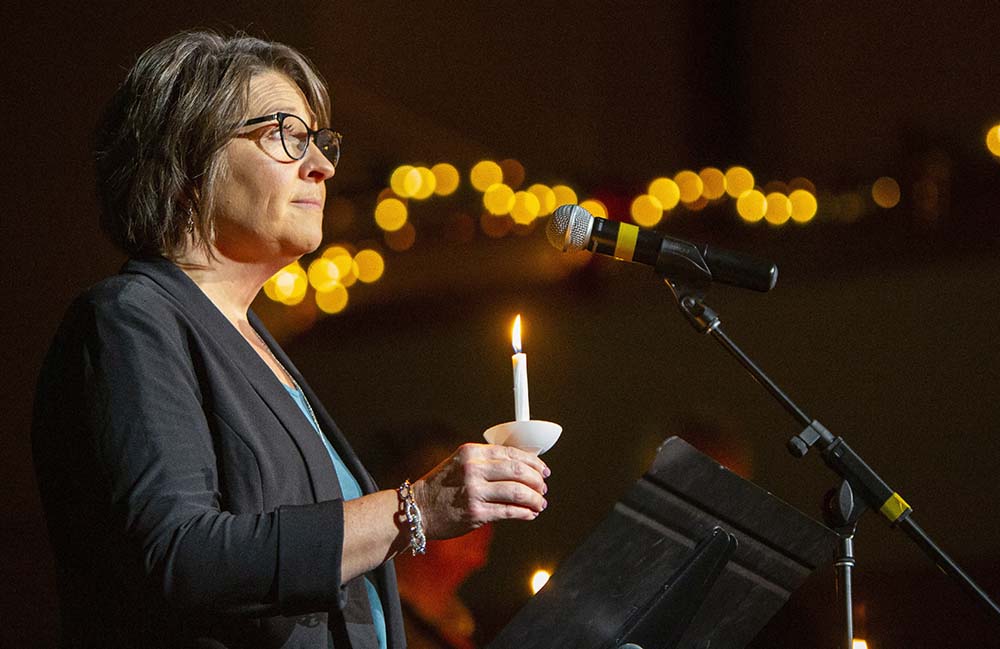
Brockie Donovan, the oldest funeral home in Brandon launched 107 years ago, weathered the Spanish Flu in 1918, and is now navigating COVID-19.
The one constant, Wade said, has been their commitment to the community and helping those who have lost a loved one to celebrate their life.
When the COVID-19 virus first appeared in Manitoba, it was a terrifying experience because of the uncertainty it created.
“As a frontline business [and] essential service, we knew we couldn’t run home to stay in our home office. We were concerned about our staff and what was going to happen if people got sick and how we were properly going to serve our customers,” Wade said.
One of the first major changes at the funeral home was embracing new technologies. Within days, staff became familiar with Zoom and electronic documents for all necessary paperwork.
Livestreaming quickly became an indispensable part of services. Kelly said they had a whole new system put in the chapel as soon as possible to ensure funerals could be recorded and shared with those who could not attend in person.
“The big thing was the restrictions. It’s changed constantly, so we’ve been in constant flux always having to see what the new restrictions are, communicate to the public and make sure our staff is aware of what’s going on. We’re trying to do the best we can in accommodating what people want,” Wade said.
One of the most challenging aspects of the pandemic was when funerals were limited to five people, Kelly said, forcing families to choose who could attend the ceremony in person or delay a service indefinitely.
“Leading up to the death was horrible for these families, I’m sure. And then on top of that, they don’t have the support and the comfort from those they normally would have,” Kelly said. “We really wanted to do our very, very best for every single situation, and we would bend over backwards but we could not bend the rules.”
Kelly said it is comforting to have special practices in place for when a friend or family member dies. These steps help to acknowledge the loss and can aid in the acceptance of death.
The other key element that can provide comfort, is the sharing of stories during the funeral or reception in memory of a loved one.
“It’s really special when someone who you didn’t even know your loved one had impacted or had a connection with … [walks] up to you at the funeral and [tells] you a story you’ve never heard before, and you could hear it 100 times again. It … builds that bigger picture of the legacy that they left,” Kelly said. “It’s very heartwarming and important to hear that and to feel that gratitude that person has that they’ve known your loved one, but also the magnitude that you’re loved one had on others.”
She has spoken with families after memorial services; those who have had some type of ceremony — big or small — celebrating and commemorating a life, in most cases, have their grieving process eased.
The effects of COVID-19 will be long-lasting on families in many regards, Kelly said, and their grief journey will be no exception — especially because in some cases they were not able to be with others during their loss.
Livestreaming has brought together people from around the world while preserving the funeral experience for families during the pandemic, she said. While it is a great option for families, it is not a substitute for in-person interactions during a funeral.
Kelly expects end-of-life celebrations will one day return to normal. People are yearning to be back together in person once all public health measures are lifted.
There is a new appreciation for funerals, gatherings and important life rituals — the interesting part is the form they will take.
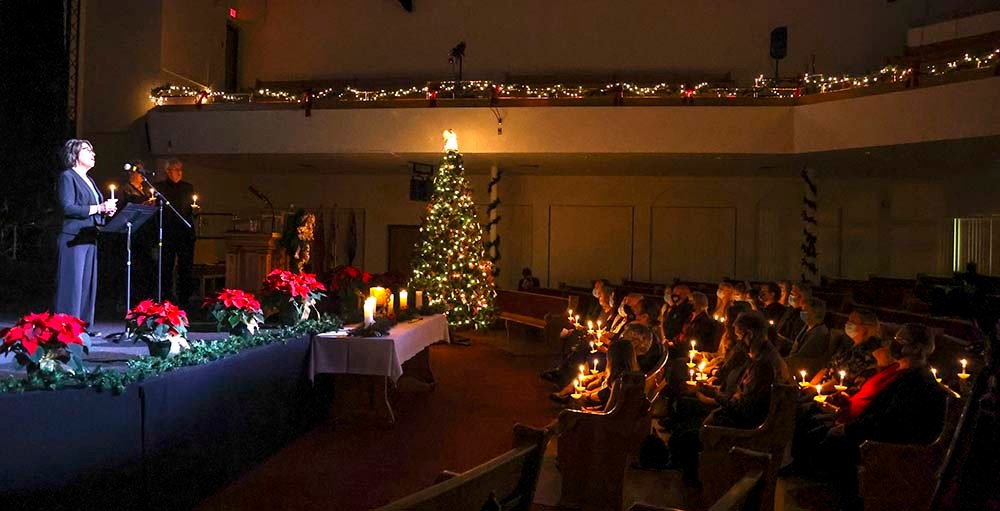
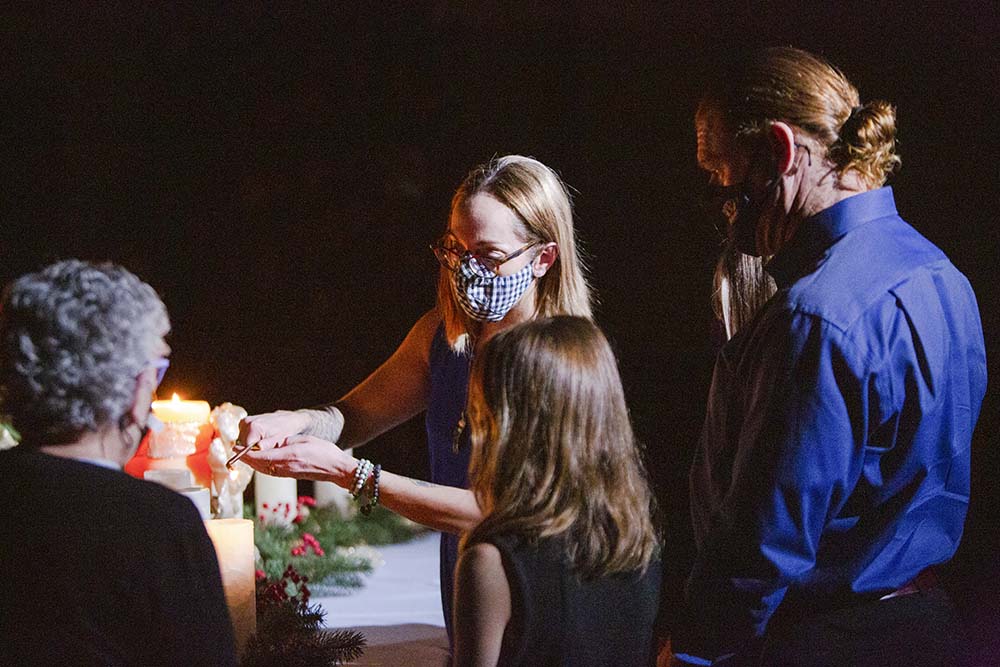
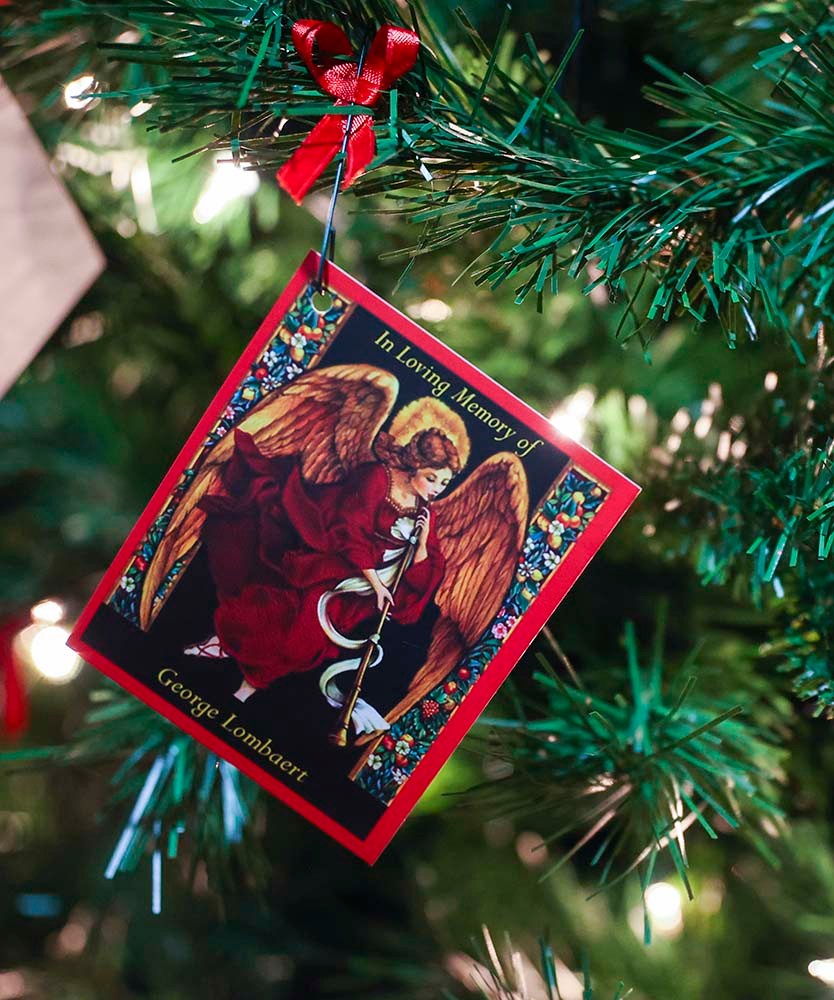
One of the established traditions at Brockie Donovan is the Tree of Memories service, which has been taking place for 24 years (except in 2020). They take pride in the tradition and are happy to provide it for the community.
Every year, Brockie Donovan makes ornaments for the service in the name of loved ones who have died. That they’re able to bring this tradition back to the community — even if it is in a different form — is exciting, Kelly said.
Brockie Donovan hosted an online video stream of the event for 2021.
“The majority of people still did something, whether it was tiny, small or delayed,” Wade said. “It’s a human need to gather.”
End-of-life doula and funeral celebrant Kim Lewarne said it has remained essential to find ways to honour the death of a loved one during the pandemic.
During a memorial, a sacred space is created when people are gathered together sharing in grief.
“It takes a village to raise a child or a person, and it takes a village to mourn them. You just want people around — that’s what we do when somebody dies,” Lewarne said. “You don’t even have to say anything that matters if you are there.”
She has participated in large services and smaller celebrations honouring the death of someone — what matters is the gathering of people together in a special space of mourning. These practices provide comfort during times of loss and grief.
“It’s a huge privilege to spend time with people who have lost a loved one. They tell me their stories.”
Before the pandemic, she would gather together with families in person in advance of a ceremony and they would craft a service that honoured the life of a loved one.
This planning and the actual service have become increasingly challenging during the pandemic. Sometimes they can meet while physically distancing and masked; other times planning may be done over the phone.
The goal, she said, remains to celebrate the lives of those who have died and the importance of sharing stories and memories about them.
“It starts establishing the significance of that person that they’ve lost. Telling those stories brings the joy of that person across. Of course, there are lots of tears, too. The stories are so rich, and sitting there, talking to a grieving family and hearing those stories is such a huge privilege and an honour to be a part of.”
This exchange of stories is crucial to begin the grieving and healing process after the death of a loved one.
“We think that we don’t want to talk to people about their loved one but trust me, they’re on their minds 24-7. We can’t remind them of something they’re already thinking about, but we can give them the privilege to tell their story and hear about their loved one,” Lewarne said.
It can be cathartic and powerful when someone learns a new story about a loved one or knows others are thinking about them. These experiences have been compromised during the pandemic, because large group gatherings have not always been possible under provincial public health measures.
Lewarne added people have also postponed ceremonies because loved ones are unable to attend in person, but the grief itself cannot be delayed.
Her hope is people will follow through on celebrations because they serve as a critical aspect of grieving and healing.
“Grief is tough enough any time, and the pandemic has just made it that much more complicated.”
There has been a need to embrace new ways of mourning that are available and she appreciates that technology still allows people to connect and share grief and memories
Lewarne recently began her journey as an end-of-life doula. She decided she wanted to dive deeper into what she had learned as a funeral celebrant.
“The importance of celebrating life really stood out to me — to honour your loved one that has gone on, that tradition, that rite of passage that we’ve done for years.
“It is a ritual and we have done it for years. We can do it in different ways.”
An end-of-life doula acts as an advocate supporting and empowering the person that is dying and their family.
“If a family member or the person that is dying has an idea or something they might like, in a lot of cases they can do it, it’s just to show them the way.
“They’re in crisis, so it’s somebody to walk with them — not take the place of the nurses [or] the palliative care — to kind of guide them.”
Death is complicated, Lewarne said, and a doula can help navigate the process.
“If you knew what you’re loved one wanted long before there’s a diagnosis or a tragedy, it’s just so much better,” Lewarne said. “Life is finite; we’re all going. Something we’re guaranteed is we’re going to die. Talking about it is not going to make it come any sooner … in some ways, death can be beautiful — you continue on through the memories you leave behind.”
Planning for death
While funerals, end-of-life ceremonies and memorials are taking new forms during the COVID-19 pandemic, City of Brandon cemetery administrator Sandy Jasper said burial practices have largely remained unchanged.
Jasper is responsible for the daily administrative activities at the cemetery office. This includes liaising with funeral homes, arranging burials and dealing directly with families for plot selection or plot purchases.
“There’s nothing out of line yet for actual burial trends,” Jasper said. “There were many … months where people would pass away, and the family would perhaps choose cremation so a service could be held down the line, or for people who felt strongly about having a service … it was down to as low as five or 10 people — those are hard choices to make.”
In the past, families have often chosen to delay funeral services, especially during the cold winter months, she said, but this trend has become increasingly popular during the pandemic.
This careful timing of celebrations has coincided with people opting for cremation upon death. For more than a decade it has been virtually 70 per cent cremations and 30 per cent traditional burials at the Brandon cemetery. Jasper said considerations can influence these decisions, including land use and financial choices.
She has also seen people more willing to plan ahead for their deaths and purchase land at the cemetery for future use.
In general conversations about death have remained unchanged during the pandemic, but Jasper saw a number of people over the last year because of the pandemic looking to plan ahead for the future resting place. People were increasingly investing in property, a plot or a columbarium niche in the Brandon cemetery. In most cases, these spaces will not be used for decades.
She spoke with many people who had been talking about buying property in the cemetery for years, and for some, the pandemic is what pushed them to act.
“Mortality was on our collective radar,” Jasper said.
Sioux Valley lost funeral traditions during pandemic
COVID-19 has had a drastic effect on the community in Sioux Valley Dakota Nation. When a death occurs, traditional cultural practices are not always possible under provincial public health restrictions, said Chief Jennifer Bone.
“When there’s passing in the community, we all gather and support one and other. Historically, we’ve always done that. Some people have a wake overnight, others just have a one-day funeral at the Veteran’s Hall. It’s that sense of community and supporting one another in a time of grief and being able to be there and support one and another,” Bone said. “How do you express your condolences when you’re not allowed to visit and be there? That’s how we help one and other in our times of grief and sorrow. That was a huge change.”
Bone intimately knows the challenges of navigating a family death during the pandemic — the father of her sons died in March.
Bone said they had a small service in Sioux Valley and the following day, he was transported to Saskatchewan for burial. Her family was unable to attend the Saskatchewan funeral due to travel restrictions.
“That was difficult for my family to experience that,” Bone said. “We were able to have a small funeral here in the community.”
Traditionally, when someone passes in Sioux Valley, families will keep a sacred fire burning. During the time of mourning, community members will visit with the family to provide emotional support.
This was not possible at the height of the pandemic and it was a loss keenly felt in the community.
“I think the community felt that,” Bone said. “People were just having the funerals within their homes and limiting the number of people that were there.”
It took careful planning to honour these cultural traditions while following COVID-19 public health measures, Bone said.
An especially painful part has been the inability to connect in person. The compassion of sharing a hug and checking in was sorely missed when public health measures did not allow for funerals or forced a capacity limit on events.
“There are large extended family members, it’s not just immediate family, everybody comes together to support each other. And at times, there wasn’t even a service at the home when we were on lockdown,” Bone said.
In these cases, some of the funerals would just go directly to the gravesite.
These feelings of loss were magnified when community members were in COVID-19 isolated quarantine, Bone said, and it broke her heart that these people could not attend ceremonies to pay their last respects.
When a family member passed before the pandemic, Coun. Tim Whitecloud said it was typically a four-day ceremony honouring the four directions and colours. With COVID, they have been unable to hold the cultural tradition and this period of mourning has at times been extended to two or three weeks due to the family waiting for the body of a loved one to be returned to the community.
“Out of necessity, we have had to get away from the norms and it affects the people because you have to wait longer before your family member comes home and you can put them to rest,” Whitecloud said.
Bone said it is difficult because as a small community, they are tight-knit and want to support each other in times of grief and loss.
“That was tough when the numbers were really limited.
“It’s difficult for us as leadership when you have to follow those regulations and do your best to ensure that they are being followed and that people are complying with public health orders. It’s a hard phone call to make when you tell them, ‘no, you can’t do this.’”
Outdoor tents and seating have been purchased for Sioux Valley to allow for outdoor funerals to take place safely when people can gather together.
The travel restrictions between provinces and other communities, Bone said, also greatly impacted the experience of end-of-life in Sioux Valley.
“We have relatives that are from Saskatchewan, or we have our sister communities of Canupawakpa [Dakota Nation] and Bird Tail [Sioux Nation], and having our restriction on visitors to our community made it so they are not allowed to attend,” she said. “It not only affects our community but the relatives in other communities as well.”
Whitecloud noted that typically, funerals in the community are not recorded. More traditional families will not allow cameras or video at a funeral and it will be frowned upon to even use a cell phone during a ceremony. This experience is further complicated because some families are unvaccinated, preventing them from attending services.
In these cases, people would make time to go after and find other ways to pay their respects, but they do not get to be a part of the process when individuals are brought home for burial.
It is hard to say what the long-term impacts will be because people grieve differently, Bone said.
She added 2020 was a tough year in the Sioux Valley community not only because of the pandemic, but because they lost a large number of community members and a state of emergency was implemented due to a mental health crisis.
Bone said the nation has returned to somewhat normal end-of-life funerals, but people remain cautious about going into public and are stringently following public health restrictions.
It has been a new experience attending a funeral because personal protective equipment, hand sanitizer, and a contact-tracing log of everyone there is in place, along with physical distancing and masks.
“Those sorts of things are really different and awkward, but we managed,” Bone said.
In Sioux Valley, a treasured cultural tradition is hosting a memorial a year after the death of a loved one, Whitecloud said. The ceremony serves as a chance to grieve and give thanks to the community for their support.
Everyone comes together to mark the occasion, but this was not possible at the peak of the pandemic. Bone said in some cases, people would do contactless deliveries of items to thank the people that helped them during their time of grieving.
“We were just trying to adapt based on the guidelines at the time.”
Whitecloud added chief and council will honour those who have suffered a loss with the “Wiping of the Tears.” The ceremony acknowledges families who have experienced loss.
The ceremony is typically hosted every three months, but they have not been able to have one since summer.
“There’s prayer and feast and we feed the families,” Bone said. “We let them know that they’re not alone and the community is there to support [them].”
Spiritual expressions of death during COVID-19
The dean of the St. Matthew’s Anglican Cathedral says the church continues to learn the best way to serve people through the pandemic based on lived experience.
“The COVID thing has altered things in a lot of ways, not for the better, but there are some things that it’s forced on us in funeral homes and churches to say, ‘you’ve been doing this the same way for centuries, now it’s time to do those things, but do those things in a 21st-century style,” Rev. Don Bernhardt said.
The receptions that take place after a funeral are an equally important experience and help to bind people together in the memory of someone who has died.
Bernhardt said, in his experience, there would be as much, if not more, healing during these gatherings because people were able to talk and connect.
“All of that was immediately gone [when COVID-19 arrived],” Bernhardt said.
The loss of these experiences forces the mourner and their supporters to find new ways to connect.
“The loss of one of us is a loss to all of us and we need to acknowledge that.”
Funerals were changing before the pandemic, Bernhardt said, but the pandemic has pushed people to stop and reflect on the rituals associated with death.
One of the trends he worries about is people opting to not have a funeral.
A ceremony does not need to be elaborate, religious, fancy or expensive, he said. What is critical is taking time to honour someone who has departed and provide people with the opportunity to join together in the community.
“It’s a part of our grieving process,” Bernhardt said. “Your life has now forever changed. Your old normal is gone and you will now have to work on finding the new normal — the world without [a loved one]; we need to acknowledge these things and we need to say ‘this sucks.’ Death is not easy.”
Funerals are always a tough day, especially for immediate family, but are a significant practice for the living.
“The funeral is not for the deceased, because they now are in a different place. For us as Christians, we believe in a better place — but, that doesn’t mean the living don’t need to look towards each other and go, ‘it hurts.’”
Funerals play a critical role in the grieving process, serving as an important part of healing. Bernhardt said a delay in an end-of-life celebration directly impacts this process.
“You have moved forward in your life. You have developed a new normal and the crashing waves of grief have lessened, and now all of a sudden you have this funeral and all of that grieve can potentially come roaring back. You don’t go back to square one and now you have to work through that process again.”
The experience of isolation before, during and after the death of a loved one also added to the pain of families.
Even if funerals were held, very few people were able to attend and offer support.
“You’re isolated even more so than normal. Deferred grief, isolation, all of these things have made the whole grieving process a real challenge for so many people.”
Services are beginning to look more normal. More people are allowed to be in attendance, but the numbers of mourners are still small in number compared to pre-COVID times.
Bernhardt said he is unsure if they will ever return to normal numbers because many in the community can feel uncomfortable coming to a tight place like the church and sitting shoulder-to-shoulder with people they do not know.
The cathedral has seen a growing demand for new technologies, including livestreams and Zoom sessions.
“We really need to always have the ability for people to do what they can so they can attend without attending [in person],” Bernhardt said. “The underpinning is love — you can share something one more time.”
According to Knox United Church minister Craig Miller, it has been a different experience at the church during COVID-19. The parish is accustomed to gathering for worship, fundraiser, dinners, educational opportunities and other events, and all of this was restricted during COVID-19.
These changes also affected funerals — initially, the end-of-life ceremonies were just unable to take place.
“It used to be that a funeral had to happen. People died at home and the funeral happened within a few days of the person dying and that’s changed. We have a lot more options now, but people do tell me when there is a significant period of time between the death and some type of gathering … it’s like they’re carrying a heavy weight. They know that there is unfinished business to do,” Miller said. “Once a funeral has happened, they feel like they can move on to take the next steps on the journey of grief.
“It’s part of the process of healing.”
These changes during COVID-19 added layers of loss for families. People were unable to be with a loved one if they were in a health centre prior to their death, or they had to designate one person so it became much more common for people to die without family or friends with them because of the regulations.
“One of the most important messages we say in the United Church tradition is ‘we are not alone.’ That’s a statement of faith for us, and you experience that when you gather for a funeral or a celebration of life,” Miller said. “We do that together, there is power in that.”
These practices create a sacred space and are a very holy moment to say goodbye to a loved one, serving as a chance to send a loved one on the next phase of their journey — part of this practice is having the opportunity to share memories and stories in honour of the person’s life.
There is something missing from the funeral process when people cannot gather and sit together with food and memories, he said. These gatherings offer comfort and being able to eat together, nurturing and healing each other in the midst of grief.
“Grief is tiring and we need to sustain ourselves and we do that together. As we sit down, as we eat together and as we raise a glass, sometimes we’ll have a toast to the memory of the person that has died and it warms the heart, and it’s just another way of being connected,” Miller said.
“We all grieve in our unique way. To be able to do that in the community is quite powerful … I think it provides the support that you need to continue the journey of grief.”
» ckemp@brandonsun.com
» Twitter: @The_ChelseaKemp