
Harm reduction efforts shared with council
Advertisement
Read this article for free:
or
Already have an account? Log in here »
We need your support!
Local journalism needs your support!
As we navigate through unprecedented times, our journalists are working harder than ever to bring you the latest local updates to keep you safe and informed.
Now, more than ever, we need your support.
Starting at $15.99 plus taxes every four weeks you can access your Brandon Sun online and full access to all content as it appears on our website.
Subscribe Nowor call circulation directly at (204) 727-0527.
Your pledge helps to ensure we provide the news that matters most to your community!
To continue reading, please subscribe:
Add Brandon Sun access to your Free Press subscription for only an additional
$1 for the first 4 weeks*
- Enjoy unlimited reading on brandonsun.com
- Read the Brandon Sun E-Edition, our digital replica newspaper
*Your next Free Press subscription payment will increase by $1.00 and you will be charged $20.95 plus GST for four weeks. After four weeks, your payment will increase to $24.95 plus GST every four weeks.
Read unlimited articles for free today:
or
Already have an account? Log in here »
Hey there, time traveller!
This article was published 16/05/2022 (1606 days ago), so information in it may no longer be current.
Two bills — one each at the provincial and federal levels — could reduce risks for people who use drugs in Brandon, a local addictions treatment advocate told city council Monday evening.
Kim Longstreet said that if she polled council, they’d likely tell her that they used their drug of choice, probably alcohol, in a safe manner with limited risk.
That same privilege should be extended to people who use other drugs, especially ones associated with higher risks, she said.
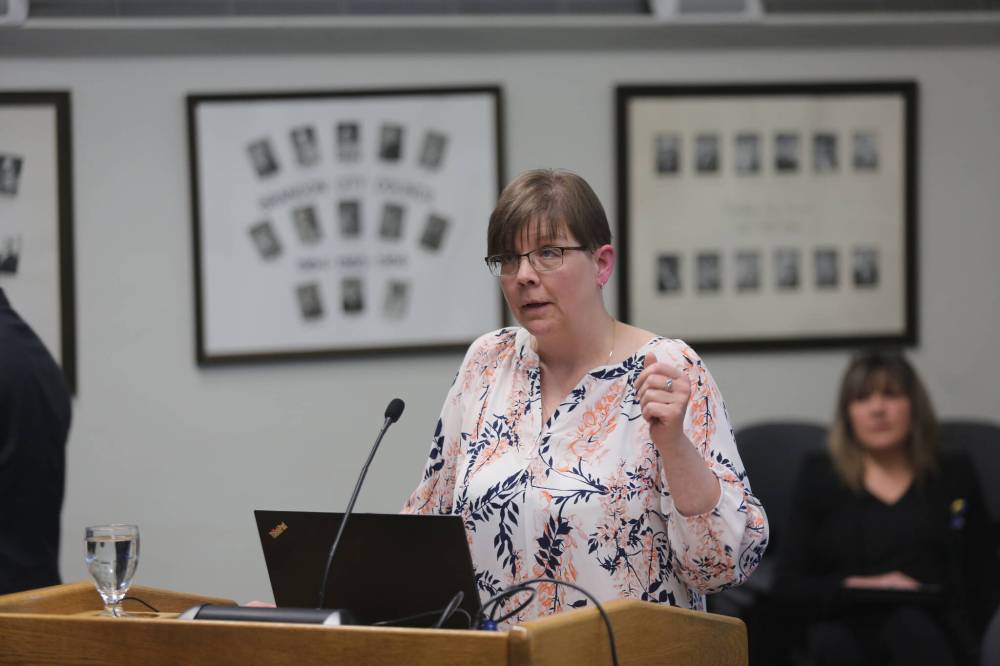
“I hope another five years don’t pass before we get help,” she said, referring to a request for harm reduction measures made to council approximately five years ago.
Bill 217, a private member’s bill put forward by NDP MLA Bernadette Smith, would compel Manitoba to improve its reporting of overdose-related deaths.
At the federal level, Bill C-216 was presented by NDP MP Gord Jones to decriminalize simple possession of drugs, create a safe supply for people who use substances and expand trauma-informed treatment and recovery methods.
In addition to voicing her support for those bills, Longstreet also presented findings from a survey of 50 people who use drugs completed by Brandon’s Harm Reduction Network last August to show the harm reduction measures they have access to. Another survey is in the works this year.
That survey had 42 respondents identify themselves as Indigenous, seven as white, one who preferred not to identify their background and one person who considers themselves “very mixed.”
“That’s not something new,” Longstreet said of the high number of Indigenous people represented in the survey. “That’s a known fact.”
The majority of respondents (56 per cent) said they were either 25 to 34 or 34 to 44 years old, with fewer than half saying they either belonged to older or younger age groups. Eight per cent of those surveyed did not identify as male or female.
More than two-thirds (67.35 per cent) of respondents said they were unemployed, 20.41 per cent said they were a paid volunteer, 8.16 per cent said they worked part-time and 4.08 per cent said they have a full-time job.
Fewer than half of participants (46 per cent) said they had access to a cellphone if they needed to make an emergency call.
Respondents also shared where they usually access harm reduction supplies. Of the 50 people, 26 got supplies from Manitoba Public Health, 30 from the 7th Street Health Access Centre, 20 from the Manitoba Harm Reduction Network, six from the Sexuality Education Resource Centre and one person said they got theirs through street connections.
Some people received supplies from more than one location. Longstreet’s presentation explained that in followup sessions, the peers in the group said it was convenient to have multiple pickup locations and will go to the closest location.
Sometimes one location won’t have the right supplies or staff will be rude or absent, so the peers would go to another location for those reasons as well.
The peers identified that they were most comfortable with getting their harm reduction supplies from a public health office or the 7th Street Health Access Centre and least comfortable going to either gas stations or asking their other peers for supplies.
The survey also asked group members how often they safely disposed of their used needles or syringes. A total of 36 per cent said they did so every day and another 15 per cent do so a few times a week.
Four per cent of people preferred not to answer, 22 per cent said they never safely disposed of their needles, eight per cent said they did so less than once a month and 14 per cent said they did so a few times a month.
As for difficulties in finding safe disposal sites, 54 per cent said they had no issues, 14 per cent said their site wasn’t open, 26 per cent said their site was too far away and 12 per cent of people were afraid of not maintaining confidentiality when disposing of their needles.
Though 41 respondents indicated they had accessed syringes or needles through harm reduction services in the previous six months, 44 people reported accessing pipes.
When the respondents were asked what kind of services they wanted access to, 74 per cent wanted a peer support group, 72 per cent wanted a mobile services van, 70 per cent wanted education about trauma and 62 per cent identified that they were interested in having a safe consumption site.
Apart from being asked to choose which substances they use from a provided list, survey respondents also said they use nicotine, DMT and ketamine.
A total of 70 per cent of respondents said they’d used methamphetamine in the last six months, 56 per cent had used alcohol and 44 per cent had used cannabis.
According to Longstreet, a group held a pop-up safe consumption site in Winnipeg last year that, while not officially authorized, was well received by those who used it.
“What we are hearing that we have never heard before is that people are injecting alcohol,” Longstreet said. “Some people are also injecting the solution that comes with NarCan in the belief that it will get them high.”
Asked by Coun. Jan Chaboyer (Green Acres) what council could do to assist, Longstreet said council could voice support for the provincial bill.
Presenting after the Brandon Downtown Development Corporation proposed a tax-incentive program to get the site of the former Strand Theatre developed, Longstreet said it would be a great location for a 24-hour community wellness centre for both Brandonites and people in the local trading area.
“If we’re not going to get help from the government, the community is going to come together to get what we need.”
» cslark@brandonsun.com
» Twitter: @ColinSlark