
Hydro report slams lack of oversight on megaprojects
Advertisement
Read this article for free:
or
Already have an account? Log in here »
We need your support!
Local journalism needs your support!
As we navigate through unprecedented times, our journalists are working harder than ever to bring you the latest local updates to keep you safe and informed.
Now, more than ever, we need your support.
Starting at $15.99 plus taxes every four weeks you can access your Brandon Sun online and full access to all content as it appears on our website.
Subscribe Nowor call circulation directly at (204) 727-0527.
Your pledge helps to ensure we provide the news that matters most to your community!
To continue reading, please subscribe:
Add Brandon Sun access to your Free Press subscription for only an additional
$1 for the first 4 weeks*
- Enjoy unlimited reading on brandonsun.com
- Read the Brandon Sun E-Edition, our digital replica newspaper
*Your next Free Press subscription payment will increase by $1.00 and you will be charged $20.95 plus GST for four weeks. After four weeks, your payment will increase to $24.95 plus GST every four weeks.
Read unlimited articles for free today:
or
Already have an account? Log in here »
Hey there, time traveller!
This article was published 27/02/2021 (2030 days ago), so information in it may no longer be current.
Cost overruns on the Keeyask and Bipole III projects by Manitoba Hydro were caused by a combination of incomplete planning and lack of oversight by the Selinger government, according to the results of an economic review released by the Manitoba Government on Friday.
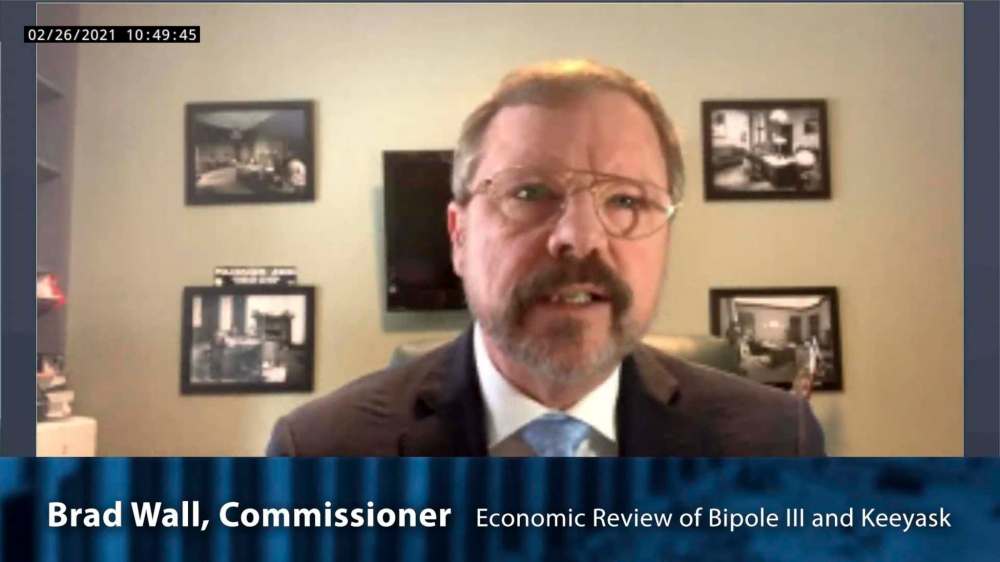
The commission handling the report was run by former Saskatchewan premier Brad Wall, who was tasked with looking into the cause of the projects costing a combined $13.4 billion when initial spending estimates had pegged the cost as being approximately $9.7 billion.
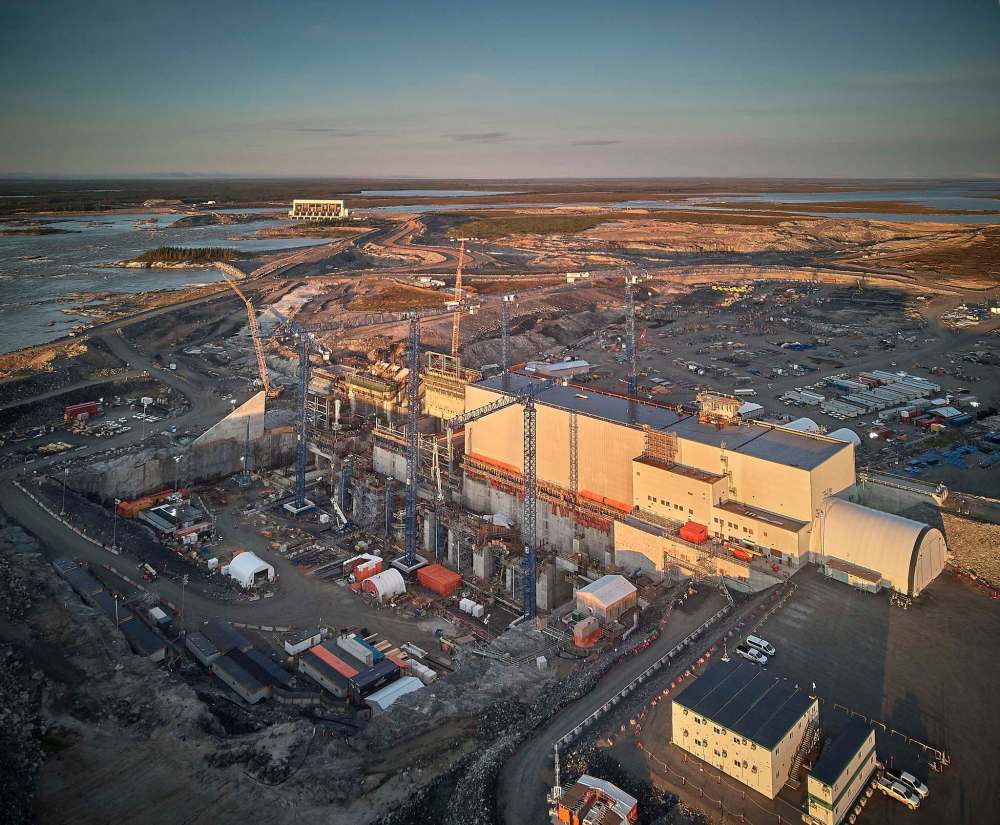
Completed in 2018, Bipole III is a transmission line that delivers hydroelectric power from northern to southern Manitoba while Keeyask is a hydroelectric generating station on the lower Nelson River, 725 kilometres north of Winnipeg.
Although the report found that the cost overruns significantly harmed Manitoba Hydro’s financial health, it also concluded that the additional electrical capacity the projects provide will be a value to the province going forward.
The report itself cost Manitoba slightly less than $1 million to complete over two years.
While the report recommends that Manitoba Hydro should remain a Crown corporation and not become a private entity, it does recommend that its various divisions and subsidiaries should be sold off or shut down if they are found to impede Hydro’s ability to provide reliable and cheap electricity to Manitobans.
It also advises that future major projects that Manitoba Hydro undertakes should be public-private partnerships so that some of the risk is offloaded onto private partners. The Manitoba NDP decried this suggestion on Friday, calling it another step towards privatizing the Crown corporation.
In his opening remarks, Wall said it was important to review the contents of his report in the context of what is happening in Texas, where cold weather, deregulation of the electric industry and the local power grid being disconnected from the U.S.A.’s larger countrywide grid led to extended outages in recent weeks.
“Not withstanding the fact that we’re going to be talking about real concerns with how Manitoba Hydro and the government of the day managed and drove these two particular projects, I think it’s important for us to begin by saying that the people of Manitoba are well-served by this Crown corporation, by a regulated grid system,” said Wall.
The report states that the NDP government of the day overestimated how much Manitoba’s electricity needs would grow while electricity export contracts wouldn’t cover the costs of the two projects.
With Keeyask, the report states that the $1.2 billion spent before approval was given for the province to proceed with the projects indicates that there were no plans in place to off-ramp should the project not go ahead and there was also no evaluation into how much money should be spent before approval.
For Bipole III, the report states that the western route chosen for the transmission line added $400 million in expenses “with some evidence that staging the transmission line on the east side may have avoided up to $1 billion in additional costs.”
There was also criticism of how long it took to get Bipole III off the ground, having first been identified as a solution to reliable power delivery in 1975 but only entering into service in July 2018.
The report criticizes former NDP premiers Greg Selinger and Gary Doer’s accusations towards the then-opposition Progressive Conservatives that they wanted to mothball major hydroelectric programs, stating that this posturing made it more difficult to pause or stop the projects once they were underway.
And then, once the projects were in progress, the report states that there was a lack of formal oversight, which allowed them to progress to a point where despite overruns, the sunk costs made it certain that they would have to be completed.
“Following approval of the projects, the Review found that Government did not exercise any identifiable oversight nor consider the impacts of the projects on the financial circumstances of the province,” one of the review documents states. “The Review found no interaction, presentation, discussion, or document that showed that the input of the Treasury Board Secretariat or the Department of Finance was sought or heard in the planning or execution of the project plans.”
The recommendations made by the review endorse proposed changes the current provincial government wants to make in Bill 35, which would require Manitoba Hydro to regularly submit integrated resource plans to the minister responsible for the Crown corporation when proposing capital expenditures, changes to transmission and generation and limit the Public Utilities Board’s oversight on Hydro rate changes.
In a statement issued after Wall’s media conference, Crown Services Minister Jeff Wharton praised the economic review for uncovering the previous government’s role in the cost overruns and its financial impact on Manitoba Hydro.
“Manitobans need to be able to hold Manitoba Hydro and the projects they undertake to account,” stated Wharton. “This review confirms that Manitobans were deliberately left in the dark regarding Bipole III and Keeyask, and provides clear recommendations to ensure this can never happen again. Our government has already taken steps toward this with the introduction of Bill 35, the public utilities and ratepayer protection act, which would ensure all current and future operations of our publicly owned Manitoba Hydro are transparent and fully accountable to Manitobans.”
Speaking with the Sun in the afternoon, Manitoba NDP leader Wab Kinew said the logic of Wall’s report doesn’t add up.
“I think Mr. Wall is a skilled political operator, but no matter how skilled he is, he can’t square the circle that he claims to be against privatization, but today he’s recommending that Hydro break off parts of its business and sell it off to the private sector,” said Kinew. “No matter how skilled he is, he can’t square the circle that he seems to think that the Public Utilities Board is very important and yet in the same breath he’s recommending that we accept Bill 35 that would see Hydro removed from PUB oversight.”
Kinew alleged that the current government’s actions will end up costing Manitobans more through rate increases for electricity once PUB oversight is removed.
In an email to members of the media, Manitoba Liberal Leader Dougald Lamont said that Manitoba Hydro’s problems have been caused by both the Progressive Conservatives and the NDP.
“Billions of dollars in Hydro debt has not gone into building dams, or Manitoba jobs or transmission lines — it was used by the NDP and PCs to pay for pet projects and tax cuts,” stated Lamont. “If Manitobans, or even the Federal Government, are willing to invest in Hydro and take over just some of the billions in debt the PCs and NDP forced it to take on, we don’t have to privatize, or cut jobs, or hike rates. This is a bad report.”
CUPE 998, which represents some Hydro employees, said in a news release that Wall’s report opens the door to privatization.
“Pallister’s approach to privatizing Manitoba Hydro is about taking one slice at a time,” stated Michelle Bergen, president of CUPE 998. “This government is carving off pieces of our Crown Corporation for sale, winding down subsidiaries, and now potentially introducing P3s to our hydro infrastructure and allowing private, for-profit generation of electricity.”
» cslark@brandonsun.com
» Twitter: @ColinSlark