
Invisible patients left in limbo
Advertisement
Read this article for free:
or
Already have an account? Log in here »
We need your support!
Local journalism needs your support!
As we navigate through unprecedented times, our journalists are working harder than ever to bring you the latest local updates to keep you safe and informed.
Now, more than ever, we need your support.
Starting at $15.99 plus taxes every four weeks you can access your Brandon Sun online and full access to all content as it appears on our website.
Subscribe Nowor call circulation directly at (204) 727-0527.
Your pledge helps to ensure we provide the news that matters most to your community!
To continue reading, please subscribe:
Add Brandon Sun access to your Free Press subscription for only an additional
$1 for the first 4 weeks*
- Enjoy unlimited reading on brandonsun.com
- Read the Brandon Sun E-Edition, our digital replica newspaper
*Your next Free Press subscription payment will increase by $1.00 and you will be charged $20.95 plus GST for four weeks. After four weeks, your payment will increase to $24.95 plus GST every four weeks.
Read unlimited articles for free today:
or
Already have an account? Log in here »
Hey there, time traveller!
This article was published 26/05/2021 (2000 days ago), so information in it may no longer be current.
They are the ones waiting for surgery or important diagnoses while the health-care system struggles to care for COVID-19 patients.
They’re called invisible.
Non-urgent and elective procedures have been cancelled for the most part in the province with as many as 1,000 Manitobans per day not receiving elective or non-urgent surgery, the Winnipeg Free Press reported this week.
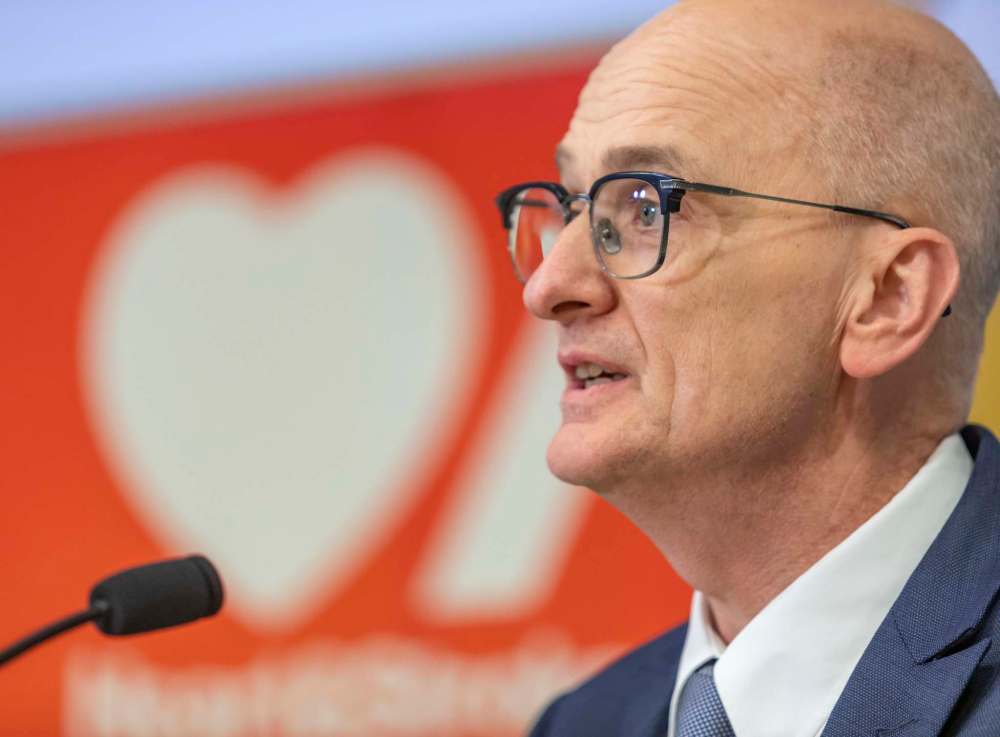
“We are continuing to see the COVID-19 numbers continue to rise, especially in our intensive care units across the province,” Shared Health chief nursing officer Lanette Siragusa said at a press conference on Tuesday.
“We have been forced to significantly reduce surgeries again,” Dr. Perry Gray, provincial lead for medical specialist services and chief medical officer for Shared Health, said Tuesday.
Urgent surgeries may also be impacted, Gray said.
“I am worried that we are getting close to that,” Gray said.
Six people have died waiting for cardiac surgery during the third wave of the COVID-19 pandemic, said ICU anesthesiologist Dr. Eric Jacobsohn, after an announcement by six physicians asking for communities to stay home, even if the government doesn’t require it. They were also calling on public health to close all non-essential businesses immediately and implement a stay-at-home order.
Anyone who has a serious chronic condition, who may have early cancer that needs to be diagnosed or is in need of urgent surgery is now at great risk of not getting the care they need, the release from the six doctors said.
Gray echoed this. He said the province is working on the idea of transferring cardiac surgery patients.
As well, he added: “They are also working on the idea and in discussions about potentially transferring patients who need very complex and very urgent but not emergent spine surgery south of the border. We are working on those. No outpatient has been transported yet.”
Of the 146 intensive care unit beds being made available, there are already 120 of those beds in use. The province is expected to reach that capacity over the next couple of days.
Currently, there are 190 cardiac cases on the wait list (up from 60 pre-COVID); 75 of these are on the urgent list. There are 20,000 less pathology specimens year over year, reflecting patients who are not being seen or are not receiving a diagnosis as well as non-surgical diagnostic procedures used to evaluate throat, stomach and colon, are also being cancelled.
Nationally, oncologists estimate cancer diagnoses are down 25 per cent in some cancers as a result of COVID-19; and also expect a surge in advanced cancers once patients are able to be seen or diagnosed.
“We need your help,” Gray said to Manitobans.
Currently, the province is sending four intensive care COVID-19 patients a day to Ontario.
Ontario has stated it has a 20-bed maximum dedicated for this province. Saskatchewan’s premier, Scott Moe, announced the province will be accepting one intensive care unit patient from Manitoba per day to a maximum of five, at which time he said the province will re-evaluate.
Manitoba is expecting 12 nurses from other provinces that are already on the other side of the third wave to assist Manitoba with a total of 50 nurses expected to arrive in the province.
» kkielley@brandonsun.com, with files from The Winnipeg Free Press