
Monkeypox on Canada’s radar after confirmed cases
Advertisement
Read this article for free:
or
Already have an account? Log in here »
We need your support!
Local journalism needs your support!
As we navigate through unprecedented times, our journalists are working harder than ever to bring you the latest local updates to keep you safe and informed.
Now, more than ever, we need your support.
Starting at $15.99 plus taxes every four weeks you can access your Brandon Sun online and full access to all content as it appears on our website.
Subscribe Nowor call circulation directly at (204) 727-0527.
Your pledge helps to ensure we provide the news that matters most to your community!
To continue reading, please subscribe:
Add Brandon Sun access to your Free Press subscription for only an additional
$1 for the first 4 weeks*
*Your next subscription payment will increase by $1.00 and you will be charged $20.00 plus GST for four weeks. After four weeks, your payment will increase to $24.00 plus GST every four weeks.
Read unlimited articles for free today:
or
Already have an account? Log in here »
Hey there, time traveller!
This article was published 20/05/2022 (1386 days ago), so information in it may no longer be current.
Another disease has captured Canada’s attention: monkeypox.
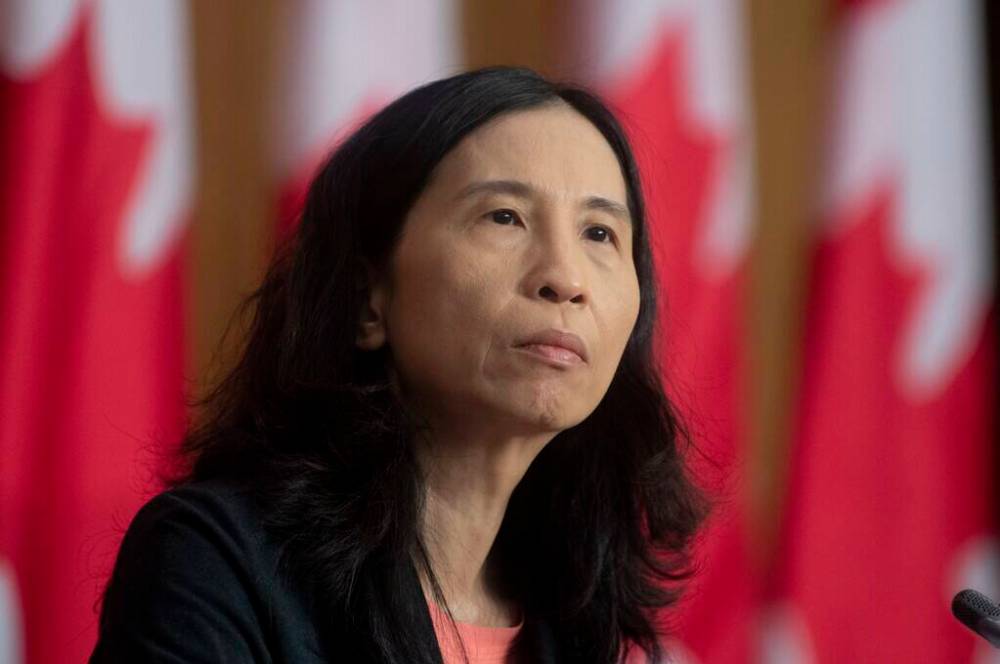
According to the nation’s top doctor, Dr. Theresa Tam, the federal government is keeping close tabs on the virus, on top of monitoring COVID-19.
Tam said Friday that COVID-19 cases are trending upward, which is something the federal government and provinces were hoping not to see this time of year. On a positive note, the number of hospitalizations and deaths is falling.
She encouraged Canadians to continue practising healthy hygiene like hand washing, staying home if sick and maintaining physical distance to reduce transmission of the virus.
While case counts are increasing, Tam said there is confidence as warmer months approach, cases and hospitalizations will drop off.
“We are keeping a balanced approach,” she said. “We are going forward on managing this virus’ spread.”
With the public wary of highly infectious diseases, Tam said it’s understandable people are concerned of reports of monkeypox arriving in Canada. Quebec reported two cases earlier this month and 20 more are under investigation, with British Columbia also investigating two possible contacts, she said.
It doesn’t appear to be widespread as of yet, but due to its mild symptoms, they are monitoring to see if any more cases appear.
“We have to cast the net wide to catch hidden transmission,” Tam said. “There’s probably been some hidden chains of transmission that could have occurred for quite a number of weeks, given the sort of global situation that we’re seeing right now, so we shouldn’t rule out new things that we might learn as we go along. We also want to sensitize the public to this, even though it appears to be low risk.”
Monkeypox is from the same family as smallpox and was first discovered in 1958 in a colony of monkeys kept for research. Historically, it was primarily found in western and central African countries and outbreaks were caused by travellers. Symptoms include headache, fever, swelling in the lymph nodes and muscle aches. Pustules appear on the face and limbs usually within one to three days of the onset of a fever.
Until recently, it was a rare disease, but Spain, Portugal, the United Kingdom and the United States have all recently reported cases.
What makes it even more unusual is there seems to be no clear links between some of the infections. Tam said as far as they know, monkeypox can be spread by water droplets and may also be spread by exposure to mucus or pus from an infected person.
The concern now is how the infection has evolved over the decades and why it is appearing in so many countries.
“It’s unusual for the world to see this many cases reported in different countries outside of Africa and we will let people know as soon as we get more information,” Tam said.
There are no treatments for monkeypox, but there are vaccines that can combat it. Deputy chief public health officer Dr. Howard Njoo said because it is in the smallpox family, smallpox vaccines can offer some protection. However, Canada stopped administering smallpox vaccines in 1972, leaving a wide swath of the population vulnerable.
Canada has ordered 500,000 vials of the smallpox vaccine Imvamune, which also protects against monkeypox. However, those won’t be delivered until 2023.
Canada does have a limited supply Imvamune right now, but the number isn’t being disclosed for security reasons, Tam said, and are reserved for those at high risk of exposure.
» kmckinley@brandonsun.com
» Twitter: @karenleighmcki1