
Protest bill raises civil liberty concerns
Advertisement
Read this article for free:
or
Already have an account? Log in here »
We need your support!
Local journalism needs your support!
As we navigate through unprecedented times, our journalists are working harder than ever to bring you the latest local updates to keep you safe and informed.
Now, more than ever, we need your support.
Starting at $15.99 plus taxes every four weeks you can access your Brandon Sun online and full access to all content as it appears on our website.
Subscribe Nowor call circulation directly at (204) 727-0527.
Your pledge helps to ensure we provide the news that matters most to your community!
To continue reading, please subscribe:
Add Brandon Sun access to your Free Press subscription for only an additional
$1 for the first 4 weeks*
- Enjoy unlimited reading on brandonsun.com
- Read the Brandon Sun E-Edition, our digital replica newspaper
*Your next Free Press subscription payment will increase by $1.00 and you will be charged $20.95 plus GST for four weeks. After four weeks, your payment will increase to $24.95 plus GST every four weeks.
Read unlimited articles for free today:
or
Already have an account? Log in here »
Hey there, time traveller!
This article was published 16/03/2021 (2023 days ago), so information in it may no longer be current.
Imposing harsher penalties for protesters doesn’t feel like reconciliation to Birdtail Sioux First Nation Chief Ken Chalmers.
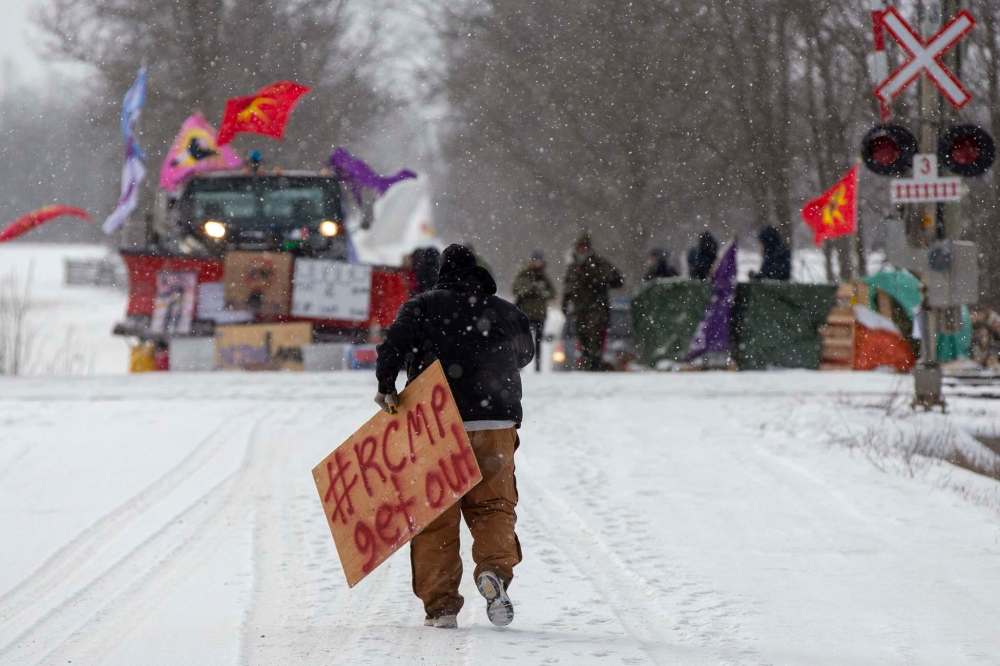
The province announced Bill 51 on Monday, which would “prohibit interference with the critical infrastructure or access to it.”
“The intent there would be to allow for people to gather, allow for their voices to be heard but to keep them and everyone safe while ensuring the unfettered operation, construction or use of that infrastructure,” said Justice Minister Cameron Friesen.
“There would be no desire to see the voices of Manitobans diminished in any way.”
The bill allows for the owner or operator of a piece of infrastructure the ability to apply for a court order to create a temporary protection zone.
Included would be oil or natural gas pipelines and provincial highways. It also includes courthouses, hospitals and animal processing facilities.
If a person were to go into the area, they could be fined $5,000 or jailed for up to 30 days. A corporation could be fined up to $25,000.
“There’s going to be challenges for that, I imagine,” said Chalmers. “We’ll see what happens, but it really upsets reconciliation when one side puts up a law like that.”
Birdtail Sioux has maintained an open dialogue with the provincial and federal governments, and Chalmers said they’ve maintained a promise to not block rail lines as long as said dialogue is open.
Not all First Nations can say the same, as evidenced by the blockades in British Columbia in support of Wet’suwet’en hereditary chiefs who opposed the construction of a pipeline.
Chalmers said he can’t think of anything comparable in Manitoba that might warrant Bill 51, and that any blockades he has heard of were resolved in short order.
Criminalizing protesters is an approach he said he “completely” disagrees with, and will only serve to complicate matters.
“The risk is they’re going to be throwing people in jail — and probably chiefs and council will go to jail … and it’s going to criminalize everybody,” he said.
“It’s pretty hard to negotiate from jail if you’re chief or council.”
Various environmental protests have taken place outside of Knox United Church in recent months, including the occasional Fridays For Future climate strike effort.
Although these protests have never disrupted traffic in any way, local activist Wayne Clayton is concerned the province is stepping closer toward the demonization of those who disagree with them.
“We all need to be careful that we’re not just putting someone down because they have a different opinion than us,” he said, adding the same could be said for both sides of many disagreements.
“If people can sit around a table and move forward on a common ground — that is by far the best.”
Manitoba NDP Leader Wab Kinew expressed his concern about “people’s civil rights and their freedom of speech” when asked about Bill 51 on Monday.
“It does seem as though the government is going to be interfering with some of those civil liberties,” he said.
Manitoba Liberal Party Leader Dougald Lamont called the bill “revenge-based legislation.”
“I understand why people are upset about those protests, but people also need to understand why First Nations are doing it,” he said. “They’re being portrayed as rule-breakers, but they are actually trying and pleading with governments to respect their legal rights.
“The reason these protests are happening is they want to governments to follow the law. They want governments to respect their property rights and their jurisdiction. I don’t see this as being a useful bill, just an escalation.”
The proposed legislation was committed to in the October 2020 throne speech, which pledged to introduce legislation that could prevent blockades of critical infrastructure.
» tclarke@brandonsun.com, with files from Colin Slark
» Twitter: @TylerClarkeMB