
Province expanding CWD surveillance
Advertisement
Read this article for free:
or
Already have an account? Log in here »
We need your support!
Local journalism needs your support!
As we navigate through unprecedented times, our journalists are working harder than ever to bring you the latest local updates to keep you safe and informed.
Now, more than ever, we need your support.
Starting at $15.99 plus taxes every four weeks you can access your Brandon Sun online and full access to all content as it appears on our website.
Subscribe Nowor call circulation directly at (204) 727-0527.
Your pledge helps to ensure we provide the news that matters most to your community!
To continue reading, please subscribe:
Add Brandon Sun access to your Free Press subscription for only an additional
$1 for the first 4 weeks*
- Enjoy unlimited reading on brandonsun.com
- Read the Brandon Sun E-Edition, our digital replica newspaper
*Your next Free Press subscription payment will increase by $1.00 and you will be charged $20.95 plus GST for four weeks. After four weeks, your payment will increase to $24.95 plus GST every four weeks.
Read unlimited articles for free today:
or
Already have an account? Log in here »
Hey there, time traveller!
This article was published 28/06/2022 (1548 days ago), so information in it may no longer be current.
To help prevent the spread of chronic wasting disease in Manitoba’s deer population, the provincial government is changing some hunting regulations.
The province is expanding the area from which samples are taken from hunted deer along the western and southern borders of Manitoba, said Maria Arlt, acting director for the fish and wildlife branch of Natural Resources and Northern Development.
All hunters in the mandatory submission zone must provide tissue samples from white-tailed deer, mule deer, elk and moose for chronic wasting disease (CWD) testing. Hunters will be informed if their animals test positive.
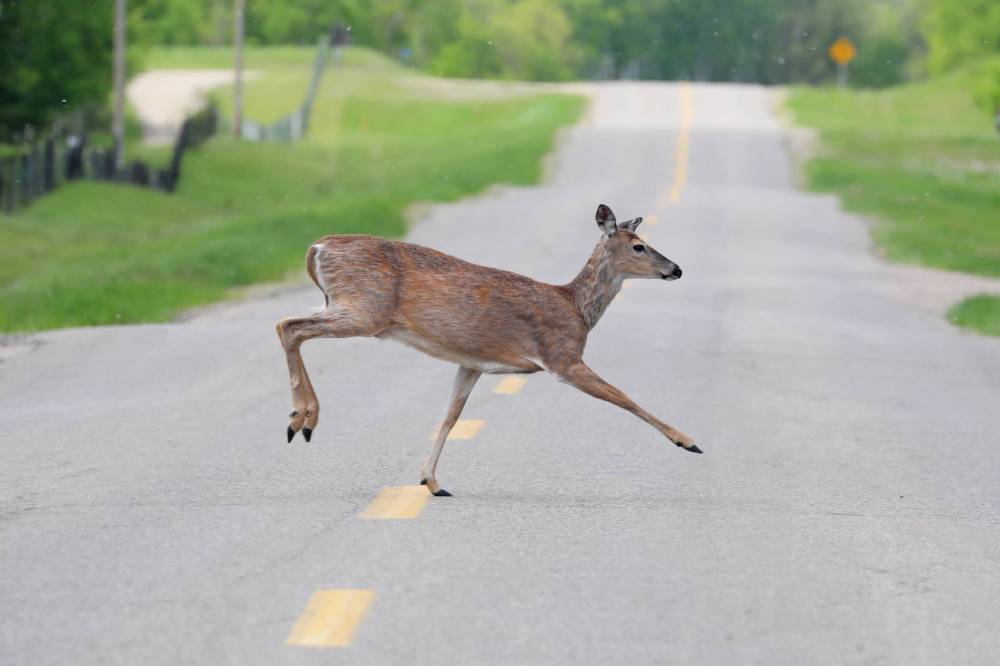
This will help the province determine if the disease has spread further, Arlt said. All hunters in the high-risk zone are being asked to practise safe carcass handling and avoid eating any flesh from the animals until test results come back.
New sample dropoff locations will be announced in mid-August.
The province is also establishing a strictly regulated mule deer hunting season in the affected areas and passing information on the risks of CWD to nearby Indigenous communities and stakeholders.
Anyone who has been hunting in southern or western Manitoba should have their animal tested.
“Chronic wasting disease is one of the most significant challenges in wildlife management,” Arlt said. “It has significant negative impacts to wildlife populations, as well as hunting outfitters, tourism and Indigenous food security.”
The concern is that it’s continuing to spread in Saskatchewan in both whitetail and mule deer populations. As well, more deer have tested positive for CWD in Minnesota and North Dakota near the Manitoba border.
There has been a CWD surveillance program in place since 1997, Arlt said. Extensive testing has been done in the whitetail population, but there has been limited testing for mule deer. Having this hunting opportunity for that species will give the province more samples from the mule deer population to make sure there wasn’t any further spread.
Even with extensive testing in the area, Arlt said the province doesn’t believe the disease has spread past the five known cases.
“We feel those detections were very early and close to the border, so we don’t believe it spread beyond that,” she said. “But again, we are increasing our surveillance to ensure that is the case.”
The surveillance program is extensive, Arlt added. The early and widespread measures it took since CWD was detected have likely prevented much transmission and more actions will help catch it before it can spread again.
CWD is a highly contagious, incurable and fatal disease that affects members of the cervid species, including all deer, moose and elk. According to the Government of Canada website, signs that a cervid has CWD include excessive salivation, erratic behaviour, paralysis and sudden weight loss. How it is spread is unknown.
It was first detected in a mule deer in the Lake of the Prairies area on Oct. 14, 2021. Four more mule deer were found to be infected shortly after along the Saskatchewan border.
Since then, there have been no other cases detected, Arlt said.
While Manitoba Natural Resources and Northern Development says CWD is not transmissible to humans, people should not eat meat from infected animals.
Anyone with concerns can contact the province at CWD@gov.mb.ca.
» kmckinley@brandonsun.com
» Twitter: @kearnleighmcki1