
Province pledges $500K in support of healing centres
Advertisement
Read this article for free:
or
Already have an account? Log in here »
We need your support!
Local journalism needs your support!
As we navigate through unprecedented times, our journalists are working harder than ever to bring you the latest local updates to keep you safe and informed.
Now, more than ever, we need your support.
Starting at $15.99 plus taxes every four weeks you can access your Brandon Sun online and full access to all content as it appears on our website.
Subscribe Nowor call circulation directly at (204) 727-0527.
Your pledge helps to ensure we provide the news that matters most to your community!
To continue reading, please subscribe:
Add Brandon Sun access to your Free Press subscription for only an additional
$1 for the first 4 weeks*
- Enjoy unlimited reading on brandonsun.com
- Read the Brandon Sun E-Edition, our digital replica newspaper
*Your next Free Press subscription payment will increase by $1.00 and you will be charged $20.95 plus GST for four weeks. After four weeks, your payment will increase to $24.95 plus GST every four weeks.
Read unlimited articles for free today:
or
Already have an account? Log in here »
Hey there, time traveller!
This article was published 05/04/2022 (1622 days ago), so information in it may no longer be current.
The province announced new funding in support of Indigenous residential school healing centres Monday to improve available mental health and trauma supports for survivors and their families.
The $500,000 investment will be divided between 10 centres, according to Mental Health and Community Wellness Minister Sarah Guillemard.
“Manitoba is acknowledging past harms and responding to intergenerational traumas and needs of residential school survivors for support,” Guillemard said during the announcement.
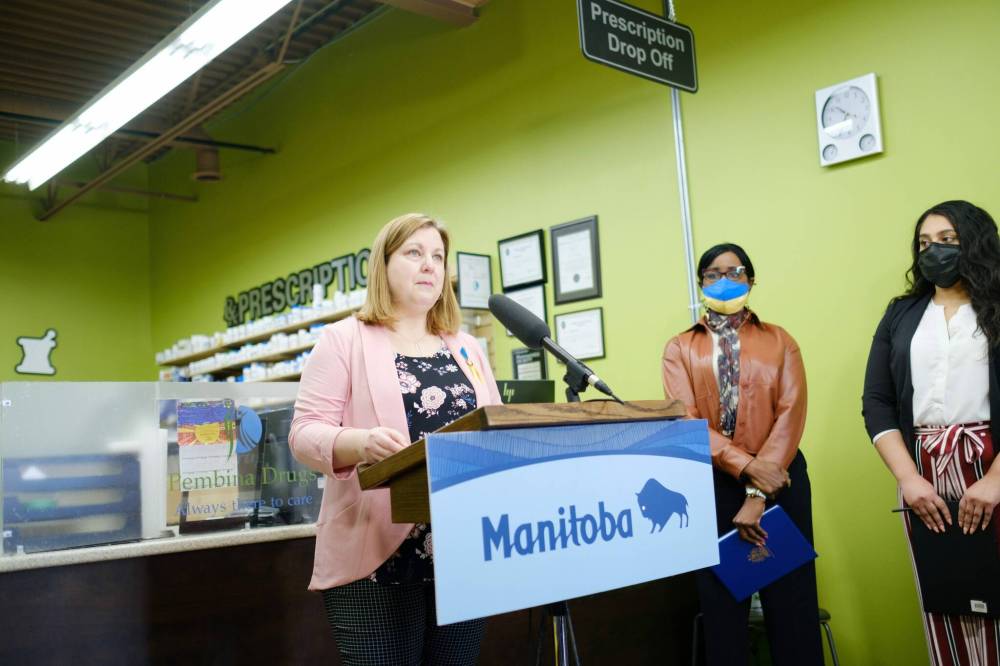
“We will partner closely with these Indigenous-led organizations to help bring about healing through traditional Indigenous ceremonies, safe mental health approaches and holistic community-based care.”
A cultural or residential school health support worker will be provided through 10 urban and rural organizations across Manitoba, including in Dauphin, The Pas, Thompson, Pine Falls and Winnipeg.
The investment is designed to supplement federal funding under the Indian Residential Schools Resolution Health Support program to provide spiritual, cultural, emotional and mental health support services to eligible former residential school survivors and their families.
The Dauphin recipient is West Region Treaty 2 and 4 Health Services, whose executive director Diane McDonald said aiding survivors on their healing journey remains paramount.
“There is a lot of healing that needs to take place,” McDonald said. “We need to work together with the province, federal [government] and First Nation communities to provide services that are going to be beneficial to our First Nation communities in that healing aspect.”
Residential and day school survivors continue to carry trauma from what they experienced while attending facilities. The lasting impacts of the trauma can be seen in the substance use crisis in the province and reports of addictions being on the rise.
Manitoba saw an increase in overdose deaths last year. There were a reported 314 overdose deaths from January to September 2021.
“I feel that we need more treatment centres that can help people that want to be healed,” McDonald said. “I wish Dauphin had a detox centre. I wish we had a treatment centre that we could send our people to, our First Nation members.”
She thanked the provincial government on behalf of West Region Treaty 2 and 4 Health Services.
Emotions remain high in First Nation communities as people are still healing from the rediscovery of unmarked graves across the country and the recent apology issued by the Catholic Church, McDonald said. These recent experiences have left many wondering if they have unmarked graves in their own communities at former residential school sites.
There has always been a gap between provincial health services and First Nation communities, McDonald said, and there is a need to start working together to remove that “invisible line.” The key gap is access to provincial health supports and resources, which has been an ongoing issue that still needs to be addressed. Additional treatment centres are also needed across Manitoba.
Dauphin has a full staff aiding residential school survivors and their families. These teams include a mental health program that includes specialists visiting communities.
The funding from the province can be used to enhance existing programming, she said, along with creating a monument to honour residential school and day school survivors in Dauphin to be placed in front of the planned cultural awareness centre.
“We have a lot of ideas.”
West Region is committed to responding and sending teams out immediately when crises emerge, McDonald said. These teams include a cultural worker to ensure they can offer a cultural component when providing aid to nation members experiencing a crisis.
“There’s so much healing that needs to take place, and one of the biggest questions is: where do we start? I think we need to start in the homes of the people that want to be healed.”
» ckemp@brandonsun.com
» Twitter: @The_ChelseaKemp