
Q&A: The Brandon Sun speaks with Premier Brian Pallister
Advertisement
Read this article for free:
or
Already have an account? Log in here »
We need your support!
Local journalism needs your support!
As we navigate through unprecedented times, our journalists are working harder than ever to bring you the latest local updates to keep you safe and informed.
Now, more than ever, we need your support.
Starting at $15.99 plus taxes every four weeks you can access your Brandon Sun online and full access to all content as it appears on our website.
Subscribe Nowor call circulation directly at (204) 727-0527.
Your pledge helps to ensure we provide the news that matters most to your community!
To continue reading, please subscribe:
Add Brandon Sun access to your Free Press subscription for only an additional
$1 for the first 4 weeks*
*Your next subscription payment will increase by $1.00 and you will be charged $20.00 plus GST for four weeks. After four weeks, your payment will increase to $24.00 plus GST every four weeks.
Read unlimited articles for free today:
or
Already have an account? Log in here »
Hey there, time traveller!
This article was published 27/07/2019 (2450 days ago), so information in it may no longer be current.
With a provincial election scheduled for Sept. 10, The Brandon Sun recently spoke with Premier Brian Pallister about the upcoming campaign and his last three years in power.
The governing Progressive Conservative party will be in a much different position in this election than the last time it asked Manitobans for their vote. The Progressive Conservative party took over with a large majority, ending 17 years of NDP government and securing all Westman seats.
Pallister announced earlier this year the next election would be held more than a year early, breaking the previous fixed election date of Oct. 6, 2020.
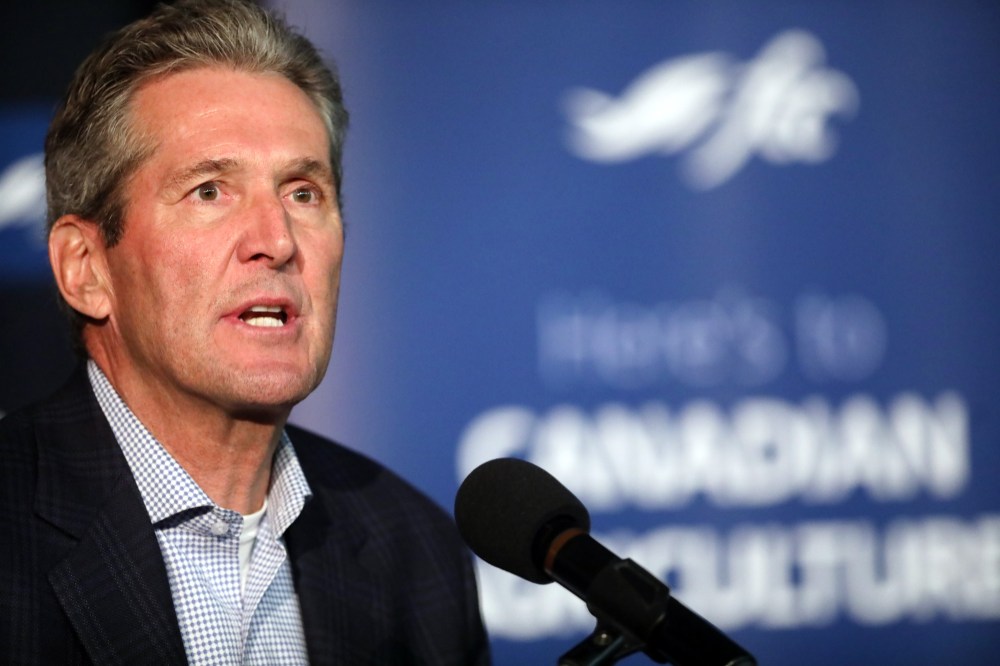
Drew May: During the last election, you were in opposition and hadn’t had a good look at the provincial books. This time, you’re going into it as the incumbent, so how does that change your approach to the campaign this time?
Brian Pallister: Well, I welcome the opportunity to have Manitobans look at our record, but I also welcome the opportunity to put a few things out there that we think we can focus on to make Manitoba even better and stronger going forward. So it’s a bit of both, I guess. We did inherit quite a mess financially and socially, longest wait times in Canada, and now we are, according to the Canadian Institute of (sic) Health Information, ranked No. 1 on shortening wait times, so that’s a really good accomplishment, but there’s more to be done. That’s why things like adding dozens of paramedics to improve, to get better care sooner to the people outside of the major centres is a major aspect of what we’re doing to improve health care provincewide. In doctor recruitment, when we came in we were short doctors in many regions of the province; we just hired the second-highest number of doctors that’s ever been hired in Manitoba, and we’ve addressed that one, but again these are ongoing challenges. I’m really proud of the fact that we maintained our investments and strengthened them in areas like health care and education and social services without raising taxes while we reduced our deficit below projections by about 80 per cent. That’s overall strong leadership that we provided and I think Manitobans are pleased.
DM: Of course, in the last election campaign you didn’t make too many promises, but going forward into this election campaign, are you going to make any promises for the Brandon and Westman region of the province?
BP: I think people are tired of politicians promising to do all kinds of things for them with money they’re borrowing from them and their children. We’ll be running on a realistic platform, just as we did last time. I think it could be fair to say we under-promised but we over-delivered. I was asked right in the run-up to the last election, “Well, what about this school? The NDP has promised a school for Brandon the last three elections, are you going to promise it, too?” I said, “Well the first thing I’m going to do is make sure we have a real good understanding of where we’re at as a province financially.” I did that, and we found that we had the ability, and we had to proceed to building some schools. We’ve got seven schools underway, and as you know one of them is Maryland Park. I never believed that promising people things is the right way to go in politics. I think what you do is deliver and we’ve delivered. The NDP promised the Daly (Overpass) for how many different years and the project is going to get underway, and we’re looking at completion by winter 2021. That’s a good example of our sincerity, I think. Another good one for Brandon, I think is, retiring that debt on the Keystone Centre. The Keystone Centre is a major, major economic driver for Westman and for the province of Manitoba, but putting it on a solid financial footing is, I think, a really important benefit for the people of Brandon and Westman area going forward.
DM: Speaking of some of those ongoing provincial things in Brandon, there was Brandon University’s downtown development. They did recently decide to go the private sector route, but is there still a provincial role there?
BP: Well, there may be, and obviously we’re going to have to have those discussions. We’ve got some new dynamics at play there, new people to establish relationships, as well as the previous participants or proponents. But I would argue that another important piece for Brandon is this K-12 education review, because what we know is that as a training centre, Brandon is pivotal in the province for preparatory instructions. Our K-12 schools can do a better job. And so that review is a historic review that’s underway right now, and I’m very excited about it. As the son of a former teacher at Neelin — is where I student-taught — I believe education is a critical investment going forward, and I think we can do a better job for our kids. I’m really excited about that review underway.
BP: I would go another vein, too, if I could and talk about our economic development strategies as a province, and I’m really excited about where we can go on this. We are leading the country the last two years in attracting private-sector capital to Manitoba, we are the No. 1 province and we are growing our private sector, and it’s really exciting to see, because those are where the long-term sustainable jobs are. Brandon, it’s no secret, has grown, almost led the way in Manitoba in terms of its growth over the last number of years, largely due to private-sector investment coming into the city and into the region. I’m excited to see that continue and accelerate going forward, because that’s where we are able to give a better future to our young people as they come out of BU or ACC that they can find good work closer to home, close to their family. I’m a rural Manitoba guy, and I’m really happy when I see our high school graduates from rural schools have the chance to find work closer to home.
DM: Moving on a little bit, Brandon is growing, but there remains an issue across the province with meth and drug use. Here in Brandon, we’ve seen fentanyl recently start to move in, so on the topic of fighting drug addiction, what would a re-elected PC government do for Westman on the topic?
BP: Well, we’ve already taken some actions, but certainly — I just returned from the premiers’ meetings last week over in Saskatoon and raised this issue. We’ve got a commitment from all the premiers and health ministers now to work more closely, because this is not a unique problem to Manitoba. It varies across jurisdictions. In B.C., fentanyl is a major problem, and Brandon is seeing increased incidents on fentanyl recently, but until recently it was largely meth that we were concerned about. The better co-ordination piece is really important, because we’re not alone in this challenge. Other province are facing this. Best practices need to be adopted. That’s why we set up that tri-partite structure you’re familiar with and worked with the City of Winnipeg and the federal government to develop recommendations on how to deal with the current situation related to meth. It was focused on meth largely, was to make sure that we’re proceeding co-operatively and getting the best results we can in the circumstance; not just reacting to the challenge currently before us, but also setting the stage to deal more effectively as situations change. Two years ago in Winnipeg, it was largely opioids that was the issue, and now it’s meth that’s the emerging problem. Two years from now, we aren’t sure what it’s going to be. We’ve taken a lot of action already, tens of millions of dollars in additional investment in Rapid Access clinics, there’s one in Brandon obviously, expanded the hours of their operations, tripled treatment beds at the Addictions Foundation of Manitoba; at the Health Sciences Centre we’ve added beds. Obviously, more needs to be done in terms of things like needle cleanup. I would emphasize this: my concerns isn’t solely — as much as I feel great sympathy for the people who make the decision to use meth and to use opioids — I also am very, very concerned about the neighbourhood safety of the people who chose not to. Their concerns can’t be ignored in this.
BP: Also the educational piece, I commend Mayor (Rick) Chrest for his work, his outreach. He has really, I think, done a good job of going out and actually encouraging young people not to make the mistake of getting into the drugs in the first place. This eduction piece is one, for example. I just spoke with Premier (John) Horgan from British Columbia last week on this issue, and he said “That education piece going forward is a very important part of this.” Well, we’ve already got plans to beef up the education piece to make sure that drug prevention, not just the treatment after people get addicted to it, is on the radar, and we’re doing what we can to help young people make the right choices.
DM: You touched on this briefly, but there was that report, the Illicit Drug Task Force report that was between the three levels of government. I know that you already moved on a couple of those items …
BP: I think over half of them already. I just had discussions with a couple of our ministers on this, and they and their departments are pursuing acting on all those recommendations, so we’re already halfway there in three weeks, which is a pretty good indication of our willingness to respond and to act.
DM: Speaking of that, was there anything in that you would not move on, that the provincial government would disagree with?
BP: I don’t think so. The one thing the NDP keeps putting on the radar, and not one premier agrees with this, by the way — this was raised in discussion at the national premiers’ meeting — is this idea of giving drugs away at these injection sites. Opioids are a different deal, and B.C. does have injection sites, they set up where there is concentrated use, the lower east side of Vancouver has a very high-use area. But nobody supports the idea of making crystal meth more readily available to people to inject it in dedicated sites. Nobody. In fact, the City of Winnipeg police chief came out this week and said “Absolutely not.” There’s not one premier who thinks that is a good idea, and there is not one jurisdiction in Canada, or that we can find globally, that has set up an injection site for crystal meth. So the NDP is wrong on this, they need to admit it. I’m certainly open to any other ideas they or others have, and we’re excited to act on those, because we care about community safety, and we care about these folks who are addicts. We want to get them off drugs, though, we don’t want to give them drugs.
DM: Moving on to a bit of a different topic here, in recent days there has been a bit of friction between the provincial government and the federal government, specifically with what Minister Catherine McKenna has been saying about funding school boards directly with carbon tax money. Going forward, we do have a federal election in October, so where do you see the relationship between the province and the federal government going moving into next year and next couple years?
BP: I think our relationship, actually, has been very good and productive overall. But we did disagree; we agreed with many things, and we worked co-operatively on a number of ag initiatives, a lot of infrastructure projects, housing projects, I could go on. Where we disagree with the Trudeau government’s approach is on this carbon tax. We do not agree that a rising carbon tax is anything but going to punish the people of rural Manitoba, northern Manitoba and, in fact, anybody who has to commute to work or has to drive their kids to events, sports events or seniors living on fixed incomes. It’s very dangerous, so we advanced our own plan, which the federal government rejected. If we have to, and we hope we don’t have to, but if we have to we will go to court, and we believe we’ll win, and we’ll have our own made-in-Manitoba plan instead of this Ottawa tax plan, which we see as dangerous. Some of our major industries in our province are agriculture, transportation, and this is a very punitive approach the federal government has taken, and we think very misguided. So we’ve stood up to the federal government on that issue in the best interests of Manitobans. We think Manitobans want a made-in-Manitoba plan and — look we have a great green plan. It is. We lead the country in our conservation trust we started, put over $100 million in that conservation trust. We’re doing projects for wetlands restoration, we’ve got the most stringent fuel-additive rules in the country, we’re moving to do things that basically put us in the lead on green, but we deserve respect from Ottawa, because we’re already paying. We’re paying billions of dollars for clean, green hydro that we won’t get a return on for decades to come. And we need respect from Ottawa for our plan, because it’s a better plan than theirs.
DM: So if the Manitoba court challenge fails, like it did in Saskatchewan, would you continue to fight and appeal it to the Supreme Court?
BP: Well, we’re very, very confident that we have a different case and a stronger case than any other province, because we are green and because we have advanced a plan to stay green, which puts us ahead of any other jurisdiction. We also know that the federal Liberals made exceptions for other provinces like Quebec and Newfoundland and Labrador and Nova Scotia and allowed them to do things to avoid the impact being felt by their people. Like, for example, lowering their gas tax and then saying they’re adding a carbon tax, which is not the right way to deal with this issue, frankly, it’s inconsistent and it’s not how our country should be run.
DM: On the issue of legalized cannabis, I know you’ve been saying that there aren’t going to be many revenues, but this year we’re almost a year into legalization, are you where we thought we would be with that?
BP: Yes, I think we are where we thought we’d be. I told the federal government in no uncertain terms, and this is a point of disagreement, that if they rush the legalization, they wouldn’t be able to supply the demand. That’s exactly what’s happened, and now what we have is a situation where we’re trying to satisfy demand with a third of what we need in terms of product. Well, that does nothing but embolden the illegal distribution of cannabis, the black-market distribution of cannabis. They rushed, they shouldn’t have rushed, but that horse left the barn. What we’re doing is we’re doing the best we can with a bad situation. But, there is no doubt that our costs for at least the first couple of years are going to exceed our revenues. Now, I understand the Liberal leader was talking to (the media) and said something about that if I can’t sell drugs and make money, I’ve got a real problem. OK, that’s fine, good political comment I guess, but the actual fact of the matter is that there is a lot of cost borne by the provincial government that we’re not going to cover because we had to adopt and adapt all kinds of changes in Manitoba to accommodate the federal legalization strategy that aren’t going to see any revenue covering them. There’s a difference between gross and net and — I don’t want to be condescending to the Liberal leader — but the Liberals don’t seem to understand that. Conservatives do. So with your expenses, I’ll just make this real clear, exceed your revenues that’s called a net loss. That’s what the province will have for the next couple years barring massive improvements in the availability of product and massive reduction in the amount of illegal product being sold in the black market, because our costs remain the same either way — and they’re high.
DM: But speaking about that black market, you’re saying that there isn’t enough product, but here in Brandon I think we have five or six stores scheduled to (be) open here, so how do you balance not enough product with all these new stores?
BP: Well, because we have the best model of any province. We have the best of both worlds. We have the private-sector delivery — the private sector is getting ready, they’re assuming and I hope they’re right, that the federal government will proceed to license more producers to make product available. They’re getting positioned in the marketplace to get ready to take care of customer need, that’s as it should be. We’re regulating using the public sector, because that’s what they can do better, but we’re letting the private sector determine where the stores will be and where the customers needs will best be met. What you realistically have is you have more stores who none of which are working to full capacity yet. I think it would be a fair statement.
» dmay@brandonsun.com
» Twitter: @DrewMay_