
Westman MPs decry ‘uncontrolled spending’ in Budget 2022
Advertisement
Read this article for free:
or
Already have an account? Log in here »
We need your support!
Local journalism needs your support!
As we navigate through unprecedented times, our journalists are working harder than ever to bring you the latest local updates to keep you safe and informed.
Now, more than ever, we need your support.
Starting at $15.99 plus taxes every four weeks you can access your Brandon Sun online and full access to all content as it appears on our website.
Subscribe Nowor call circulation directly at (204) 727-0527.
Your pledge helps to ensure we provide the news that matters most to your community!
To continue reading, please subscribe:
Add Brandon Sun access to your Free Press subscription for only an additional
$1 for the first 4 weeks*
*Your next subscription payment will increase by $1.00 and you will be charged $20.00 plus GST for four weeks. After four weeks, your payment will increase to $24.00 plus GST every four weeks.
Read unlimited articles for free today:
or
Already have an account? Log in here »
Hey there, time traveller!
This article was published 08/04/2022 (1458 days ago), so information in it may no longer be current.
It wasn’t a surprise the deficit in this year’s federal budget was higher than expected for Westman’s members of Parliament, but it was a disappointment for them.
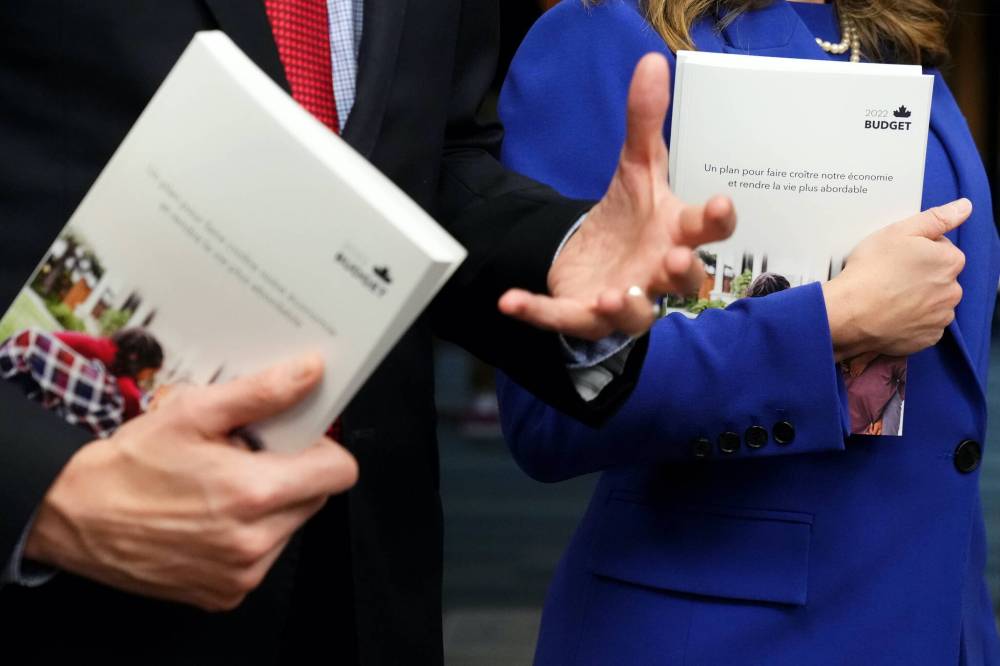
When Deputy Prime Minister and Finance Minister Chrystia Freeland unveiled Budget 2022 on Thursday, the deficit rose from an earlier projection of $44.1 billion to $52.1 billion.
“It’s almost like they’re doubling down with Canadians’ money,” Dauphin-Swan River-Neepawa Conservative MP Dan Mazier said in a phone interview from Ottawa on Friday. “I cannot get over the amount of spending — and it’s uncontrolled spending.”
Both Mazier and his caucus colleague Brandon-Souris MP Larry Maguire said they could see the influence of the NDP in the budget after the party signed a confidence and supply agreement to keep the Liberals in power through 2025 in exchange for concessions on items like pharmacare and dental care.
One of the large focuses in the budget was on making housing more affordable, with approximately $10 billion earmarked to help increase the supply of homes, regulate the role of foreign buyers in the market and create a program that would allow people aged 40 years or younger to save up to $40,000 in a tax-free savings account to put toward buying their first home.
Mazier is unconvinced the new policies will actually make an impact, saying the Liberals first touted affordable housing as one of their priorities when they first formed government in 2015 and he has yet to see any forward progress.
“They talk about doubling the amount of homes that we have in Canada,” Maguire said. “The only thing they’ve doubled is the national debt.”
Earlier this week, the Conservatives put forward a motion calling for Canada to meet its military spending obligations as a member of NATO, which states member nations should spend at least two per cent of their gross domestic product on defence.
That motion passed through the minority House of Commons with only the NDP voting against.
Thursday’s budget featured $8 billion in new military spending over the next five years.
New spending will bring Canada closer to its NATO goal, but not all the way. The Canadian Press reported Thursday that defence analyst David Perry of the Canadian Global Affairs Institute said despite the new funds, Canada still risks falling behind its allies on military spending.
“What they did will only bring it to about 1.5 per cent [of GDP] instead of the two per cent that we, the NDP and the Bloc wanted to get passed, wanted to encourage them to work towards,” Maguire said. “The purchase of airplanes, the F-35s, will take years and years … we can’t take for granted our own defence.”
Speaking to media after the budget release, interim Tory leader Candice Bergen seemed happy that defence received a boost.
“But we’re going to be looking for where they’re going to be spending it and that they’ll actually get that money out,” she said.
On that point, Mazier agrees with his leader. He and Maguire also agreed with Bergen’s disappointment that the budget doesn’t contain any provision of military supplies Ukraine has requested in its war against Russia, just money.
Both Maguire and Mazier would have liked to see an emphasis on increasing Canadian energy exports, especially with countries in Europe trying to wean themselves off of their dependency on Russian oil and gas.
Bergen has already signalled her party won’t support the budget, but given that the Liberals will have the NDP’s support, it’s likely to pass.
Though Mazier didn’t have anything positive to say about the federal budget, Maguire said he agreed with attempts to limit foreign influence in the housing market and a reduction in tax in small businesses. He believes the tax credits to help homebuyers could be helpful, but isn’t sure how it will work out.
On Friday, Manitoba Finance Minister Cameron Friesen released a statement saying the federal government failed to deliver on the most important item to all Canadians — health care.
“Now more than ever, the federal government needs to restore a sustainable health-care funding partnership through the Canada Health Transfer,” Friesen wrote. “At just 22 per cent, the federal share is simply inadequate, as the pandemic sadly proved. Immediate and sustained investments are required to increase the federal share to 35 per cent. Our premier will continue to collaborate with her counterparts to press the federal government on this critical issue in the months ahead.”
The province will unveil details on how it intends on tackling affordability and health care in its budget being released next Tuesday.
In a joint media conference held Thursday at the legislature, Manitoba NDP Leader Wab Kinew and Alberta NDP Leader Rachel Notley also criticized the federal budget but said the lack of increase in health transfer will prevent the damage done to their respective provinces’ health-care systems by Conservative governments.
“Manitobans are paying the price after years of living with a health-care system that is underfunded and unable to withstand PC cuts,” Kinew said.
“In all, 170,000 people are waiting for life-saving surgeries, tests and procedures. Health-care staff are overworked and exhausted and patients are being transferred hours away for care. We need to get Manitoba back on track and fix the damage the PCs have caused, and to do that we need a willing federal partner and a commitment at the provincial level to spend every new health dollar at the bedside.”
» cslark@brandonsun.com
» Twitter: @ColinSlark