
Former privacy czar denounces lack of transparency over government’s phone-data haul
Advertisement
Read this article for free:
or
Already have an account? Log in here »
We need your support!
Local journalism needs your support!
As we navigate through unprecedented times, our journalists are working harder than ever to bring you the latest local updates to keep you safe and informed.
Now, more than ever, we need your support.
Starting at $15.99 plus taxes every four weeks you can access your Brandon Sun online and full access to all content as it appears on our website.
Subscribe Nowor call circulation directly at (204) 727-0527.
Your pledge helps to ensure we provide the news that matters most to your community!
To continue reading, please subscribe:
Add Brandon Sun access to your Free Press subscription for only an additional
$1 for the first 4 weeks*
*Your next subscription payment will increase by $1.00 and you will be charged $20.00 plus GST for four weeks. After four weeks, your payment will increase to $24.00 plus GST every four weeks.
Read unlimited articles for free today:
or
Already have an account? Log in here »
Hey there, time traveller!
This article was published 11/02/2022 (1499 days ago), so information in it may no longer be current.
OTTAWA – Ontario’s former privacy commissioner says she is troubled “by the complete lack of transparency” from the Public Health Agency of Canada over its plans to collect millions of people’s mobile phone data.
Giving evidence to the House of Commons ethics committee, Ann Cavoukian said she found it “disturbing” that data from mobile phones had been collected without actively informing the public first.
Cavoukian, who was privacy commissioner in Ontario from 1997 to 2014, expressed alarm that a request from the privacy commissioner of Canada to look at the privacy implications of the plans was rebuffed by the government.
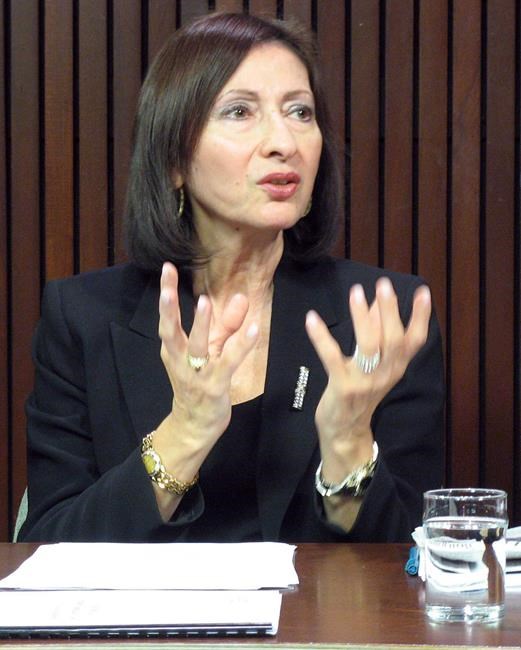
“Looking under the hood by the privacy commissioner is absolutely essential,” she said Thursday.
She told MPs that although the data gathered was anonymized, questions remain about whether it could be “re-identified.”
Cavoukian said, in general, it is easier to identify people from data in small communities than in big cities.
The public health agency has said the mobile phone data was gathered to help it understand travel patterns during the COVID-19 pandemic.
It said in a statement that it “has not and will not be able to identify or track individuals using this data.” The data is anonymized and aggregated and does not include personal information.
In December, it issued a new request for proposals to track countrywide cell tower-based location data between Jan. 1, 2019, and May 31, 2023.
The notice said the data must be accurate, accessible and timely, while ensuring privacy and transparency. It must also be stripped of all identifying information.
Daniel Therrien, the federal privacy commissioner, told the committee in an earlier session that the government declined his offer to advise it on the implications of collecting data from millions of mobile phones. The government consulted its own privacy experts instead.
Cavoukian warned that data gathered en masse during a pandemic or a time of crisis should not set a precedent, allowing it to become usual practice. She said protecting personal privacy should remain a priority during a crisis.
Damien Kurek, a Conservative member of the committee, said in an interview that the “government seems to be preparing itself to be able to use this information in the longer term.”
Canadians have the right to be “very concerned” about the lack of transparency from the public health agency about the collection of people’s cellphone location data, Kurek said.
Members of Parliament passed a motion on Tuesday that called on the government to suspend its plans to extend the collection of mobile-phone location data. The MPs wanted privacy concerns to be looked into first.
The office of Health Minister Jean-Yves Duclos has said the data does not contain personal information that would identify anyone. It has said its priority is keeping Canadians healthy and safe while upholding privacy standards.
The public health agency said all personal identifiers were removed from the data before it received it.
“PHAC briefed the office of the privacy commissioner (OPC) in April 2020 on this issue and provided assurances that an analysis was undertaken to determine that the data captured would not include personal information, and had discussions with the OPC again in Jan. 6, 2022,” it said in a statement.
This report by The Canadian Press was first published Feb. 11, 2022.