Trudeau pledges more action on cybersecurity following decision to ban Huawei from 5G
Advertisement
Read this article for free:
or
Already have an account? Log in here »
We need your support!
Local journalism needs your support!
As we navigate through unprecedented times, our journalists are working harder than ever to bring you the latest local updates to keep you safe and informed.
Now, more than ever, we need your support.
Starting at $15.99 plus taxes every four weeks you can access your Brandon Sun online and full access to all content as it appears on our website.
Subscribe Nowor call circulation directly at (204) 727-0527.
Your pledge helps to ensure we provide the news that matters most to your community!
To continue reading, please subscribe:
Add Brandon Sun access to your Free Press subscription for only an additional
$1 for the first 4 weeks*
*Your next subscription payment will increase by $1.00 and you will be charged $20.00 plus GST for four weeks. After four weeks, your payment will increase to $24.00 plus GST every four weeks.
Read unlimited articles for free today:
or
Already have an account? Log in here »
Hey there, time traveller!
This article was published 20/05/2022 (1416 days ago), so information in it may no longer be current.
OTTAWA – A day after the federal Liberals banned Chinese firms Huawei Technologies and ZTE from helping build Canada’s 5G networks, Prime Minister Justin Trudeau said more must be done to secure critical systems against threats.
The government is working closely with big financial institutions as well as other companies across the country to protect vital networks from malicious attackers, Trudeau said Friday at an event in Quebec.
Canada will do more, whether through legislation, new spending or “better and stronger partnerships,” he told reporters.
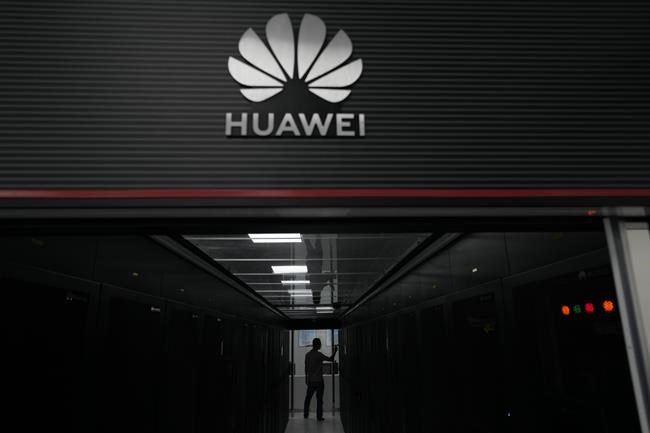
Trudeau seemed undaunted by the fact Chinese Foreign Ministry spokesman Wang Wenbin raised the spectre of retaliation over Canada’s 5G decision at a press briefing Friday.
“Without any solid evidence, the Canadian side cited vague security risks as a pretext to exclude relevant Chinese companies from its market,” Wang said.
“This move violates the market economy principle and free-trade rules and severely harms the Chinese companies’ legitimate rights and interests.”
Trudeau conceded Canada’s 5G policy “may well lead to challenges of the World Trade Organization.”
“But we feel that it is extremely important to stand up for Canadian protection, Canadian interests and Canadian safety. That’s why we took this decision and we stand by it.”
The Liberal government made it clear this week that the long-awaited 5G decision is only a first step in an era of perpetual cyberattacks, ransomware operations and efforts by criminal hackers and state-sponsored players to pilfer information or sabotage key infrastructure.
Public Safety Minister Marco Mendicino said Thursday the government would table legislation to protect critical infrastructure in the finance, telecommunications, energy and transport sectors.
In addition, Mendicino’s mandate letter from the prime minister directs him to expand efforts to detect security risks in foreign research and investment partnerships, partly by increasing RCMP and security agency resources for this purpose.
Fen Hampson, a professor of international affairs at Carleton University, said legitimate network integrity concerns, as well as persistent pressure from the United States, helped forge Canada’s decision to exclude the Chinese vendors from 5G.
“Is this going to resolve our security problems, security concerns? Absolutely not.”
Much of the “hidden wiring” of the Canadian economy lies in private hands, and securing it poses a huge challenge, he said. “We need to do a lot more.”
Hampson ponders whether Canada is prepared for a major cyberattack against a seaport or machines in the oilsands that rely on remote-communication technologies.
“I think the short answer is no,” he said. “I mean, yes, we’re getting better at it. But it’s not just being able to thwart and deter those attacks, but how resilient are we?”
The latest federal budget earmarks $875 million over five years, and $238.2 million ongoing, for cybersecurity measures including programs at the Communications Security Establishment, Canada’s electronic spy service, as well as more robust protection for small federal departments, agencies and Crown corporations.
The move is applauded as “utterly important” by Ulrike Bahr-Gedalia, senior director for digital economy, technology and innovation at the Canadian Chamber of Commerce.
However, the chamber wants the government to turn next to helping the private sector bolster its defences.
Bahr-Gedalia said knowing how to predict and prevent problems in the digital sphere is essential.
“It is crucial for businesses to be secure and safe,” she said. “We really want to be ahead of the game, which is so important.”
The chamber is urging the government to spend $1 billion to protect Canada’s critical infrastructure, supply chains and businesses of all sizes from cyberthreats.
This will augment the more than $7 billion already being spent by the private sector on cybersecurity products and services, it says.
It is also calling for $300 million to accelerate the commercialization of such products and services in Canada, and $200 million to build Canada’s future cybersecurity workforce through education, talent development and retention programs.
This report by The Canadian Press was first published May 20, 2022.