
Wildfire officials warn heat is now a concern in Alberta’s south, too
Advertisement
Read this article for free:
or
Already have an account? Log in here »
We need your support!
Local journalism needs your support!
As we navigate through unprecedented times, our journalists are working harder than ever to bring you the latest local updates to keep you safe and informed.
Now, more than ever, we need your support.
Starting at $15.99 plus taxes every four weeks you can access your Brandon Sun online and full access to all content as it appears on our website.
Subscribe Nowor call circulation directly at (204) 727-0527.
Your pledge helps to ensure we provide the news that matters most to your community!
To continue reading, please subscribe:
Add Brandon Sun access to your Free Press subscription for only an additional
$1 for the first 4 weeks*
- Enjoy unlimited reading on brandonsun.com
- Read the Brandon Sun E-Edition, our digital replica newspaper
*Your next Free Press subscription payment will increase by $1.00 and you will be charged $20.95 plus GST for four weeks. After four weeks, your payment will increase to $24.95 plus GST every four weeks.
Read unlimited articles for free today:
or
Already have an account? Log in here »
Hey there, time traveller!
This article was published 14/05/2023 (1249 days ago), so information in it may no longer be current.
EDMONTON – Wildfire officials in Alberta say hot, dry and windy weather has pushed fire conditions even further into the extreme in the province’s north this weekend, and the situation in the south is now a growing concern.
Josee St-Onge of Alberta Wildfire says the heat that’s been sparking new fires in the north and helping existing fires grow is also starting to impact the rest of the province.
While St-Onge says conditions in the south aren’t as extreme at the moment, the province may need to reposition resources so it can be ready to respond quickly to new fires in the area.
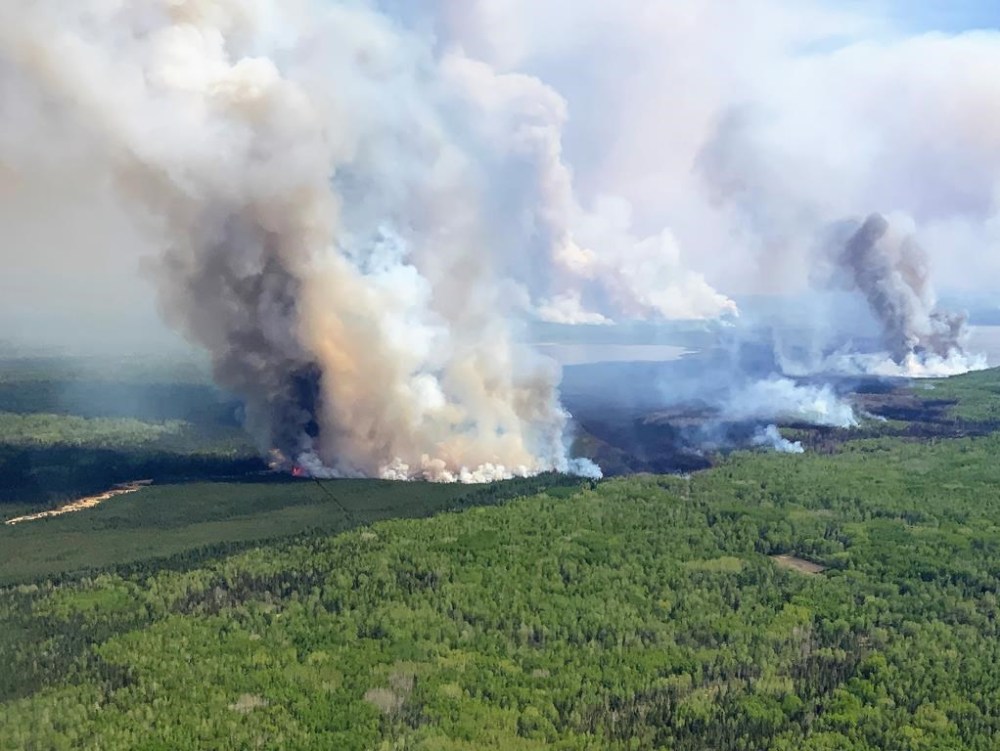
The number of evacuees in Alberta grew to more than 19,300 on Sunday, a jump from about 16,500 a day earlier, due to new evacuation orders in Rainbow Lake, Sturgeon Lake First Nation and Leduc County.
There were 87 active wildfires in Alberta on Sunday afternoon, with 24 considered out of control.
St-Onge says fire crews are already in the Rocky Mountain and Calgary forest areas in the south, but they could be bolstered with resources from the north, or even from outside the province, if fires break out and grow in the south.
“We’ll be analyzing the situation in the coming days, seeing where the wildfire danger is the highest, and moving our resources around appropriately to respond to any new wildfires that may start in the south of the province,” St-Onge told a news conference on Sunday.
She urged Albertans to remain extremely vigilant by following provincewide fire and off-highway vehicle bans in order to prevent sparking any new fires.
The return to hot and dry conditions following a brief reprieve last week was expected, and St-Onge said there was a corresponding increase in fire activity. However, she said firefighters were able to hold their ground in most areas on Saturday.
But the peak burning period for Sunday, which she explained occurs when temperatures are at their highest and fuels are their driest, was “still in front of us.”
There are over 1,500 Albertans fighting the fires. The province said an additional 200 firefighters from the United States have now joined them, bringing the total number of people from outside agencies assisting in firefighting efforts to more than 800.
St-Onge said crews have been busy building fire guards and containment lines.
“For the vast majority, those are holding so they are in a good position to continue making progress. But we are expecting challenging conditions to continue and that will be the case for the next few days as these hot, dry conditions persist,” St-Onge said.
Colin Blair of the Alberta Emergency Management Agency urged people in areas that are threatened to prepare in advance to evacuate, including having an evacuation kit ready.
“Everyone should know what to do, where to go and how to stay in touch with each other for those who are not together or at home when an evacuation order is issued,” Blair told Sunday’s news conference.
This report by The Canadian Press was first published May 14, 2023.