
What’s the difference between an inquiry and the hearings Johnston promises to hold?
Advertisement
Read this article for free:
or
Already have an account? Log in here »
We need your support!
Local journalism needs your support!
As we navigate through unprecedented times, our journalists are working harder than ever to bring you the latest local updates to keep you safe and informed.
Now, more than ever, we need your support.
Starting at $15.99 plus taxes every four weeks you can access your Brandon Sun online and full access to all content as it appears on our website.
Subscribe Nowor call circulation directly at (204) 727-0527.
Your pledge helps to ensure we provide the news that matters most to your community!
To continue reading, please subscribe:
Add Brandon Sun access to your Free Press subscription for only an additional
$1 for the first 4 weeks*
- Enjoy unlimited reading on brandonsun.com
- Read the Brandon Sun E-Edition, our digital replica newspaper
*Your next Free Press subscription payment will increase by $1.00 and you will be charged $20.95 plus GST for four weeks. After four weeks, your payment will increase to $24.95 plus GST every four weeks.
Read unlimited articles for free today:
or
Already have an account? Log in here »
Hey there, time traveller!
This article was published 24/05/2023 (1238 days ago), so information in it may no longer be current.
OTTAWA – Special rapporteur David Johnston says a public inquiry into allegations of Chinese interference in the 2019 and 2021 federal elections would not advance the goals of transparency or trust.
Johnston found in his first report, released Tuesday, that a formal commission of inquiry would be held mostly behind closed doors.
Instead, the former governor general proposes to hold public hearings himself, sometime before he writes a final report due at the end of October.
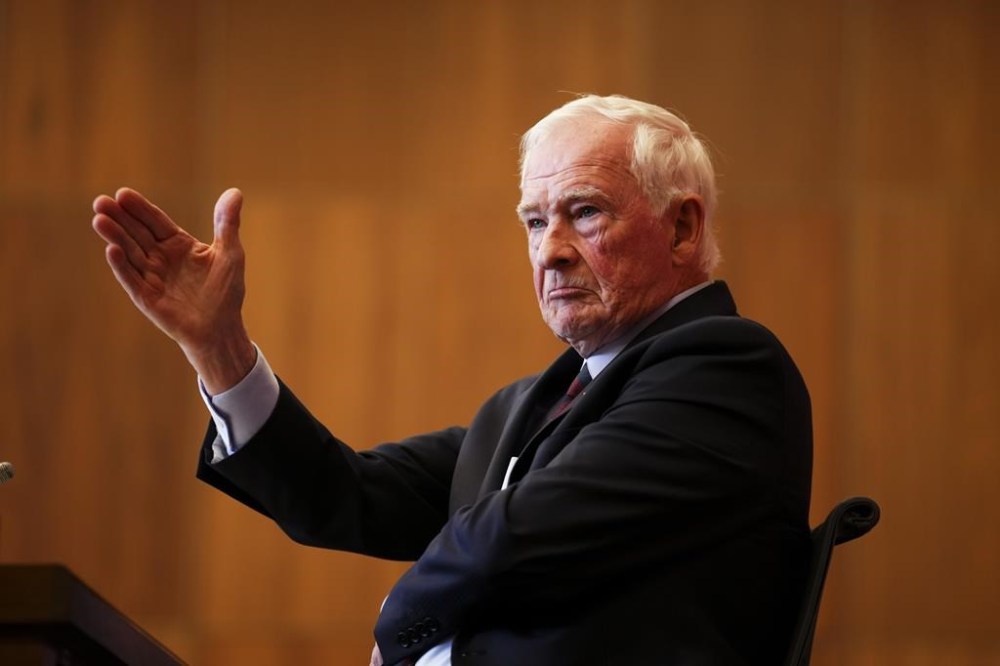
Here’s a look at the difference between those two things.
What’s the difference between an inquiry and hearings?
The Inquiries Act says the government can appoint commissioners who have the subpoena power to compel testimony.
They can require written and oral evidence, and they can require witnesses to swear to an oath. They can also demand that the government or other parties produce documents for them to examine.
Those are similar to the powers afforded to judges.
Johnston, as a special rapporteur, doesn’t have subpoena powers. But he says he wouldn’t need them to encourage public attention to the matters he is examining.
Those he invites will appear at their pleasure and risk no repercussions for declining an invitation.
Witnesses and other parties with standing at a public inquiry are able to be represented by their own legal counsel, who are often able to cross-examine other witnesses appearing.
That means more lawyers are involved, increasing the cost and time spent. Johnston is looking to avoid all of that.
“They are not especially efficient processes for discerning facts. By their nature, they are expensive and lengthy, often extending for years,” Johnston said in his report.
“The process is dominated by lawyers, and tends to become quasi-adversarial.”
Johnston said public hearings are a more timely and effective way to investigate foreign interference and share findings with the public and parliamentarians.
Who would he talk to?
Johnston said he had already received letters from Chinese-Canadian organizations indicating their concerns over how foreign interference is affecting diaspora communities.
“I also plan to have some of the conversations I have had with senior national security officials in public, so that Canadians can hear from them firsthand,” he said in the report.
Johnston said the hearings will include members of diaspora communities, experts, political parties and government officials submitting policy and governance solutions.
He said the public process should focus on strengthening Canada’s capacity to detect, deter and counter foreign interference in elections and the threat that type of interference represents to democracy.
What else would the hearings look at?
Johnston’s work has largely focused on looking at government documents and speaking with security officials, but he said he intends to spend the remainder of his mandate listening to Canadians.
The lengthy list of issues he hopes to tackle in the public hearings includes:
— how the government turns intelligence into evidence;
— examining the role of a parliamentary committee that examines national security issues and whether it can be strengthened;
— potential amendments to Canadian laws, including those that govern national security agencies, that could help the country foreign interference;
— changes that would improve how information is shared within government, and clarify who is responsible to react to intelligence;
— ways for the government to declassify information and enhance transparency;
— and how the government deals with threats against elected officials.
This report by The Canadian Press was first published May 24, 2023.