
Paul Bernardo’s transfer to prison that treats sex offenders not unusual: professor
Advertisement
Read this article for free:
or
Already have an account? Log in here »
We need your support!
Local journalism needs your support!
As we navigate through unprecedented times, our journalists are working harder than ever to bring you the latest local updates to keep you safe and informed.
Now, more than ever, we need your support.
Starting at $15.99 plus taxes every four weeks you can access your Brandon Sun online and full access to all content as it appears on our website.
Subscribe Nowor call circulation directly at (204) 727-0527.
Your pledge helps to ensure we provide the news that matters most to your community!
To continue reading, please subscribe:
Add Brandon Sun access to your Free Press subscription for only an additional
$1 for the first 4 weeks*
- Enjoy unlimited reading on brandonsun.com
- Read the Brandon Sun E-Edition, our digital replica newspaper
*Your next Free Press subscription payment will increase by $1.00 and you will be charged $20.95 plus GST for four weeks. After four weeks, your payment will increase to $24.95 plus GST every four weeks.
Read unlimited articles for free today:
or
Already have an account? Log in here »
Hey there, time traveller!
This article was published 05/06/2023 (1083 days ago), so information in it may no longer be current.
Notorious serial killer Paul Bernardo’s transfer to a medium-security prison that specializes in treating violent rapists almost three decades after his conviction is not unusual, says a Quebec criminology professor who studies sexual murderers.
Bernardo, who has been serving a life sentence for kidnapping, torturing and killing 15-year-old Kristen French and 14-year-old Leslie Mahaffy in the early 1990s near St. Catharines, Ont., was quietly transferred to La Macaza Institution, a medium-security prison about 190 kilometres northwest of Montreal, last week.
Bernardo was initially incarcerated at the Kingston Penitentiary in Ontario and later spent about a decade at the Millhaven Institution, a maximum-security prison just outside Kingston.
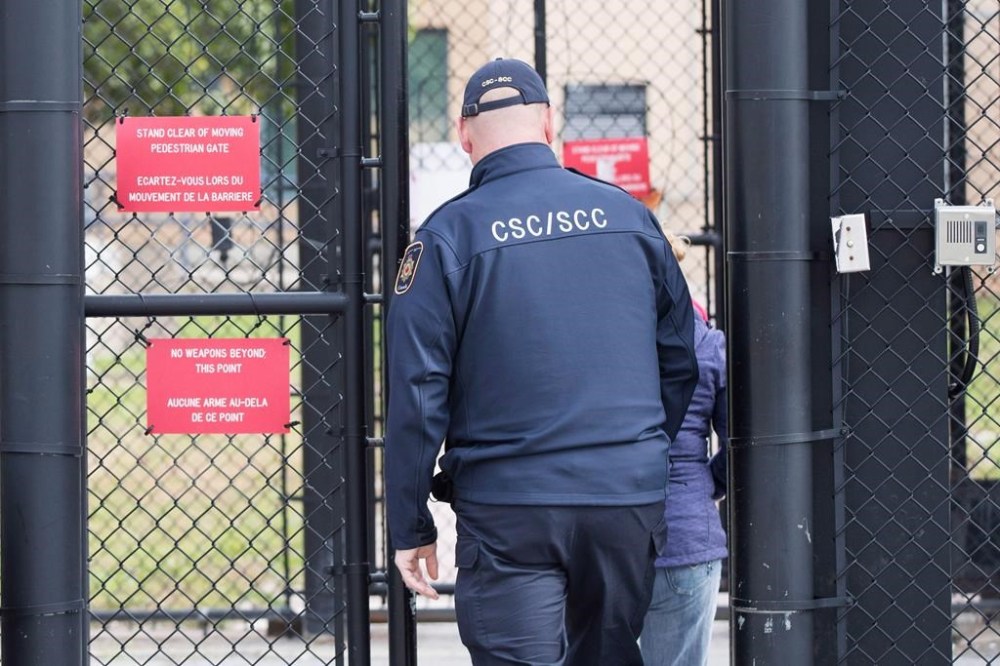
Family members of Bernardo’s victims and Canadian politicians have expressed outrage at the transfer, with Public Safety Minister Marco Mendicino calling it “incomprehensible.”
In a statement on Monday, the Correctional Service of Canada said its commissioner Anne Kelly was reviewing Bernardo’s security classification to ensure it was “appropriate, evidence based, and more importantly, adequately considered victims.”
“We are restricted by law in what we can divulge about an offenders case,” it added.
Jean Proulx of the Université de Montréal said in a phone interview Monday that although the public fury was understandable, Bernardo’s transfer is not shocking.
“I know the emotional reaction of the population is always very intense,” Proulx said in a phone interview.
“There is anger, anxiety, but at the same time, a person who commits those types of crimes, 25 years later, they may be a different person or they may be not a different person and we have to assess the level of risk.”
He says violent sex offenders are often transferred to La Macaza to begin more treatment as they near their eligibility for parole after spending about 20 years in maximum security.
He adds La Macaza Institution specializes in providing treatment to sex offenders and almost two-thirds of the inmates held there have been convicted of a sexual offence.
“There is anger management training, stress management training, social skill training, programming focusing on how to control, to reduce the interest for rape or sadistic behaviour,” he said.
“He will have a treatment and very detailed assessment of his level of risk,” said the professor, who has written three books about sexual murderers.
La Macaza also has a relapse prevention group that helps inmates understand how not to commit crime again, he added.
Proulx said judges who decide whether an inmate is eligible for parole focus heavily on their behaviours during treatment programs.
“They will have much more information to judge his level of risk and make a good, valuable decision as to the possibility of a conditional release.”
Correctional Service of Canada noted in its Monday statement that Bernardo “continues to serve an indeterminate and life sentence — the most serious possible in Canada.”
It also stressed that he “continues to be incarcerated in a secure and controlled institution – with every precaution in place to maintain safety.”
“We understand Canadians want to know reasons for such transfers,” it further said, adding that security classifications are based on “risk to public safety, escape risk, an offender’s institutional adjustment,” as well as other considerations.
A review of security level decisions is conducted every two years, by law, the service said. “It is important to note that some inmates never make it to minimum security nor do they return to our communities.”
Correctional Service of Canada states on its website La Macaza was built in the early 1960s as a military base.
“In 1970, the base was deserted, to later become collège Manitou, a school for Indigenous students, before becoming a prison facility. Correctional Service Canada acquired all of the facilities of this institution in 1977,” the website says.
La Macaza can house up to 240 inmates.
This report by The Canadian Press was first published June 5, 2023.
Note to readers: This story has been corrected to say that Paul Bernardo’s transfer to a medium-security prison took place almost three decades after this conviction.