
Quebec kids killed: Domestic homicide often follows many warning signs, experts say
Advertisement
Read this article for free:
or
Already have an account? Log in here »
We need your support!
Local journalism needs your support!
As we navigate through unprecedented times, our journalists are working harder than ever to bring you the latest local updates to keep you safe and informed.
Now, more than ever, we need your support.
Starting at $15.99 plus taxes every four weeks you can access your Brandon Sun online and full access to all content as it appears on our website.
Subscribe Nowor call circulation directly at (204) 727-0527.
Your pledge helps to ensure we provide the news that matters most to your community!
To continue reading, please subscribe:
Add Brandon Sun access to your Free Press subscription for only an additional
$1 for the first 4 weeks*
- Enjoy unlimited reading on brandonsun.com
- Read the Brandon Sun E-Edition, our digital replica newspaper
*Your next Free Press subscription payment will increase by $1.00 and you will be charged $20.95 plus GST for four weeks. After four weeks, your payment will increase to $24.95 plus GST every four weeks.
Read unlimited articles for free today:
or
Already have an account? Log in here »
Hey there, time traveller!
This article was published 28/08/2023 (1130 days ago), so information in it may no longer be current.
MONTREAL – The death of a Quebec man and his two children is a reminder for Canadians to be aware of the warning signs that someone may harm members of their own family, domestic violence researchers say.
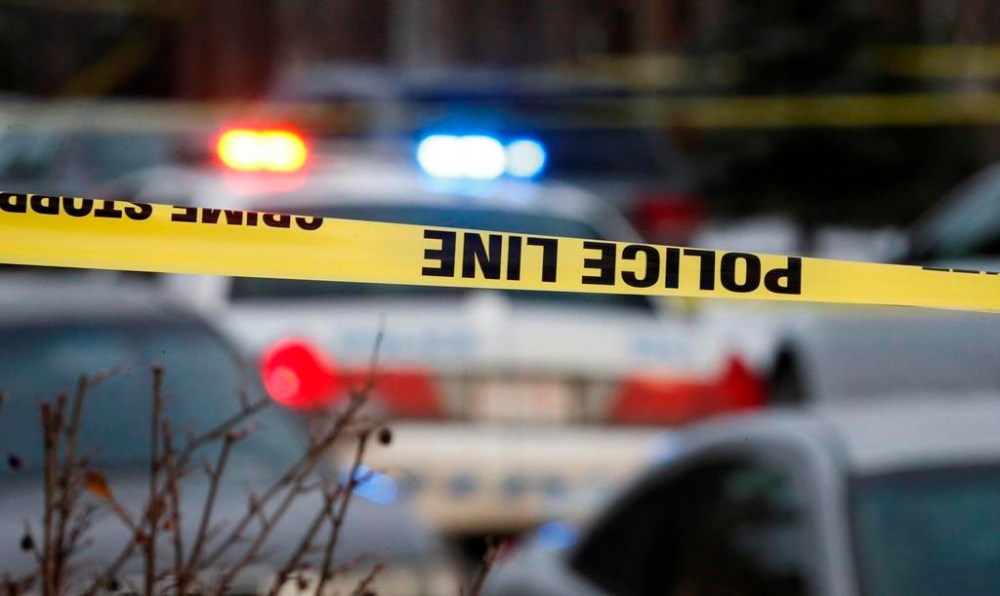
Police allege that Ian Lamontagne, 46, killed his two three-year-old children, Antoine and Tristan Lamontagne, before killing himself in Notre-Dame-des-Prairies, Que., northeast of Montreal, on Saturday.
Katreena Scott, with the Centre for Research and Education on Violence Against Women and Children at Western University, says cases of domestic homicide usually follow multiple warning signs.
“Domestic homicides are among the most predictable and the most preventable of all homicides,” she said Monday in a phone interview. “If we look back, we know that there are things that are going wrong and it’s a matter of being able to put the pieces together and act on those concerns.”
A recent separation, escalation of abuse, expressions of fear from a victim, or a partner showing signs of depression, suicidal ideation, or obsessive behaviour are all potential risk factors for domestic homicide, Scott explained.
The head of a Quebec City-based family and partner violence prevention organization says increasing attempts by a potential perpetrator to control a victim can be another sign, though those efforts are not always easy for onlookers to identify.
“In many cases of homicide, the homicide was the first act of physical violence,” said Sabrina Nadeau, the director of À coeur d’homme.
The risk factors that precede an act of violence “are really gestures of control,” whose goal, Nadeau continued, is to “deprive the victim of their freedom.”
Examples that may be apparent to someone outside the household could include requests from an abusive partner to help monitor or track their victim, or the use of dehumanizing, vindictive language to describe them, she said.
While Nadeau admitted “it takes a certain amount of training and knowledge of domestic violence to be able to identify the risks,” she said harassment reports to police from a victim or their loved ones, for example, could provide a “first sign” of their partner’s dangerous behaviour.
There are often other witnesses to at least some of the conditions that lead to domestic homicide, said Scott. The key, she stressed, is to “recognize those as indicators of risk” and “sharing information … so that that full picture comes out of the danger.”
Nadeau suggested there is some evidence that Canadians are becoming increasingly able to recognize family and conjugal violence, however.
While Statistics Canada recorded an increase in police-reported incidents of family violence in recent years — to a rate of 336 victims for every 100,000 people in 2021 — Nadeau suggested those numbers may be due to changing social attitudes.
“I don’t really think it’s gone up. It may have. But what I do think is that the population’s tolerance threshold has dropped,” she said.
“It’s becoming clearer and clearer that it’s no longer tolerated in society, and victims feel less and less alone.”
This report by The Canadian Press was first published Aug. 28, 2023.