
Quebec premier inaugurates vast Romaine hydro project on North Shore
Advertisement
Read this article for free:
or
Already have an account? Log in here »
We need your support!
Local journalism needs your support!
As we navigate through unprecedented times, our journalists are working harder than ever to bring you the latest local updates to keep you safe and informed.
Now, more than ever, we need your support.
Starting at $15.99 plus taxes every four weeks you can access your Brandon Sun online and full access to all content as it appears on our website.
Subscribe Nowor call circulation directly at (204) 727-0527.
Your pledge helps to ensure we provide the news that matters most to your community!
To continue reading, please subscribe:
Add Brandon Sun access to your Free Press subscription for only an additional
$1 for the first 4 weeks*
*Your next subscription payment will increase by $1.00 and you will be charged $20.00 plus GST for four weeks. After four weeks, your payment will increase to $24.00 plus GST every four weeks.
Read unlimited articles for free today:
or
Already have an account? Log in here »
Hey there, time traveller!
This article was published 12/10/2023 (906 days ago), so information in it may no longer be current.
HAVRE-ST-PIERRE, Que. – The newly inaugurated Romaine hydroelectric complex could serve as a model for future projects that are sorely needed in the province, Quebec Premier François Legault said Thursday.
“It brings me a lot of pride. It is truly the symbol of Quebec ingenuity,” Legault said as he opened the vast power plant on the province’s North Shore.
The premier told dignitaries that Quebec still doesn’t have enough electricity to meet demand from industry, and Quebecers need to consider more ways to boost the province’s ability to power future projects. The premier has said previously that demand is expected to surge by an additional 100 terawatt-hours by 2050 — half the current annual output of the provincially owned utility.
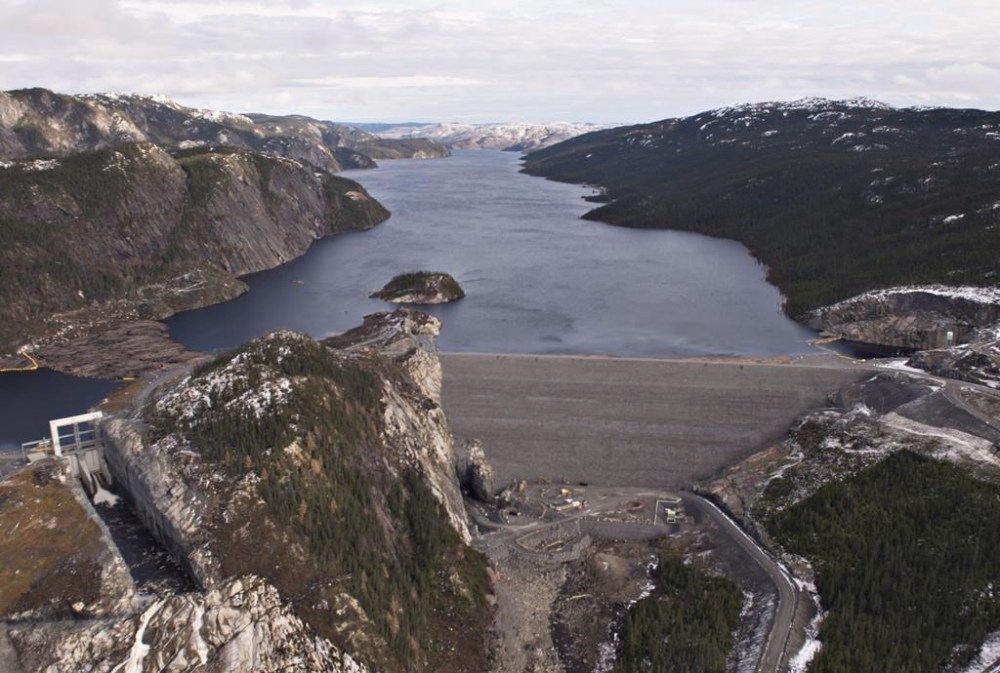
Legault’s environmental plan of reducing greenhouse gases and achieving carbon neutrality by 2050 hinges on increased electrification, so the electricity needs for transport and industry will be massive. An updated strategic plan from Hydro-Québec will be presented in November outlining those needs, president and CEO Michael Sabia told reporters on Thursday.
Legault said the report will trigger a broader debate on energy transition and how the province can be a leader in the green economy. He said he wasn’t ruling any potential power sources, except for a return to nuclear power. “For the next months, the next years, we are going to have important questions to ask ourselves in Quebec,” Legault said. “We will need to have a societal debate.”
Legault said wind power alone is not ideal because it is intermittent, so hydroelectricity remains the province’s main focus. He said the Romaine experience could serve as a blueprint for future projects.
Romaine is comprised of four power stations and is the largest hydro project built in the province since the Robert Bourassa generation facility in the James Bay area, which was commissioned in 1979.
The $7.4-billion Romaine complex can produce eight terawatt hours of electricity per year, enough to power nearly 470,000 homes. It generates its power from the Romaine River, located north of Havre-St-Pierre, Que., near the Labrador border.
Four workers lost their lives during construction, which led the provincially run utility to review and strengthen its practices.
Ekuanitshit Chief Jean-Charles Piétacho noted the construction also flooded a large part of his people’s traditional territory. “The eldest of our village, she turned 92 on Oct. 5, it would have been awkward to invite her with me today because her birthplace was flooded,” he said.
He invited the various stakeholders to “rethink” relations and agreements with First Nations and Inuit. He also called on officials to not build a dam on the Magpie River on the North Shore.
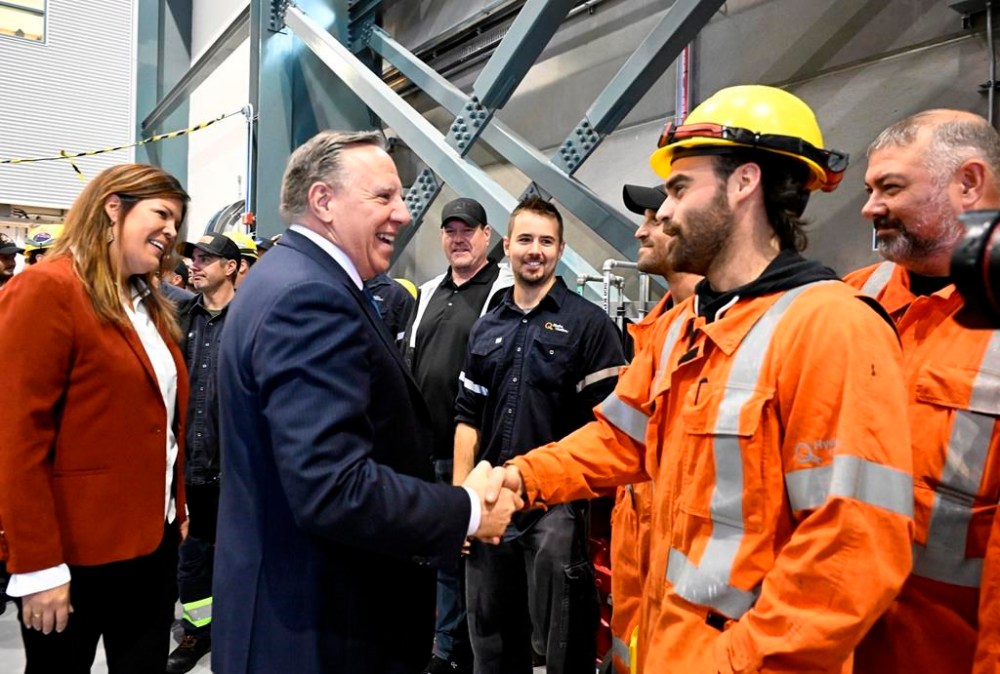
Legault said the Ekuanitshit chief “is worried for nothing” and said no project is planned on the Magpie. But the premier confirmed another on the Petit-Mécatina remains “under analysis.”
Legault was accompanied at Thursday’s event by Jean Charest, who was Quebec premier when construction began in 2009. Legault said the former premier made the right choices by launching the ambitious project. He also paid tribute to previous premiers who approved other hydroelectric projects.
“Today, thanks to these choices, we have the lowest electricity rates in North America,” Legault said.
This report by The Canadian Press was first published Oct. 12, 2023.