
Former Mountie acknowledges tension between intelligence units within RCMP
Advertisement
Read this article for free:
or
Already have an account? Log in here »
We need your support!
Local journalism needs your support!
As we navigate through unprecedented times, our journalists are working harder than ever to bring you the latest local updates to keep you safe and informed.
Now, more than ever, we need your support.
Starting at $15.99 plus taxes every four weeks you can access your Brandon Sun online and full access to all content as it appears on our website.
Subscribe Nowor call circulation directly at (204) 727-0527.
Your pledge helps to ensure we provide the news that matters most to your community!
To continue reading, please subscribe:
Add Brandon Sun access to your Free Press subscription for only an additional
$1 for the first 4 weeks*
- Enjoy unlimited reading on brandonsun.com
- Read the Brandon Sun E-Edition, our digital replica newspaper
*Your next Free Press subscription payment will increase by $1.00 and you will be charged $20.95 plus GST for four weeks. After four weeks, your payment will increase to $24.95 plus GST every four weeks.
Read unlimited articles for free today:
or
Already have an account? Log in here »
Hey there, time traveller!
This article was published 13/10/2023 (1062 days ago), so information in it may no longer be current.
OTTAWA – A former senior Mountie acknowledges there were tensions from time to time between an intelligence unit he led and one run by Cameron Jay Ortis, who is charged with breaching Canada’s secrets law.
Warren Coons, now a retired chief superintendent, was responsible for the National Intelligence Co-ordination Centre, an RCMP unit that aimed to track emerging trends of interest to the force.
At the time, Ortis was director of the RCMP’s Operations Research group, which had access to highly classified intelligence.
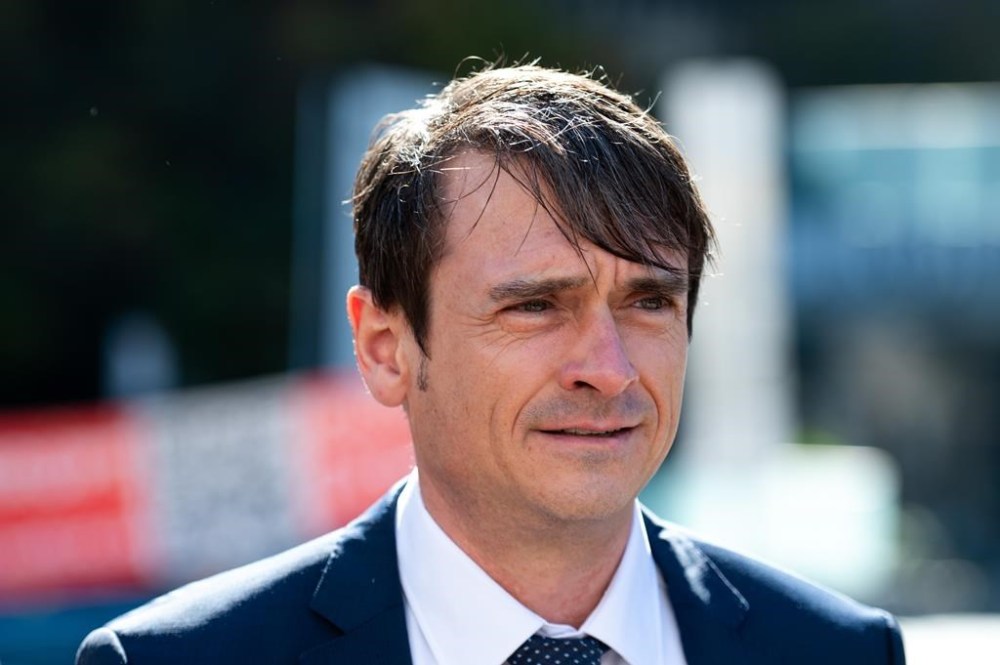
Coons told the jury in Ortis’s Ontario Superior Court trial on Friday he wouldn’t necessarily describe the relationship between the two units as adversarial, but it was not a strong one.
“In a high-stress working environment, that’s not uncommon,” Coons said under cross-examination by defence lawyer Mark Ertel.
The Crown alleges that Ortis anonymously sent secret information in 2015 to people who were of investigative interest to the RCMP.
Ortis, 51, has pleaded not guilty to violating the Security of Information Act by allegedly revealing secrets to three individuals and trying to do so in a fourth instance.
The investigative trail to Ortis began in 2018 when the RCMP analyzed the contents of a laptop computer owned by Vincent Ramos, chief executive officer of Phantom Secure Communications, who had been arrested in the United States.
An RCMP effort known as Project Saturation revealed that members of criminal organizations were known to use Phantom Secure’s encrypted communication devices.
The encryption issue had proved vexing to Canadian police and international counterparts.
The Crown says the RCMP uncovered evidence, after much technical sleuthing, that Ortis had communicated secrets to Ramos and other investigative targets.
Ortis’s lawyers have signalled they will argue their client had the authority to take the actions he did.
“It’s obvious that the case is all about authority — who was in charge, who was in a position to give authority. Those are themes,” Ertel said in brief comments to the media Friday.
He said other factors at the time were the threats to Canada, the urgency of the situation, “the failure of other attempts by the RCMP to solve these problems, and the scenario that Mr. Ortis found himself in as the director of the (Operations Research group) when these events arose.”
The Operations Research group assembled and developed classified information on transnational criminal networks, terror cells, cybercrime actors and commercial espionage.
Ortis’s job description, filed with the court, says the director was expected to manage a high-risk program that provided actionable packages of information to senior RCMP executives.
Coons rejected a suggestion that Ortis was given a free hand in his role.
“I don’t agree that anybody in the RCMP was given carte blanche to do anything related to criminal investigations,” Coons said. “That’s not how we operate, that’s not the culture of the RCMP.”
On Thursday, Coons testified that Ortis never discussed with him the idea of sending secret information to targets as part of an undercover operation.
Coons stressed the importance of respecting the confidentiality of classified documents and abiding by conditions about distributing such information.
He said the intelligence community is built entirely on trust, and sharing sensitive information without permission can mean being cut off by partners from seeing additional documents.
This report by The Canadian Press was first published Oct. 13, 2023.