
TikTok denies it’s controlled by China as exec faces Canadian MPs over security fears
Advertisement
Read this article for free:
or
Already have an account? Log in here »
We need your support!
Local journalism needs your support!
As we navigate through unprecedented times, our journalists are working harder than ever to bring you the latest local updates to keep you safe and informed.
Now, more than ever, we need your support.
Starting at $15.99 plus taxes every four weeks you can access your Brandon Sun online and full access to all content as it appears on our website.
Subscribe Nowor call circulation directly at (204) 727-0527.
Your pledge helps to ensure we provide the news that matters most to your community!
To continue reading, please subscribe:
Add Brandon Sun access to your Free Press subscription for only an additional
$1 for the first 4 weeks*
*Your next subscription payment will increase by $1.00 and you will be charged $20.00 plus GST for four weeks. After four weeks, your payment will increase to $24.00 plus GST every four weeks.
Read unlimited articles for free today:
or
Already have an account? Log in here »
Hey there, time traveller!
This article was published 18/10/2023 (903 days ago), so information in it may no longer be current.
OTTAWA – A TikTok executive faced off on Wednesday with Canadian lawmakers who have concerns that data from the app could end up in the hands of the Chinese government.
Steve de Eyre, director of public policy and government affairs for TikTok Canada, said at a House of Commons committee meeting that the video-sharing app is not controlled by the Chinese government.
Western governments have expressed worries that the popular platform owned by Beijing-based ByteDance could put sensitive data in the hands of China’s government or be used as a tool to further misinformation.
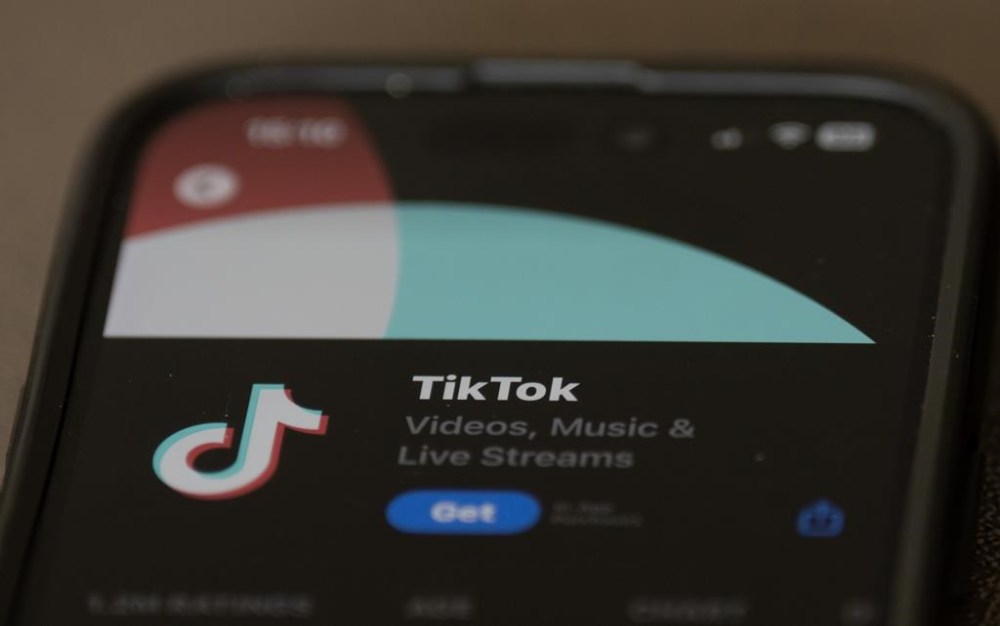
Chinese law says the government can order companies to help it gather intelligence.
When NDP MP Matthew Green asked about the law, another TikTok executive brushed off the question.
“I’m not an expert in Chinese law,” said David Lieber, head of privacy public policy for the Americas.
The federal government banned TikTok from government-owned devices in February, after its chief information officer said the application creates an “unacceptable” level of risk to privacy and security.
Provinces later followed suit and banned TikTok from government devices, which de Eyre said he believes is unfair.
He said TikTok is being singled out, adding that he has since contacted the Treasury Board and chief information officer to better understand the government’s position.
“We do operate similar to other platforms. I will say our policy — and we’ve been public about this — is that there probably isn’t a need to have any social media apps or entertainment apps or gaming apps on a government employee device. But those rules should apply equally to all platforms,” he told the House committee on access to information, privacy and ethics.
Federal and provincial privacy watchdogs have also been investigating whether TikTok complies with privacy law.
A growing number of governments, including that of the United States, have banned the popular video-sharing app on government devices, as cybersecurity concerns rise.
In Australia, it was banned from government devices after that country’s attorney general received advice from intelligence and security agencies.
And the European Parliament, European Commission and the EU Council also imposed bans on their devices, with staff advised to remove the TikTok app from their personal devices, too.
Lieber said TikTok is taking steps to protect Canadian data by storing it on servers in the United States, Malaysia and Singapore.
He said the government of China has never requested the data of Canadians but conceded that “it would be irresponsible for me or any other employee of a technology company to make categorical guarantees about what governments are capable of or incapable of in terms of their ability to conduct activities including hacking on their own initiative.”
A September 2022 intelligence brief disclosed under access-to-information law has provided fresh insight into government concerns about TikTok.
The brief by the Privy Council Office’s intelligence assessment secretariat says that TikTok is the first Chinese-owned app to reach over a billion users beyond China, “creating a globally embedded and ubiquitous collection and influence platform for Beijing to exploit.”
“Despite assurances, there is growing evidence that TikTok’s data is accessible to China,” said the heavily edited brief, which was based on both open sources and classified information.
And in a first-of-its-kind report on Chinese disinformation released last month, the U.S. State Department alleged that ByteDance seeks to block potential critics of Beijing, including those outside of China, from using its platforms.
The report said the U.S. government had information as of late 2020 that ByteDance “maintained a regularly updated internal list” identifying people who were blocked or restricted from its platforms — including TikTok — “for reasons such as advocating for Uyghur independence.”
A TikTok spokesperson, who didn’t provide a name, said on Wednesday that “no such lists exist for TikTok.”
This report by The Canadian Press was first published Oct. 18, 2023.
— With files from The Associated Press.