
B.C. civil forfeiture law will be put to ‘reasonable limits’ Charter test
Advertisement
Read this article for free:
or
Already have an account? Log in here »
We need your support!
Local journalism needs your support!
As we navigate through unprecedented times, our journalists are working harder than ever to bring you the latest local updates to keep you safe and informed.
Now, more than ever, we need your support.
Starting at $15.99 plus taxes every four weeks you can access your Brandon Sun online and full access to all content as it appears on our website.
Subscribe Nowor call circulation directly at (204) 727-0527.
Your pledge helps to ensure we provide the news that matters most to your community!
To continue reading, please subscribe:
Add Brandon Sun access to your Free Press subscription for only an additional
$1 for the first 4 weeks*
- Enjoy unlimited reading on brandonsun.com
- Read the Brandon Sun E-Edition, our digital replica newspaper
*Your next Free Press subscription payment will increase by $1.00 and you will be charged $20.95 plus GST for four weeks. After four weeks, your payment will increase to $24.95 plus GST every four weeks.
Read unlimited articles for free today:
or
Already have an account? Log in here »
Hey there, time traveller!
This article was published 14/01/2024 (993 days ago), so information in it may no longer be current.
VANCOUVER – In July 2019, Vancouver police announced they had dismantled a multimillion-dollar drug operation after raiding two warehouse laboratories in South Vancouver allegedly making illegal cannabis extracts.
Department spokesman Sgt. Steve Addison said at the time the labs were “large and sophisticated,” posing “a significant risk to the public.”
A news release said “thousands of pounds of drugs” including cannabis extracts, balms and edibles were seized. It said charges were anticipated when the investigation wrapped up, although it’s not clear if anyone was ever prosecuted.
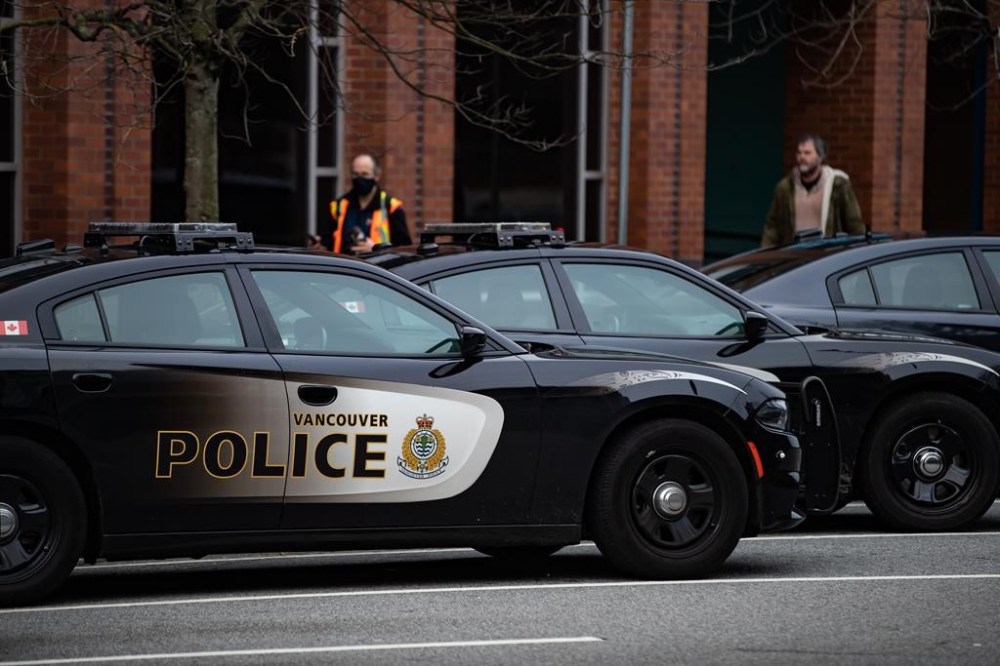
Then in October 2021, B.C.’s Director of Civil Forfeiture filed a lawsuit to seize the warehouses on Shaughnessy Street in South Vancouver as “proceeds and instruments of unlawful activity.”
But the case has hit a snag that could have implications for the province’s controversial civil forfeiture regime, with a B.C. Supreme Court judge ruling that part of the act that governs it is inconsistent with the Canadian Charter and must be tested to see if it falls within “reasonable limits.”
The lawsuit hasn’t been resolved, but in a Dec. 29 ruling Justice Jasmin Ahmad said there were “many problematic aspects” to the act’s search and seizure provision, and it “does not strike a reasonable balance between the state’s interest … and an individual’s privacy rights.”
Critics have long claimed that B.C.’s civil forfeiture system is problematic, allowing the government to seize property linked to criminal activity, even when the owner hasn’t been convicted.
Criminality has to be proven beyond a reasonable doubt, but civil forfeiture falls under the lower bar for proving civil liability under a balance of probabilities.
The Director of Civil Forfeiture had sought bank account information from the owners of the warehouse units, Realtor Scott McDermid and Leslie Ann McDermid.
The forfeiture office said the information would shed light on “relevant evidence of unlawful activity and the McDermids’ state of knowledge (regarding) the unlawful activity at the properties.”
The office claims Scott McDermid was aware of the unlawful activity, allegations that “raise the spectre of criminality,” the court found.
But the McDermids claimed in court that the sections of the forfeiture act authorizing the probes into their bank accounts were unconstitutional.
Ahmad found that one section of the act was “overly broad,” and searches authorized by it “highly intrusive.”
While the act’s search provision served a “compelling and important purpose,” Ahmad ruled, its “overbreadth … allows for a significant intrusion into ‘information which tends to reveal intimate details of the lifestyle and personal choices of the individual’ and in which the parties agree individuals have a reasonable expectation of privacy.”
“The overbreadth also waters down the protection that judicial supervision would otherwise provide,” Ahmad ruled.
“Also problematic is the lack of other procedural safeguards … the lack of an after-the-fact notice requirement means that in instances where a forfeiture action is not commenced, an individual may not even know that a search was conducted at all.”
Ahmad found the section of the act inconsistent with the Charter, but it could still survive under the Charter’s reasonable limits clause, allowing for infringements on protected rights that are “demonstrably justified in a free and democratic society.”
Scott McDermid and his lawyer Greg DelBigio both declined to comment on the ruling.
The B.C. Ministry of Public Safety said in an emailed statement that it “is reviewing the court decision and has not been advised of a hearing date” for the next phase of the case.
The ministry said courts all the way up to the Supreme Court of Canada “have all consistently upheld the validity of civil forfeiture as a means to properly address the proceeds and tools of unlawful activity.”
“Government will continue to pursue and forfeit illegally obtained assets and use the proceeds of their sale (for) community safety and crime-prevention initiatives to help repair the damage done by illegal activity in British Columbia,” the statement said.
Legal observers and critics of the civil forfeiture regime say the ruling in the McDermid’s case is significant, regardless of the outcome of the impending “reasonable limits” test.
“The B.C. government has held out civil forfeiture as a central pillar in the fight against money laundering. In support of this position, it has claimed that the regime is constitutionally compliant. The Supreme Court of British Columbia has now held otherwise,” criminal defence lawyer Matthew Nathanson said in an email.
Nathanson, who was not involved in the case but has experience in constitutional matters, said “this important ruling affirms that the broad powers the government has given itself in the civil forfeiture context are not unlimited, and that the constitutional rights of citizens must always be respected.”
Lawyer Greg McMullen with Segev LLP in Vancouver has criticized the province’s civil forfeiture regime for the B.C. Civil Liberties Association, claiming it “creates a presumption of guilt” among those facing property forfeiture actions.
McMullen said in an interview that the section at issue in the McDermids’ case gives the civil forfeiture office “very broad power that was very open to abuse.”
McMullen said the province’s civil forfeiture regime makes him “deeply uncomfortable.”
“It seems like an end run around the high criminal standard, which is there for a reason,” he said. “We don’t want people being punished if we aren’t certain that we’re punishing the right person, and I think civil forfeiture goes too far in the direction of allowing the government to punish people who they can’t prove have done anything wrong.”
“I think these investigative powers are similarly creepy and open to abuse,” he said. “If there is criminal activity, the people who committed it shouldn’t be able to live off the proceeds, but until we have a criminal conviction, we don’t know that.”
In her Dec. 29 ruling Ahmad had said that “the stigma of criminal conduct is inescapable.”
“(The) stigma attached to the serious allegations of ‘unlawful activity’ moves this regime closer to a quasi-criminal regime than a purely civil one in which no finding of ‘unlawful activity’ is required.”
McMullen said there’s been “harrowing abuse of the civil forfeiture system,” targeting people who haven’t been convicted of a crime, a problematic feature of the law in a democratic society.
“I fully support asset forfeiture after a criminal conviction,” he said. “I think that makes perfect sense.”
The Vancouver Police Department did not respond to requests for comment on the outcome of the 2019 cannabis lab investigation.
This report by The Canadian Press was first published Jan. 14, 2024.