
Bird Count brings some surprises
Advertisement
Read this article for free:
or
Already have an account? Log in here »
We need your support!
Local journalism needs your support!
As we navigate through unprecedented times, our journalists are working harder than ever to bring you the latest local updates to keep you safe and informed.
Now, more than ever, we need your support.
Starting at $15.99 plus taxes every four weeks you can access your Brandon Sun online and full access to all content as it appears on our website.
Subscribe Nowor call circulation directly at (204) 727-0527.
Your pledge helps to ensure we provide the news that matters most to your community!
To continue reading, please subscribe:
Add Brandon Sun access to your Free Press subscription for only an additional
$1 for the first 4 weeks*
*Your next subscription payment will increase by $1.00 and you will be charged $20.00 plus GST for four weeks. After four weeks, your payment will increase to $24.00 plus GST every four weeks.
Read unlimited articles for free today:
or
Already have an account? Log in here »
Hey there, time traveller!
This article was published 01/02/2024 (673 days ago), so information in it may no longer be current.
The results from the Brandon and Rivers 2023 Christmas Bird Counts are in, coloured with notable sightings of popular and rare birds, and the absence of some others that usually make the list.
Westman Naturalists, a group of amateur naturalists who explore the natural world in southwestern Manitoba, compiled the results for both counts, and gave special thanks to all participants of both Christmas Bird Counts, including those who kept track of the birds that visited their bird feeders at home and those who went out on the trail or in the field for the event.
The Brandon count boasts a total of 35 different species witnessed, and the count for Rivers, located 41 kilometres northwest of Brandon, and Riding Mountain National Park (RMNP), 99 km north of Brandon, saw 31 species recorded.
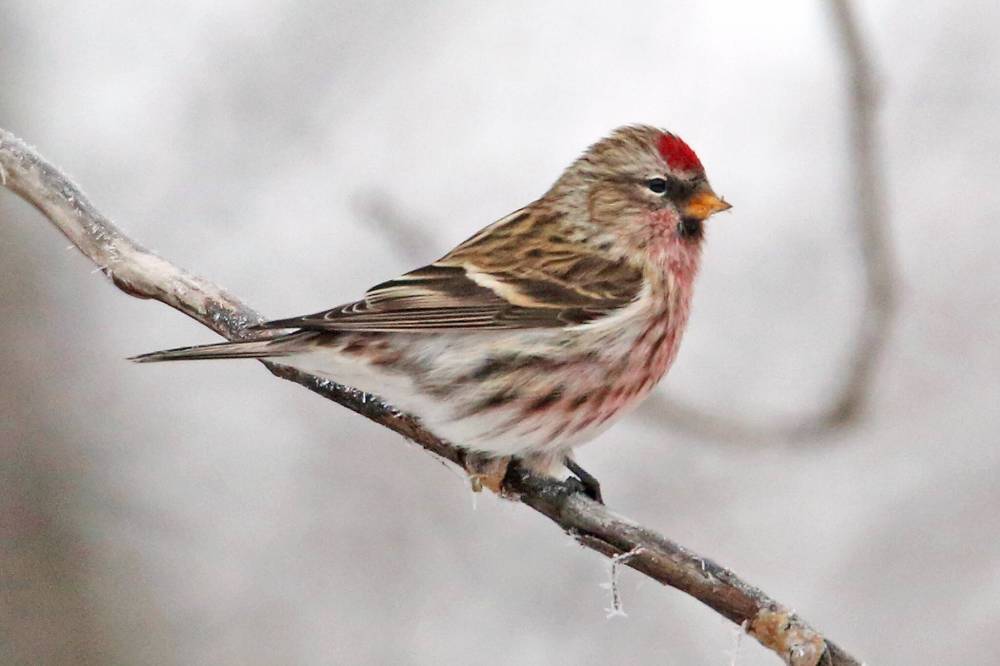
A common redpoll perches in a tree outside the home of Ken and Rae Kingdon in Onanole during a previous annual Riding Mountain Christmas Bird Count. (Tim Smith/The Brandon Sun)
Notable sightings included a varied thrush and two great grey owls at the park.
The varied thrush, a common breeding bird in western Canada, has seen little population change since the early 1970s, the Government of Canada’s Status of Birds website states. Several regional populations have dropped over 50 per cent, however, so the species has been classified in one or more Bird Conservation Region Strategies across the country as priority for conservation and stewardship.
The great grey owl, Manitoba’s official bird, is a carnivorous species that is considered “not at risk” by the Committee on the Status of Endangered Wildlife in Canada (COSEWIC), an independent advisory panel to the Minister of Environment and Climate Change Canada.
Although grey owls are found across the country, and in Manitoba and other Prairie provinces, they’re most likely to be found in forests and meadows, where they feed on voles, pocket gophers, frogs, small birds, weasels, squirrels, mice and shrews, the Canadian Geographic website says.
Pine grosbeaks and red crosbills winging their way south for the winter were spotted in Brandon and Rivers. Found across Canada’s Boreal region and throughout the west coast, pine grosbeaks have shown a moderate increase in numbers since the early 1970s, the federal government says. Despite this, the species has been identified as a priority for conservation and stewardship in Canada.
The red crossbill can be found year round in Canada, and they travel large distances to find their food of choice, which is the cones of conifer trees, Birds Canada’s website states. There are 12 different types of red crossbills across North America, and in Canada. Only the type that lives in Newfoundland is considered threatened, since there are only about 2,500 adults estimated to make up their population.
Many common redpolls were seen during the counts nest in the Arctic and come to southern Canada and the northern United States from time to time due to scarcity of food in the north, the National Audoban Society says.
Bald eagles and rough legged hawks were also sighted frequently during all counts Westman Naturalists took part in this year. Bald eagles are considered uncommon but widespread in Canada, the federal government says, and most of them reside on the west coast. Christmas bird counts across the country indicate the bald eagle population increased in the 1970s after large population decreases in the first half of the 20th century. The bird has been identified as a priority for conservation and stewardship in one or more Bird Conservation Region strategies across the country.
The breeding ground of the rough legged hawk is located in Canada’s arctic tundra, and are often spotted in Christmas bird counts as they make their way to their southern wintering grounds in Canada and the United States. The speicies has also been identified as a priority for conservation and stewardship in Bird Conservation Region strategies.
Unlike in other years, snowy owls and waterfowl were not witnessed during the Christmas Bird Counts Westman Naturalists put on this year. However, unusual sparrows, including the Harris and white-throated sparrow, and 334 snow buntings close to Rivers were recorded. The snow buntings made up the most birds during that count, Westman Naturalists says.
» leybournemiranda@gmail.com
» X: @miraleybourne