
DNA over decades: A look at how police tracked down a Calgary serial killer
Advertisement
Read this article for free:
or
Already have an account? Log in here »
We need your support!
Local journalism needs your support!
As we navigate through unprecedented times, our journalists are working harder than ever to bring you the latest local updates to keep you safe and informed.
Now, more than ever, we need your support.
Starting at $15.99 plus taxes every four weeks you can access your Brandon Sun online and full access to all content as it appears on our website.
Subscribe Nowor call circulation directly at (204) 727-0527.
Your pledge helps to ensure we provide the news that matters most to your community!
To continue reading, please subscribe:
Add Brandon Sun access to your Free Press subscription for only an additional
$1 for the first 4 weeks*
- Enjoy unlimited reading on brandonsun.com
- Read the Brandon Sun E-Edition, our digital replica newspaper
*Your next Free Press subscription payment will increase by $1.00 and you will be charged $20.95 plus GST for four weeks. After four weeks, your payment will increase to $24.95 plus GST every four weeks.
Read unlimited articles for free today:
or
Already have an account? Log in here »
Hey there, time traveller!
This article was published 17/05/2024 (854 days ago), so information in it may no longer be current.
CALGARY – The bodies of four girls and women were found outside Calgary in 1976 and 1977. For nearly 50 years, their killings were unsolved.
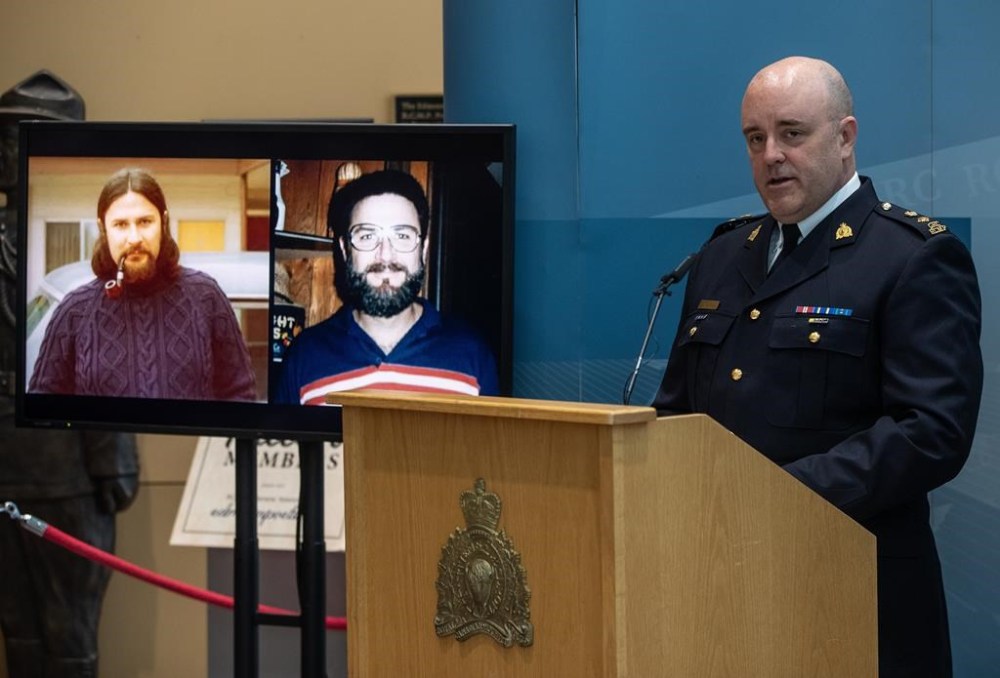
On Friday, RCMP identified Gary Allen Srery, an American sex offender, as the killer. He died in an Idaho prison in 2011.
Here’s a look at the police investigation:
Feb. 12, 1976: Eva Dvorak and Patsy McQueen, both 14, leave Ian Bazalgette Junior High School. They remain together for the next couple of days and visit the homes of various friends. McQueen’s family reports her missing.
Feb. 15, 1976: The bodies of the two girls are found on a road beneath an overpass west of Calgary. They are fully clothed, but police believe they were sexually assaulted.
Sept. 15, 1976: Melissa Rehorek, 20, is seen by her roommates at the YWCA in downtown Calgary. She tells people she’s planning to hitchhike out of Calgary on her days off work as a hotel housekeeper. The following day, her body is found in a ditch off a gravel road outside the city. Her body is also fully clothed, and there is evidence of a struggle. An autopsy determines she was strangled.
Feb. 25, 1977: Barbara MacLean, 19, attends a cabaret with friends. The bank employee is last seen walking alone from the Highlander bar about 2 a.m. the next day. Later that morning, her body is found outside what was then Calgary’s city limits. She was also strangled, and there are signs of a struggle. Her jacket is on inside-out.
1990s: Over the years, RCMP create four teams to re-examine evidence, tips from the public and any lead not previously followed in the four homicides.
March 2003: A lab confirms DNA found in the Rehorak and MacLean killings is the same.
2023: A DNA profile is identified for the killer of Eva and Patsy, and it’s the same as the profile for the killer of Rehorak and MacLean. Later that year, a report determines the DNA is a likely match to Gary Allen Srery, a serial sex offender who fled from the U.S. into Canada in the mid-1970s.
Sept. 13, 2023: Idaho police confirm Srery’s DNA matches the genetic profile of the DNA in the Calgary killings.
This report by The Canadian Press was first published May 17, 2024.