
CSE should make changes or stop using polygraphs: watchdog report
Advertisement
Read this article for free:
or
Already have an account? Log in here »
We need your support!
Local journalism needs your support!
As we navigate through unprecedented times, our journalists are working harder than ever to bring you the latest local updates to keep you safe and informed.
Now, more than ever, we need your support.
Starting at $15.99 plus taxes every four weeks you can access your Brandon Sun online and full access to all content as it appears on our website.
Subscribe Nowor call circulation directly at (204) 727-0527.
Your pledge helps to ensure we provide the news that matters most to your community!
To continue reading, please subscribe:
Add Brandon Sun access to your Free Press subscription for only an additional
$1 for the first 4 weeks*
*Your next subscription payment will increase by $1.00 and you will be charged $20.00 plus GST for four weeks. After four weeks, your payment will increase to $24.00 plus GST every four weeks.
Read unlimited articles for free today:
or
Already have an account? Log in here »
Hey there, time traveller!
This article was published 26/09/2024 (541 days ago), so information in it may no longer be current.
OTTAWA – A new watchdog report says there are fundamental issues with the use of polygraphs for security screening by Canada’s cyberspy agency.
It calls for the Communications Security Establishment and the federal government to urgently address them or stop using the tests for security screening altogether.
The National Security and Intelligence Review Agency says it’s the first time a Canadian independent review body has done such a detailed assessment on this type of program.
The report says CSE’s use of polygraph tests, and the Treasury Board’s authorization of the tests for security screening, raises “serious concerns” under the Charter of Rights and Freedoms.
It says CSE policies didn’t adequately address privacy issues, and outlines concerns involving the collection and use of personal and medical information.
It also cites “repetitive and aggressive” questioning by examiners, often resulting from an assessment that was initially negative.
Such questioning “risks causing some subjects to inadvertently fabricate information in an effort to explain an unfavourable polygraph assessment,” it outlines.
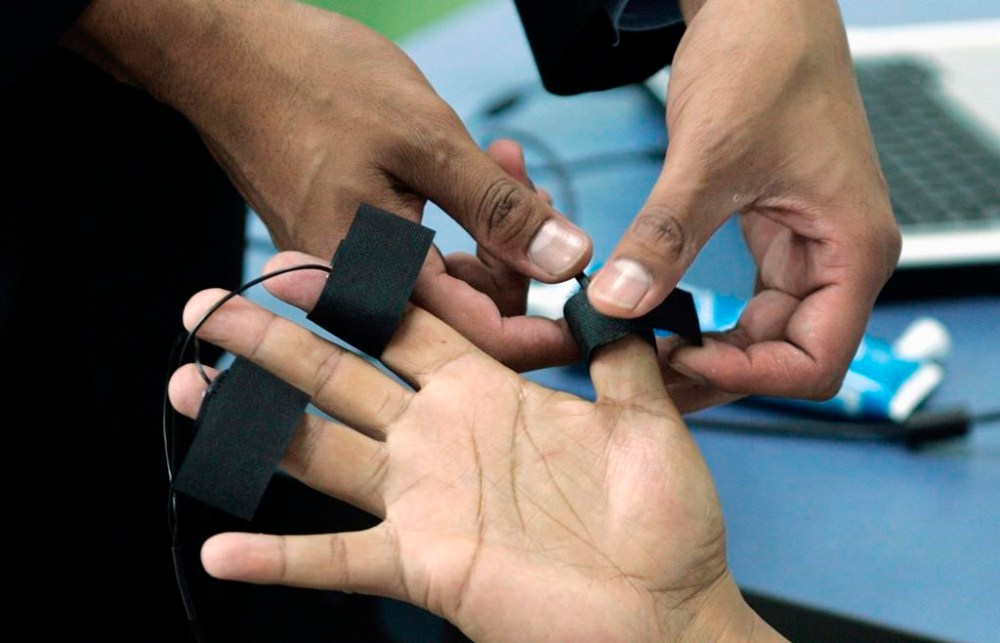
The tests measure physiological responses like heart rate and blood pressure to detect deception.
But the review body says the research it looked at “simply does not support the existence of a scientific consensus supporting the reliability or validity of the polygraph as a means to detect deception.”
The report says CSE placed too much importance on the polygraphs, “to the extent that other, less intrusive security screening activities were insufficiently used or not used at all.”
It adds that the polygraph results were “de facto determinative” in making decisions related to security screening.
The watchdog says in a background document the Treasury Board should “undertake a thorough analysis to support which screening tools it promotes and requires while being mindful that security screening does not grant an organization the licence to override the fundamental privacy protections granted under Canadian law.”
In a document responding to the report, CSE and the Treasury Board defended the use of polygraphs.
The Treasury Board said the National Security and Intelligence Review Agency is “proposing to remove a security measure that has been in successful use for almost four decades, and that is applied to only a small fraction of the public service for protection of only the most sensitive information.”
The board said the recommendation did not consider the current threat environment “or the proven record of that security measure in uncovering adverse information.”
It said the proper use of polygraphs does not conflict with Canadian laws or values.
CSE said polygraphs help establish an individual’s loyalty to Canada but are a “small portion” of its screening apparatus. It indicated it plans to make some changes, including to ensure quality control of the tests.
But it said it plans to continue using the tests, “as it remains confident that the polygraph is an important security screening tool that is particularly necessary in light of the current national security and intelligence landscape.”
This report by The Canadian Press was first published Sept. 26, 2024.