
Freeland finds safety in numbers on digital sales tax
Advertisement
Read this article for free:
or
Already have an account? Log in here »
We need your support!
Local journalism needs your support!
As we navigate through unprecedented times, our journalists are working harder than ever to bring you the latest local updates to keep you safe and informed.
Now, more than ever, we need your support.
Starting at $15.99 plus taxes every four weeks you can access your Brandon Sun online and full access to all content as it appears on our website.
Subscribe Nowor call circulation directly at (204) 727-0527.
Your pledge helps to ensure we provide the news that matters most to your community!
To continue reading, please subscribe:
Add Brandon Sun access to your Free Press subscription for only an additional
$1 for the first 4 weeks*
*Your next subscription payment will increase by $1.00 and you will be charged $20.00 plus GST for four weeks. After four weeks, your payment will increase to $24.00 plus GST every four weeks.
Read unlimited articles for free today:
or
Already have an account? Log in here »
Hey there, time traveller!
This article was published 13/11/2024 (506 days ago), so information in it may no longer be current.
OTTAWA – Finance Minister Chrystia Freeland isn’t flinching now that the U.S. can move forward with a trade challenge against the Liberal government’s controversial digital services tax.
The Liberals are slapping a three-per-cent tax on the Canadian revenues of digital giants — a move that will affect major U.S. tech companies such as Google and Apple and is expected to send Ottawa on a collision course with the White House.
But it’s not clear whether President Joe Biden will immediately take the fight to the next stage in the waning days of his administration or leave it up to Donald Trump, who takes over in January.
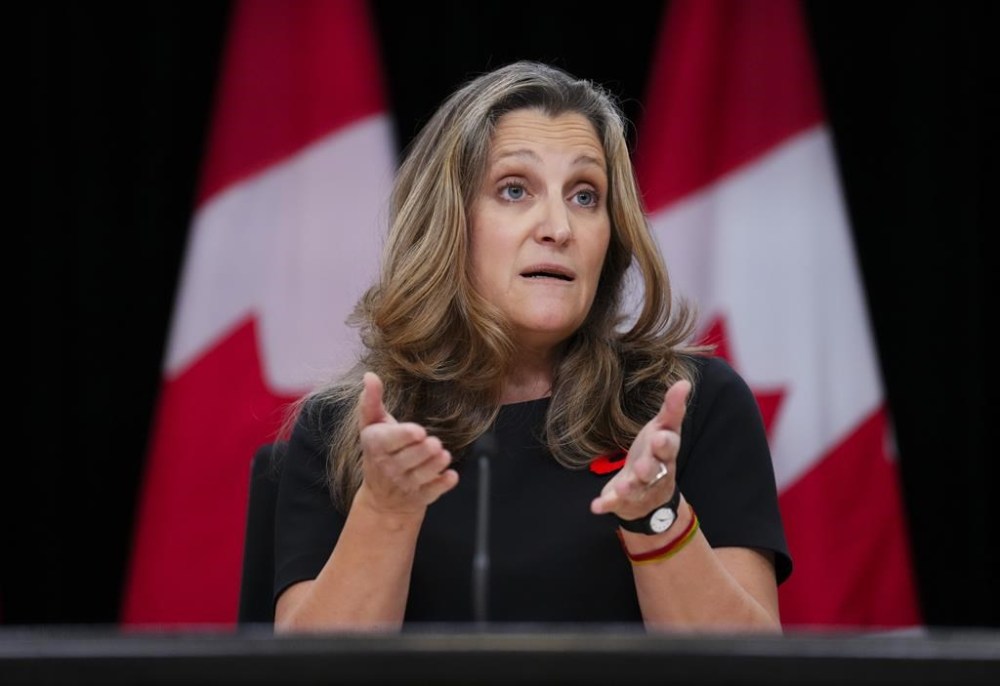
“Canadians need to have a level playing field on this issue,” Freeland said Wednesday, showing no change in tone.
The U.S. is now in a position where it can send the issue to arbitration by striking a dispute-settlement panel to probe whether Canada’s new tax breaches the trilateral trade pact.
United States Trade Representative Katherine Tai had started the long process to challenge the tax at the end of August under Canada-U.S.-Mexico Agreement rules. That set off a 75-day consultation period, where talks quietly took place behind the scenes — a sort of grace window that closed on Wednesday.
Freeland argued some of Canada’s closest allies, such as the UK, France and Italy, have brought in their own digital services taxes and are not suffering for it at the hands of the U.S.
“Italy and France are talking seriously about significantly raising the level of their [digital taxes] and they are facing no trade consequences with the U.S.,” Freeland said. “The fact that this is being handled within NAFTA is another sign of how special and privileged the Canada-U.S. trade relationship is.”
She made the comments speaking with reporters following the second meeting of a special Canada-U.S. relations Cabinet committee that Ottawa rebooted to deal with the incoming Trump administration.
This kind of tax was a major thorn in the side of the first Trump administration, which ended negotiations with European nations over a global digital services tax in 2020.
Robert Lighthizer, Trump’s former trade chief who may soon return to that key role, launched trade investigations against other countries bringing in digital taxes, and readied tariffs in retaliation against those going it alone, like France.
Members of Congress have also raised ire over Ottawa’s decision. Republican representatives that sat on the powerful House Ways and Means committee this summer called for swift action against Canada, writing in a July letter the tax will “unfairly target U.S companies.”
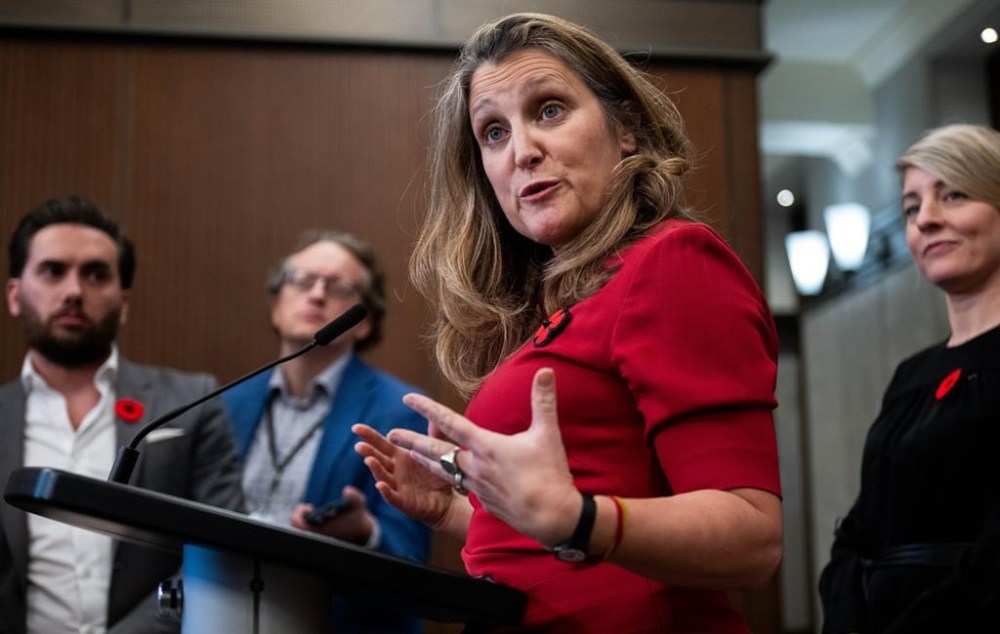
Freeland says Canada’s preference has always been to be part of the global tax framework but her government ultimately gave up on waiting for other countries to reach consensus and move ahead with a plan.
Business groups such as the Canadian Chamber of Commerce and Business Council of Canada have also warned Canada will face trade ramifications for adopting the tax.
Google brought in a 2.5 per cent surcharge for ads in Canada last month.
According to this year’s federal budget, the tax could bolster government coffers by $5.9 billion over the next five years.
This report by The Canadian Press was first published Nov. 13, 2024.