
Investigation finds Alberta government not complying with freedom of information laws
Advertisement
Read this article for free:
or
Already have an account? Log in here »
We need your support!
Local journalism needs your support!
As we navigate through unprecedented times, our journalists are working harder than ever to bring you the latest local updates to keep you safe and informed.
Now, more than ever, we need your support.
Starting at $15.99 plus taxes every four weeks you can access your Brandon Sun online and full access to all content as it appears on our website.
Subscribe Nowor call circulation directly at (204) 727-0527.
Your pledge helps to ensure we provide the news that matters most to your community!
To continue reading, please subscribe:
Add Brandon Sun access to your Free Press subscription for only an additional
$1 for the first 4 weeks*
- Enjoy unlimited reading on brandonsun.com
- Read the Brandon Sun E-Edition, our digital replica newspaper
*Your next Free Press subscription payment will increase by $1.00 and you will be charged $20.95 plus GST for four weeks. After four weeks, your payment will increase to $24.95 plus GST every four weeks.
Read unlimited articles for free today:
or
Already have an account? Log in here »
Hey there, time traveller!
This article was published 09/05/2025 (521 days ago), so information in it may no longer be current.
EDMONTON – Alberta’s access to information watchdog has found the provincial government to be non-compliant with its own freedom of information rules.
A new report from information and privacy commissioner Diane McLeod says Alberta’s government has implemented internal procedures and policies that allow government employees to wrongfully deny freedom of information requests.
The report, released Friday, follows a two-year investigation sparked by complaints made about the handling of more than 30 individual information requests, many of which were made by The Globe and Mail as part of its investigation into freedom of information systems across Canada.
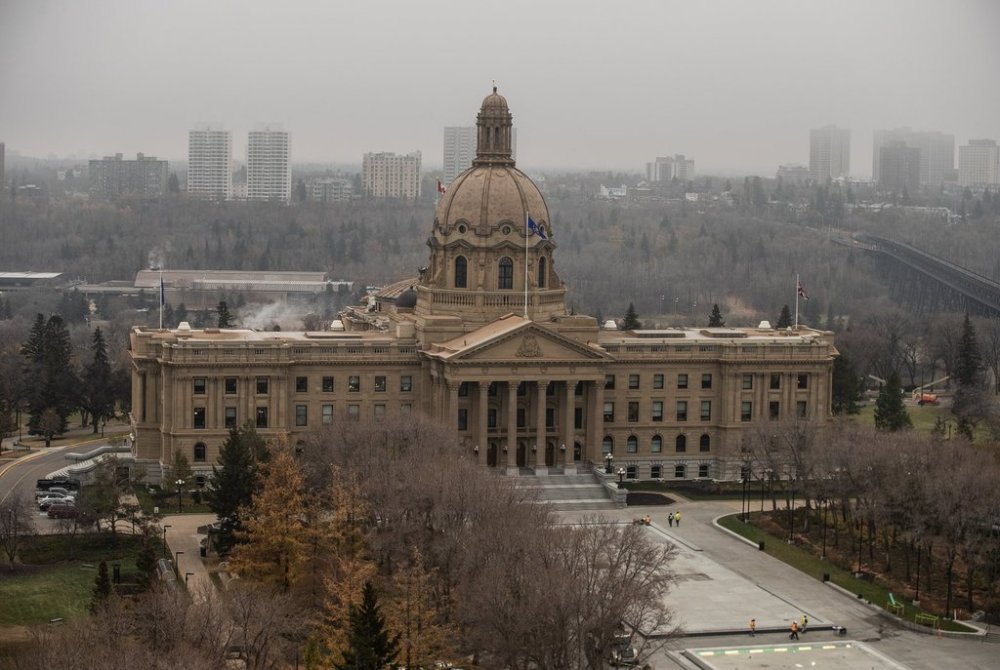
McLeod’s report says the information requests she reviewed were denied for not providing enough detail, which she determined is not a valid reason under provincial freedom of information laws.
Under Alberta’s freedom of information rules, government employees have a duty to assist an applicant. If a request doesn’t have enough detail to identify records, McLeod said it’s up to government staff to seek further information on what is being sought.
McLeod wrote that didn’t happen for the requests she reviewed for her investigation, which determined all 27 Alberta government departments to be at fault.
The report said applicants were asked to narrow down the scope of their request, such as time frame and topic, or submit multiple requests so the government could meet its legislated response window of 30 days.
But in many cases, files were actually closed the same day those asks were sent out, the report states.
McLeod said this process, which she says violates the “scheme” of Alberta’s freedom of information law, is laid out in an internal government manual called the “Access Request Playbook.”
The manual and the government’s attempts to have information requests be reduced in scope are meant to make it easier to fulfill requests, McLeod wrote, but it has made the process unfair since it’s “not the duty of the applicant to make the search easy for the public body.”
“Further, the degree of specificity identified … as necessary to meet the ‘enough detail’ threshold … is simply unattainable by an applicant and, in my view, it is unreasonable for a public body to require such specificity from an applicant when making an access request,” McLeod wrote.
“A member of the general public does not know what records are in the custody or control of a public body. They are not privy to the inner workings of government and, therefore, could not be expected to know specifics about any records held by government.”
Osagie Ogunbor, a spokesperson for Service Alberta Minister Dale Nally, said in an email that the ministry is considering McLeod’s findings and plans to work with her to address concerns.
“We’re committed to openness and transparency, and we are proud of our record,” Ogunbor said, adding that about 97 per cent of freedom of information requests in 2023-24 were handled without complaints to the commissioner’s office.
McLeod’s investigation also found the government unnecessarily refused requests by citing a section of the legislation that allows requests to be denied if creating requested records would unreasonably impede government operations.
Her report says that as part of her investigation, the government submitted its interpretation of the section as meaning that it only “requires public bodies to provide access to records that already exist” rather than create new records that contain government data.
McLeod is recommending the government make a number of changes to its internal policies to ensure requests aren’t denied for not providing enough detail, and to ensure government bodies meet their duty to assist applicants.
“I acknowledge that managing the volume of access requests received by government public bodies can be challenging and that resources to do this work are not infinite,” she wrote.
“However, in administering the access to information provisions of the (law), there is only one choice that these public bodies have and that is to administer these provisions … in such a manner that ensures Albertans are able to effectively exercise these rights.”
A news release from the commissioner’s office notes that Alberta will soon replace its freedom of information legislation with a new act after a government overhaul took place last year.
It says the relevant sections at play are unchanged in the new framework.
“For that reason, I expect government public bodies to apply my findings and recommendations to their practices under both the existing and the new legislation,” McLeod said
Ogunbor said that “many” of the recommendations will be addressed through the new legislation and its regulations.
This report by The Canadian Press was first published May 9, 2025.