
Kinew describes Bipole project as opportunity
Advertisement
Read this article for free:
or
Already have an account? Log in here »
We need your support!
Local journalism needs your support!
As we navigate through unprecedented times, our journalists are working harder than ever to bring you the latest local updates to keep you safe and informed.
Now, more than ever, we need your support.
Starting at $15.99 plus taxes every four weeks you can access your Brandon Sun online and full access to all content as it appears on our website.
Subscribe Nowor call circulation directly at (204) 727-0527.
Your pledge helps to ensure we provide the news that matters most to your community!
To continue reading, please subscribe:
Add Brandon Sun access to your Free Press subscription for only an additional
$1 for the first 4 weeks*
- Enjoy unlimited reading on brandonsun.com
- Read the Brandon Sun E-Edition, our digital replica newspaper
*Your next Free Press subscription payment will increase by $1.00 and you will be charged $20.95 plus GST for four weeks. After four weeks, your payment will increase to $24.95 plus GST every four weeks.
Read unlimited articles for free today:
or
Already have an account? Log in here »
Hey there, time traveller!
This article was published 17/07/2025 (434 days ago), so information in it may no longer be current.
WINNIPEG — Premier Wab Kinew says the $7-billion, overdue overhaul of two major hydro transmission lines in Manitoba is an investment opportunity and part of the “building blocks to be an energy superpower” — but won’t say how the cost will impact customers.
The Winnipeg Free Press reported Tuesday that maintenance and upgrades on the high-voltage direct current (HVDC) lines of Bipole I and II will require a 3.5 per cent annual rate increase every year for up to 15 years. On Wednesday, the premier called it an opportunity “to flex our economic muscle.”
“Over the next two decades, Manitoba Hydro is going to spend in the ballpark of $30 billion on acquiring new electrical equipment: to renew our HVDC lines, to ensure that the lights keep running — no matter how cold it gets in winter, how hot it gets in the summertime, and to do that in a low emissions manner,” Kinew said at an unrelated news conference in Brandon.
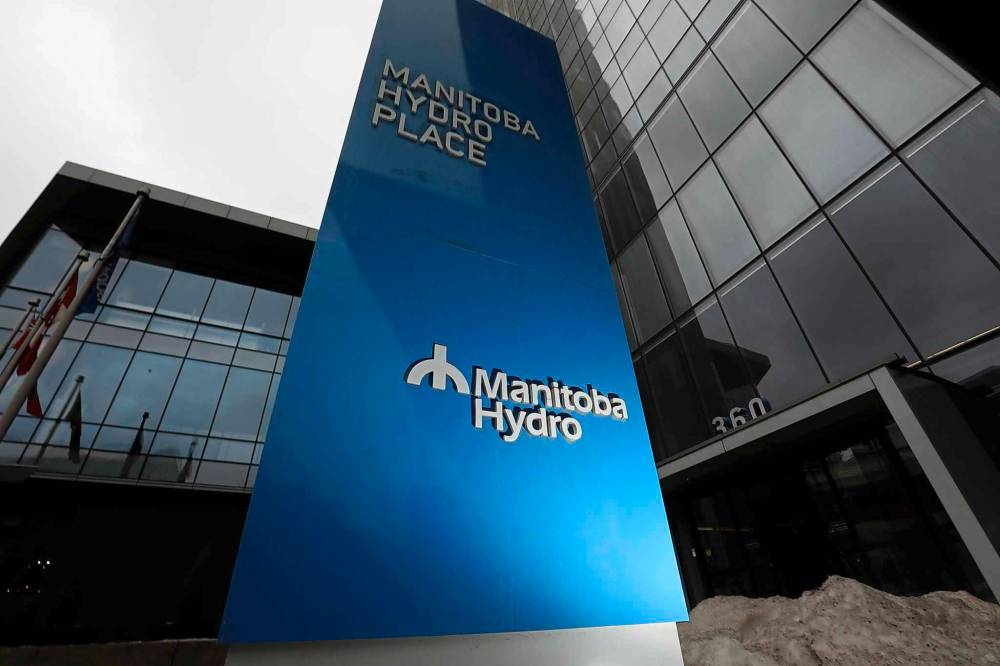
Maintenance and upgrades on the high-voltage direct current (HVDC) lines of Bipole I and II will require a 3.5 per cent annual rate increase every year for up to 15 years. (Ruth Bonneville/Winnipeg Free Press files)
His NDP government ran on keeping hydro rates affordable, and froze them for one year after winning the 2023 provincial election. In March, Manitoba Hydro asked the Public Utilities Board to approve an 11 per cent increase over three years starting in 2026.
Kinew said the government would invest in putting tens of thousands of Manitobans to work, creating jobs on First Nations and in Métis communities. The NDP has rejected private wind power projects but endorsed Indigenous-owned proposals with private sector involvement.
“We’ve got hundreds of megawatts of low-carbon electricity that we can use to build the future in our province,” he said.
Kinew will meet with Prime Minister Mark Carney and his fellow premiers next week to discuss tariffs and the trade war launched by U.S. President Donald Trump.
“Manitoba can come to the table and say, ‘What are we doing, Team Canada? Are we going to keep spending that $30 billion in procurement … on American companies and on building up the economy under the Trump administration? Or, are we going to work together and send a message to our American neighbours (and) keep building our province into being a clean energy superpower by working with countries that treat us well?’”
The premier said it was time to invest in tradespeople, engineers and consultants in Manitoba.
“That’s how we build up our economy — no matter which way we go with tariffs, which way we go with AI.”
Progressive Conservative hydro critic Lauren Stone said she’s concerned the premier is bluffing, and that Manitobans may lose their shirts.
“I don’t think the NDP are being forthcoming with the state of Manitoba Hydro. We’re gonna be watching this project very closely. We know that the NDP have a history of financially mismanaging major hydro projects,” Stone said Wednesday, referring to the construction of Bipole III and the Keeyask generating station, that saw a combined $3.7 billion in cost overruns.
That led to Hydro’s debt soaring to $24.6 billion. The public utility has said 33 cents of every dollar Manitobans pay on their electricity bill goes toward interest payments on the debt.
“It just doesn’t seem that they have a grasp on the needs of Manitoba Hydro and what the future costs for ratepayers will be. I’m certainly concerned about that,” Stone said.
Kinew called the PCs the greatest threat to Manitoba Hydro.
“There’s more power in a donut at Tim Hortons than the PCs have brought online during their recent time in government.”
A spokesperson for the Canadian Taxpayers Federation said taxpayers should be worried about any Hydro megaprojects.
“Governments of all stripes should be working to complete these costly infrastructure projects on budget and on time so taxpayers and ratepayers aren’t stuck paying even more interest on Hydro’s debt for cost overruns,” Gage Haubrich said.
Kinew said, as it relates to cost overruns, they’re taking the time to get it right.
“It’s going to be carefully scoped, there’s going to be contingency plans and we’re going to work with partners who have experience in doing this,” the premier said. “The good news is Manitoba Hydro is pretty much the most experienced company around when it comes to large-scale HVDC projects.”
The Bipole upgrades are required if Manitoba wants a reliable energy grid, said a University of Winnipeg political science professor who studies Crown corporations.
“If it’s -30 here, and we lose power, we’re all refugees in two days,” said Malcolm Bird. “System reliability is just absolutely paramount. Obviously, this is going to affect rates, but that’s part of the price that we have to pay for the electricity.
“Power is so cheap in this province — it’s almost too cheap.”
Next to Quebec, Manitoba has the lowest electricity rates in Canada.
“It’s kind of this cultural, God-given right to have cheap electricity, which is great, but that means that we’re often not fully covering the costs. These capital costs are a part of the cost — capital investments that have to be made,” Bird said.
» Winnipeg Free Press